Advertisement
Explainer: What Huduma Kenya’s proposed overhaul means for citizens
Monday 27th April, 2026 05:57 PM|

Kenyans could soon experience significant changes in how they access government services if a new policy proposal to overhaul Huduma Kenya is implemented.
The Ministry of Public Service has unveiled a draft One-Stop Shop (OSS) policy that seeks to transform Huduma Kenya from a government programme into a fully independent statutory agency, a move aimed at improving efficiency, consistency, and accessibility in public service delivery.
At its core, the proposal addresses persistent challenges that have affected service delivery for years. These include weak legal grounding, uneven service standards across institutions, and fragmented systems that often force citizens to navigate multiple offices or repeat processes.
By establishing Huduma Kenya as a legally recognised agency, the government hopes to create a more stable and accountable structure for delivering services.
You Might Also Like
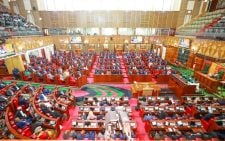


For ordinary Kenyans, one of the most noticeable changes would be the introduction of uniform customer service standards across all public institutions. The draft policy proposes clear timelines for service delivery, stronger accountability mechanisms, and a requirement for government offices to meet consistent performance benchmarks.

This could reduce delays, uncertainty, and the need for repeated follow-ups when seeking services such as ID processing, licensing, or registrations.
“Your voice matters! Be part of shaping the future of public service by submitting your comments on the Draft OSS Policy and Bill,” Huduma Kenya said in a public notice, inviting citizens to participate in refining the proposed reforms.
Another major shift is the push for full digitisation of government services. The policy prioritises end-to-end automation of back-end systems, which would allow different government departments to share information more effectively.
In practice, this means citizens may no longer need to repeatedly submit the same documents to different offices, as records would be accessible across systems, saving both time and cost.
Access to services is also expected to improve geographically. The proposal outlines plans to expand Huduma centres beyond county headquarters to all sub-counties.
For residents in rural or underserved areas, this could significantly reduce travel distances and expenses currently incurred when seeking government services concentrated in urban centres.
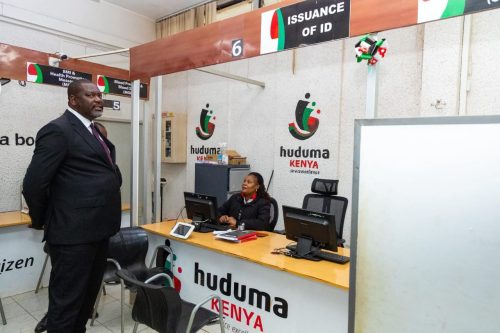
Unified service delivery?
The reforms also emphasise inclusivity. Specific provisions in the draft policy aim to improve access for persons with disabilities and other marginalised groups, ensuring that service centres and systems are designed to accommodate diverse needs.
If implemented effectively, this could help close long-standing gaps in equitable access to public services.
Additionally, the proposed agency would oversee a unified service delivery model that integrates both digital and physical platforms.
This is intended to eliminate the current fragmentation where different ministries operate separate systems with varying standards, often leading to confusion and inefficiencies for users.
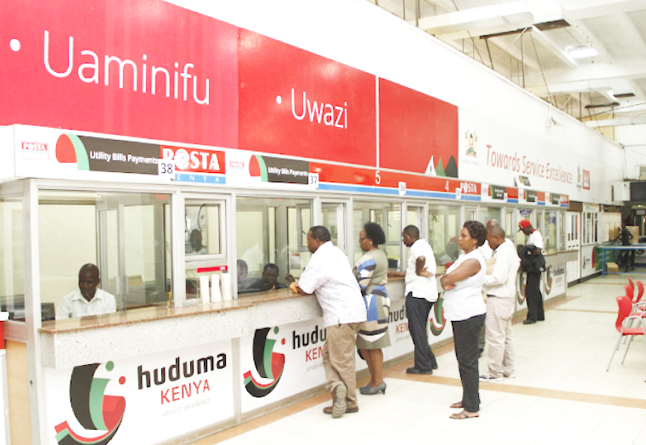
To sustain these changes, the policy introduces a structured funding framework designed to ensure consistent resource allocation.
This would replace the current model, where Huduma Kenya operates with limited and sometimes inconsistent budgetary support, potentially improving reliability and long-term planning.
If adopted, the proposed overhaul could mark a significant shift in how Kenyans interact with government, moving from a system often criticised for inefficiency and duplication to one that is more streamlined, accessible, and citizen-focused.
Author
Latest News








Advertisement
More on Insights