Advertisement
Economic reprieve or political fix? Inside Ruto’s G-to-G fuel deal
Friday 22nd May, 2026 11:43 AM|

The Government-to-Government (G-to-G) fuel import system has been the subject of a heated debate in Kenya, raising questions of whether it is an economic stabiliser or a political solution stitched up to cover structural issues.
President William Ruto has defended the government-to-government (G-to-G) fuel import arrangement, saying the framework has shielded Kenya from a deeper fuel and foreign exchange crisis amid ongoing global oil market disruptions.
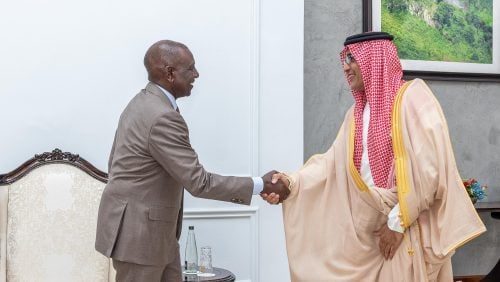
Speaking on Friday, May 22, 2026, at the State House in Mombasa, the president said the G-to-G framework, which was introduced in 2023, has protected the economy from severe shocks that would otherwise have destabilised fuel supply and the foreign exchange market.
Ruto said the arrangement has guaranteed an uninterrupted fuel supply across the country while helping to stabilise pump prices and ease pressure on the Kenyan shilling, despite volatility in the global energy market.
You Might Also Like



“Through the government-to-government fuel supply framework, we have secured guaranteed fuel supplies despite global supply chain disruptions, ensuring uninterrupted fuel availability across the country,” Ruto said.
He noted that before the arrangement was introduced, oil importers were forced to compete for United States dollars within short timelines under the spot market system, placing intense pressure on the local currency.
According to the president, the previous system contributed to the rapid depreciation of the Kenyan shilling and exposed the country to recurring fuel supply uncertainties whenever international prices surged.
“The arrangement has stabilised fuel pricing compared to the old spot market system, where prices fluctuated sharply every month,” he added.
Kenya is importing fuel under a structured state-to-state deal designed to overcome the market inefficiencies, ensure supply and stabilise the prices of fuel. But in reality, it has not been nearly as simple.
Stability over speculation
The defence by the heads of state on the G-to-G fuel deal is based on three points.
The first one is security of supply. The government has said it has avoided shortages and kept the fuel supply going in the face of world events, especially those related to tension in the Middle East.
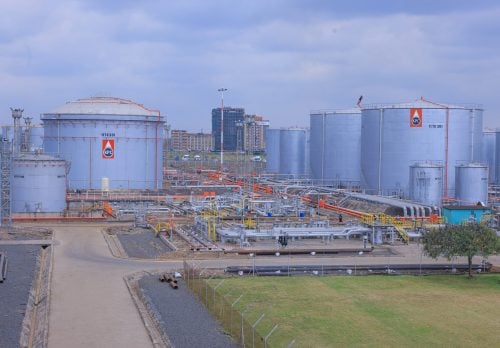
The competitiveness in the region is second on the list. The model has come under question because Ruto has claimed Kenya’s fuel market is more stable than neighbouring countries that are constrained from supplying fuel or that experience extreme volatility.
Thirdly, fiscal buffers. Ruto’s administration believes that subsidies, VAT cuts and price stabilisation funds are required to stave off even higher price rises at the pump.
In this sense, the G-to-G deal is not the issue; it’s the buffer.
Transparency, pricing, and political economy
Transparency is one of the major issues. The transition from private-sector procurement to state-to-state procurement reduces transparency in pricing mechanisms, raising questions about who benefits from import allocations and contracting systems.
The arrangement is a concentration of power in politically connected networks, sways the fuel supply chain, and reduces market competition. It has been called a “handpicking” process, which the government strenuously rejects, as opposed to open tendering.
A second form of criticism centres on the results of pricing. While the government has tried to assure Kenyans that pump prices will remain stable, the country has still been seeing a rapid rise in pump prices, with diesel and petrol commanding a huge price increase in the recent pricing cycles. This has led to doubts about the effectiveness of the G-to-G model and whether it is merely a way of shifting costs onto consumers.
When it could be viewed as a sensible way to deal with a globally volatile environment, it could also be seen as a politically expedient tale that enables the government to assert its influence over fuel stability while avoiding the questions it would have to face on domestic inefficiency, tax rates and policy decisions, which also affect pump prices.
The answer remains unclear: is Kenya enjoying an economic break due to smart state intervention or simply a political remedy to disguise underlying fuel market issues?
Author
Latest News






Advertisement
More on Insights