Advertisement
Are KNEC’s measures enough to protect exam integrity?
Monday 03rd November, 2025 01:39 PM|
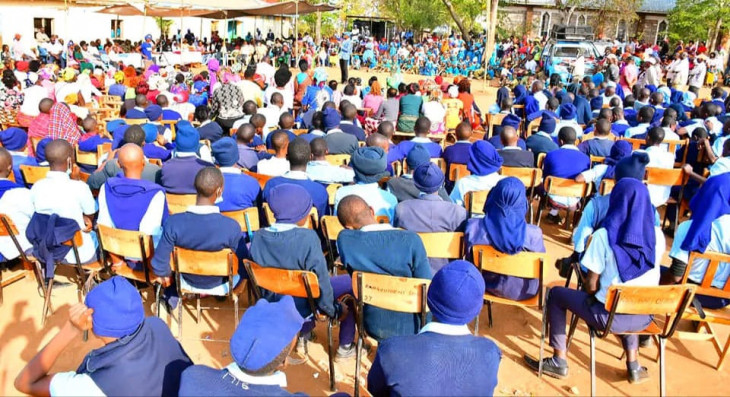
As Kenya navigates the 2025 national examination season, the Kenya National Examinations Council (KNEC) faces unprecedented pressure with the country’s largest-ever cohort of 3,424,836 candidates.
Among them, above 996K are sitting the Kenya Certificate of Secondary Education (KCSE), 1.2M are facing the Kenya Primary School Education Assessment (KPSEA), and 1.1M are pioneering the Kenya Junior School Education Assessment (KJSEA) under the Competency-Based Curriculum (CBC).
These exams, running from October 27 to November 21, determine critical academic transitions, from Grade 6 placements to university admissions.
Also watch: KNEC raises alarm over phone use in exam centers.
You Might Also Like


Education Cabinet Secretary Julius Migos Ogamba and KNEC CEO David Njengere have stressed that integrity underpins meritocracy, but persistent malpractice risks highlight the fragility of the system.
While KNEC’s reforms are a step forward, they are not impervious. Smart padlocks and personalised papers mark progress, yet mobile phone breaches, flood disruptions, and online fraud expose persistent vulnerabilities that demand stronger enforcement and systemic changes.

Measures KNEC Has Put in Place
- Mobile phone surrender protocol: All staff—including centre managers, supervisors, invigilators, security personnel, cooks, and groundsmen—relinquish devices at receipt of exam papers, stored securely until sessions end.
- Smart digital padlocks: GPS-enabled locks piloted on 250 storage containers, linked to KNEC command centres for real-time monitoring of openings and closures.
- Personalised question papers: KCSE and KJSEA papers carry the candidate’s name, index number, and signature space, with detachable booklets and separate counterfoils.
- Staggered material release and collection: Papers issued only after prior sessions conclude; enhanced color-coded security features prevent mix-ups.
- Vetted personnel deployment: Over 90,000 staff vetted via the Teachers Service Commission (TSC); mandatory sensitisation sessions conducted from October 6-9.
- 24-Hour command and call centres: Multi-agency hubs monitor social media, coordinate airlifts for flood-hit zones, and handle complaints via toll-free lines.
- Anonymous ID detachment: Candidate details separated from scripts before marking to eliminate bias, with police and school teams securing centres.
Challenges on the ground
- Inconsistent phone compliance: Some non-teaching staff flout the device policy, enabling quick leaks.
- Flood-induced logistical hurdles: Heavy rains have cut off roads, delaying deliveries and risking rushed handling.
- Fake leaks online: Numerous Telegram and WhatsApp channels circulate bogus KCSE/KJSEA papers, undermining trust.
- Insider malpractice by educators: Teachers and supervisors orchestrate leaks for profit, shifting risk from students to staff.
- Scale and resource strain: Managing 642 containers for over 3.4 million candidates stretches personnel and infrastructure.
- Digital interference: Poor internet and social media scams hamper real-time monitoring of padlocks and potential leaks.
What KNEC should do
- Expand AI-powered surveillance to monitor social media for anomalies and prosecute under KNEC Act Sections 27-40.
- Incentivise integrity with rewards for compliant centres, blacklisting repeat offenders, and providing whistleblower protection.
- Upgrade infrastructure, including all-weather roads and solar-powered padlocks for offline tracking, scaling smart locks to all containers by 2026.
- Launch public awareness campaigns emphasising formative assessment contributions to scores, reducing end-of-exam pressure.
- Introduce post-exam audits, randomised script sampling, blockchain verification, and universal ID detachment with OMR grading.
- Embed independent observers from civil society in high-risk centres and evolve toll-free lines into app-based real-time reporting.
KNEC’s 2025 measures reflect a proactive approach, yet execution remains key. Near-zero leaks are encouraging, but without rigorous enforcement, cultural reform, and technology-backed oversight, these safeguards are only partial solutions.
As Njengere cautioned on October 26, “Integrity is central; last year’s 711 cancellations were painful but necessary.” Kenya’s investment in CBC education demands nothing less than full-spectrum reforms that prioritise honesty and equity.
Only then will national exams fulfil their role in recognising true merit rather than perpetuating risk.
Author
Latest News






Advertisement
More on Insights