Advertisement
Willis Otieno faults MPs’ loyalty chants as economy bleeds
Saturday 07th February, 2026 06:53 AM|

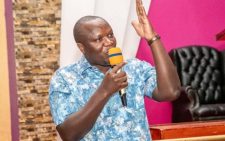
Safina Party deputy leader designate Willis Otieno has criticised Members of Parliament for chanting Tutam! Tutam! in support of the executive, saying the displays come at a time when Kenyans are facing deepening economic distress.
In a post on X dated February 7, 2026, Otieno linked the loyalty chants to what he described as Parliament’s failure to respond to worsening social and economic conditions, including pressure on households, rising unemployment and strained public services.
Criticism over loyalty chants
Otieno described the chant as the soundtrack of legislative surrender accusing lawmakers of prioritising political loyalty over their constitutional oversight role.
In the scathing post, Otieno painted a grim picture of the country’s crises: hospitals lacking essential medicine, mothers detained in maternity wards over unpaid bills, exploding youth unemployment, and an economy ‘bleeding from every artery’ under high taxes and dwindling hope.
You Might Also Like

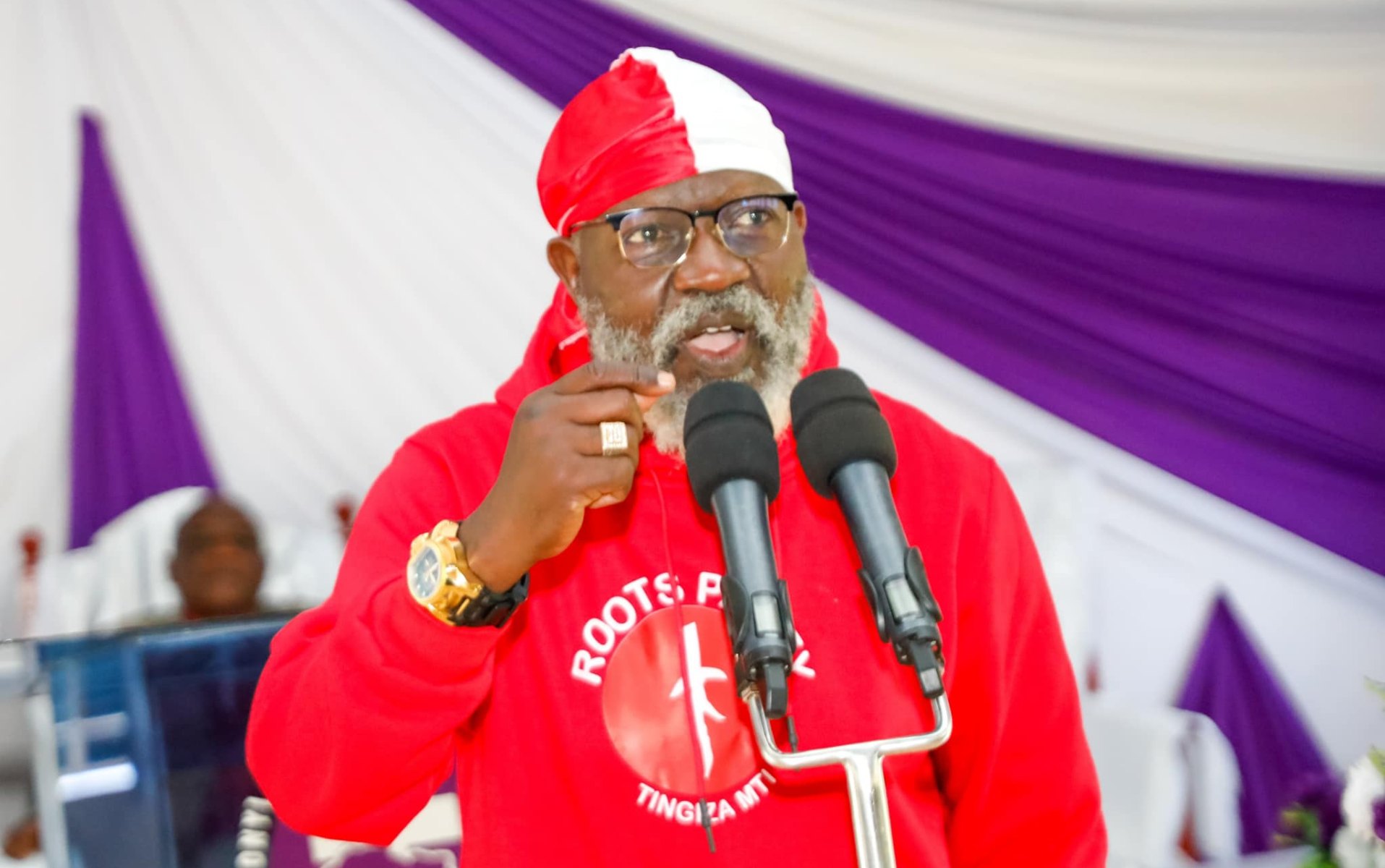
“While hospitals ration painkillers, MPs are rationing courage. While graduates roam streets jobless, MPs roam rallies chanting slogans. While families skip meals, MPs clap for budgets that starve them further,” Otieno wrote.
He further accused MPs of abandoning their mandate to hold the executive accountable, saying they had reduced themselves to “praise-singing accessories” and “human microphones echoing executive talking points while citizens suffocate.”
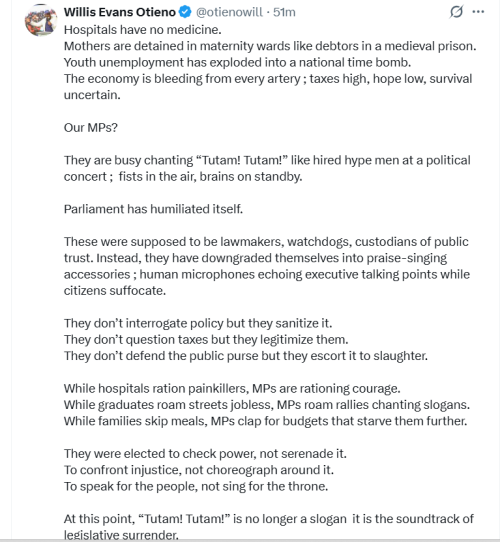
“They were elected to check power, not serenade it. To confront injustice, not choreograph around it. To speak for the people, not sing for the throne,” he added.
Naivasha retreat questioned
The “Tutam! Tutam!” chant gained prominence during President William Ruto’s State of the Nation address in November 2025 and has since been adopted by sections of the Kenya Kwanza coalition in Parliament.
Otieno’s remarks come days after he criticised the National Assembly’s five-day retreat held in Naivasha, which concluded recently. The forum brought together MPs, House leadership, committee chairpersons and the Parliamentary Service Commission to review legislative progress and align priorities.
In an earlier statement dated February 1, Otieno questioned the timing and cost of the retreat, arguing that it was held as Kenyans faced higher taxes on essential goods.
“Leadership does not check into resorts with convoys, allowances, and per diems to ‘reflect.’ You tighten your own belt first or shut up,” he said.
Parliamentary response and public concern
The Naivasha meeting, which ran from January 27, focused on legislative planning, including electoral reforms and political party financing. Organisers defended it as a structured leadership forum held at a conference facility.
Otieno, however, argued that public funds should not be used for what he termed elite gatherings, suggesting instead that MPs promote tourism through policy interventions such as tax relief for the hospitality sector and improved infrastructure.
He said repeated retreats and loyalty demonstrations risk widening the trust gap between Parliament and the public.
“History will be brutal in its judgment: When the nation was bleeding… These MPs were not fighting for the people. They were chanting,” Otieno concluded.
Author
Latest News



Advertisement
More on Inside Politics