Advertisement
Why Kalonzo Musyoka is increasingly seen as the opposition’s best bet
Thursday 09th July, 2026 07:49 AM|

As Kenya’s opposition works to agree on a single presidential candidate for the 2027 general election, one name continues to dominate political discussions: Kalonzo Musyoka.
From endorsements by senior opposition figures to repeated attacks from President William Ruto, the Wiper Patriotic Front leader has steadily emerged as the politician around whom much of the opposition’s strategy revolves. Whether leaders support him, compete against him, or dismiss him, they continue to talk about him.
That growing attention explains why Kalonzo has increasingly become the X-factor in the race to become the United Opposition’s presidential flagbearer.
His political experience, regional support, coalition-building skills and acceptability across different opposition camps have strengthened his position at a time when the alliance is trying to balance ambition with unity.
Endorsements strengthen Kalonzo’s position
You Might Also Like
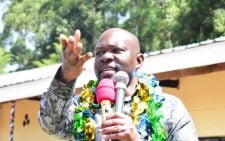
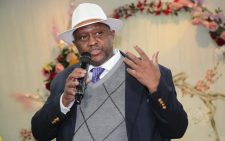

One of the clearest signs of Kalonzo’s growing influence came from former Attorney General and Democratic Party leader Justin Muturi.
Speaking during a church service in Kamulu on July 5, Muturi declared that if he failed to secure the opposition ticket himself, he would support Kalonzo without hesitation.
“Na kwa hivo mimi nataka kusema nikiwa hapa leo, na Mungu anisaidie. Kama haitakuwa mimi… mimi nitamuunga mkono ndugu yangu Dr Stephen Kalonzo Musyoka kuwa mgombea urais ya upinzani,” Muturi said.
Muturi later urged opposition leaders to stop delaying the decision over the presidential candidate, arguing that President William Ruto had already attacked nearly every major opposition figure.
In another political event, Muturi described Kalonzo as the man best placed to face Ruto in 2027, adding:
“He brings stability, vast experience in government, and a track record of serving the nation with integrity.”
He also appealed for unity, saying:
“Kenyans are tired of division. We need a candidate who can bring everyone together – and that candidate is Kalonzo.”
The endorsement matters because Muturi remains an influential figure, particularly in Mt Kenya politics, where the opposition is seeking to make significant gains.
Ruto continues to single him out
Another reason political observers view Kalonzo as a serious contender is the attention he receives from President William Ruto.
While the president frequently criticises the opposition, many of his recent speeches have appeared directed at Kalonzo.
During a church service in Meru on June 28, Ruto criticised politicians he said had spent decades in government without meaningful achievements.
“Ninyi mnajua hakuna watu wamekuwa viongozi katika hii Kenya miaka hamsini. They have nothing to show for it. Ni kurandaranda tu, uzurura, nothing. ” Wamekuwa waziri hapa, waziri pale, waziri sijui wapi,” Ruto said.
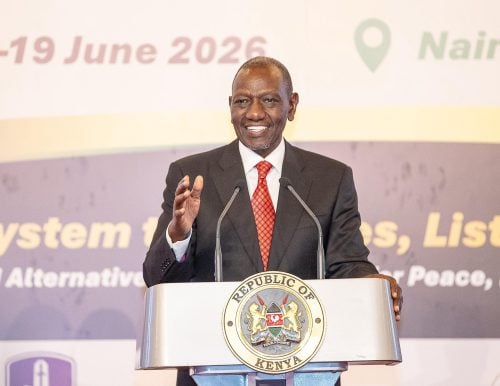
He also accused such leaders of celebrating national disruptions instead of supporting economic productivity.
A few days later in Narok County, Ruto sustained the criticism.
“Someone has been in politics for 40 years and has not built anything, no school, no church, no road,” the president said.
He challenged his rivals to demonstrate what they had delivered while serving in public office.
“I can show my track record as a leader; let them show us theirs.”
Although Ruto did not always mention Kalonzo by name, the remarks closely followed earlier exchanges between the two leaders and were widely interpreted as targeting the former Vice President.
The exchanges between the two leaders have also included disputes over specific issues, including a land ownership controversy in Yatta. In June 2026, Kalonzo rejected President Ruto’s claim that he had taken public land belonging to the National Youth Service, saying the matter had already been settled by the courts and that the property was privately owned.
He maintained that the issue was being revisited despite a court ruling that, according to him, confirmed he acquired the land legally and through the proper procedures.
Presidents spend the most political energy attacking opponents they consider genuine threats. The frequency of Ruto’s criticism has therefore reinforced the perception that Kalonzo remains among the opposition’s strongest prospects.
Ruto’s allies court Kalonzo
Beyond President William Ruto’s criticism, senior Kenya Kwanza leaders have repeatedly attempted to persuade Kalonzo Musyoka to abandon the opposition and work with the government, underscoring the influence he continues to wield ahead of the 2027 elections.
Deputy President Kithure Kindiki has on several occasions publicly appealed to the Wiper leader, describing him as an experienced statesman whose place should be in government rather than the opposition.
In June 2025, Kindiki revealed he intended to personally reach out to Kalonzo, saying:
“I will call him anytime because he is my big brother. We need people who mean well for Kenya.”
He added that Kalonzo had “always been a leader who seeks the best for the country” and argued that bringing him into government would strengthen national unity.
The outreach has continued even as the two leaders exchanged political criticism.
After Kalonzo recently accused the government of using his name to advance economic empowerment programmes in Ukambani and challenged Kindiki to apologise over deaths linked to the June 2024 anti-government protests, the Deputy President declined to escalate the confrontation.
“I hear my big brother Kalonzo has said he doesn’t wish to work with me politically. That is fine with me,” Kindiki said.
He added:
“I won’t answer him back publicly, not because I can’t, but because I never do public duels with people I respect.”
Even while warning that “respect is a two-way street,” Kindiki maintained that Kalonzo remained his “big brother” and reiterated his respect for the former Vice President.
The efforts to win over Kalonzo have also been echoed by Kapseret MP Oscar Sudi, one of President Ruto’s closest political allies.
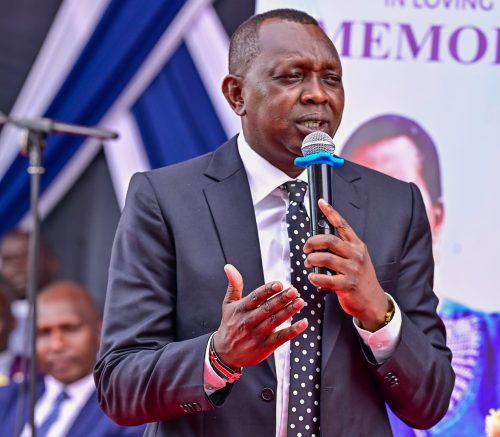
During a church service in Machakos County, Sudi urged Kalonzo to leave the opposition and join the Kenya Kwanza administration.
“Skizeni, Bishop, ambia Kalonzo amekuwa mzee, akuje kwa serikali… afanyie Wakamba kazi,” Sudi said.
He argued that Kalonzo stood little chance of becoming president while remaining outside government.
“Mwambie Kalonzo awache pata potea. Kama ni kupangwa vile atakuwa rais, hatapangwa akiwa nje.”
Sudi even pointed to Ruto’s own political path, saying the president remained in government under former president Uhuru Kenyatta before successfully positioning himself for State House.
Consensus candidate
Unlike some opposition figures who sharply divide opinion, Kalonzo has built a reputation over the years as a negotiator capable of bringing competing political interests together.
That reputation explains why several leaders continue mentioning him whenever discussions about a united opposition ticket arise.
Nairobi Senator Edwin Sifuna recently refused to be drawn into speculation over possible presidential tickets involving Kalonzo or former Interior Cabinet Secretary Fred Matiang’i.
Instead, he argued that the opposition should first agree on a common agenda before discussing positions.
“Tunazungumzia maadili ndugu yangu. Tushakubaliana, Ruto Must Go, lakini ile nchi tunataka kuona ni nchi aina gani,” Sifuna said.
He added:
“Once we agree with that, tunaleta team sasa… It is not about the positions; it is about what country we live in.”
Although Sifuna did not endorse Kalonzo directly, he also did not reject the possibility of working alongside him, leaving room for different coalition arrangements.
Meanwhile, Rigathi Gachagua has maintained that the opposition should delay naming its presidential candidate until closer to the Independent Electoral and Boundaries Commission (IEBC) deadline.
His strategy differs from Muturi’s, but both approaches acknowledge that the eventual flagbearer will need broad acceptance across the coalition.
Major advantage
Kalonzo also brings something many of his rivals cannot match: decades of national leadership experience.
He has served as Kenya’s Vice President, held cabinet positions under different administrations, and contested several presidential elections.
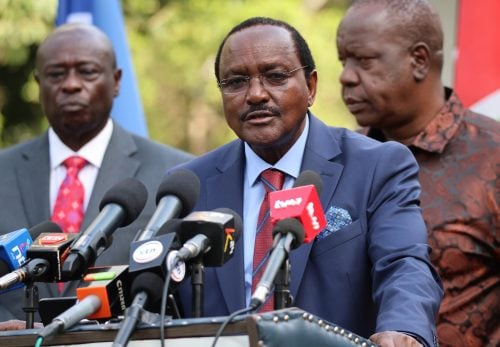
That experience allows him to speak comfortably about governance, diplomacy and coalition politics.
He has also tried to shift debate from personalities to policy.
When launching his Tukomboe Kenya campaign platform, Kalonzo promised predictable taxation and a people-centred government.
“We won’t just lip-sync and make promises to you that will never be honoured. Our administration shall have a predictable and sustainable taxation and revenue-sharing policy that is people-centred,” he said.
While discussing the 2026/27 budget, he criticised the government’s borrowing strategy.
“The difference of Ksh1.11 trillion is borrowed. And it is borrowed on behalf of a child in Turkana who is four years old today, who has never signed a loan agreement,” Kalonzo stated.
Such policy-focused messaging helps distinguish him from leaders whose campaigns remain centred largely on political mobilisation.
Challenges still remain
Despite his growing influence, Kalonzo’s path to the opposition ticket is not guaranteed.
Former Interior Cabinet Secretary Fred Matiang’i continues to attract support because of his record in government.
Martha Karua remains respected for her anti-corruption credentials and constitutional activism.
Edwin Sifuna has gained popularity among younger voters through the Linda Mwananchi movement, while David Maraga continues appealing to Kenyans looking for leadership built around integrity.
Kalonzo must also overcome the perception that he has repeatedly come close to the presidency without securing the country’s top seat.
For younger voters seeking fresh leadership, that history remains one of his biggest political challenges.
Why Kalonzo remains opposition’s X-factor
Even with competition from experienced and emerging leaders, Kalonzo continues to occupy a unique position within the opposition.
He commands a loyal support base in Ukambani, maintains working relationships across different political camps and remains acceptable to leaders from multiple regions.
Equally important, President Ruto continues to target him, senior opposition figures continue endorsing him, and coalition discussions repeatedly return to his name whenever the presidential ticket is debated.
Whether the United Opposition eventually settles on Kalonzo Musyoka or another candidate, one reality is becoming increasingly clear: the road to the opposition flagbearer will almost certainly pass through him.
Author
Kenneth Mwenda
Kenneth Mwenda is a business, sports, and politics digital writer with over seven years of experience in journalism, covering breaking news, feature stories, and in-depth analysis across a range of beats.
For inquiries, he can be reached at [email protected]
View all posts by Kenneth MwendaLatest News

Advertisement
More on Inside Politics
