Advertisement
Why court order against Kingi, Wetang’ula deals blow to Ruto’s 2027 re-election strategy
Thursday 09th July, 2026 08:35 AM|
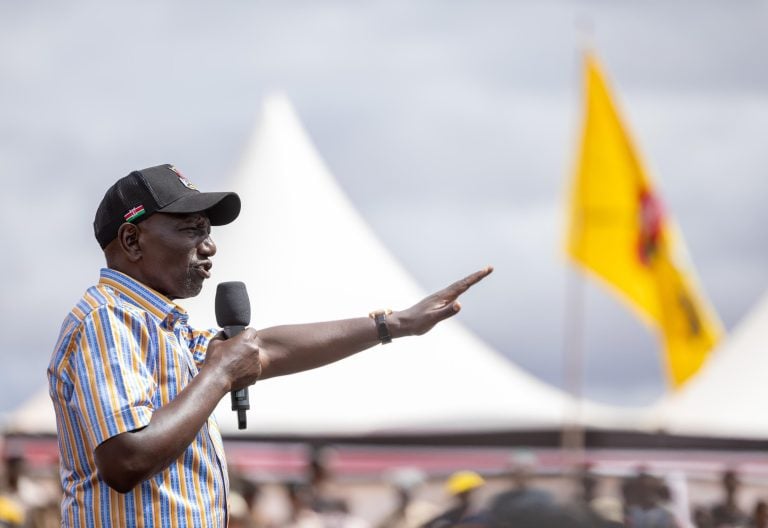
President William Ruto’s political machinery has suffered a potential setback after the High Court issued conservatory orders barring National Assembly Speaker Moses Wetang’ula and Senate Speaker Amason Kingi from participating in partisan political campaigns while serving in their constitutional offices.
The Thursday, July 9, 2026, ruling by Justice David Mburu is expected to have significant political implications for Ruto and the Kenya Kwanza coalition as preparations for the 2027 General Election gradually intensify.
“Pending the inter partes hearing of this application, a conservatory order is hereby issued restraining the 1st and the 2nd respondents (Wetang’ula and Kingi), while serving as the speaker of the National Assembly and the Senate, respectively, from using, invoking, relying upon or benefiting from the authority, prestige, dignity, influence or incidents of their constitutional offices in the organisation, promotion, endorsement, leadership or conduct of organised partisan political campaigns in support of or opposition to any political party, political coalition or political candidate,” the decision read in part.
The High Court ruling stems from a petition filed by Vocal Africa, a human rights organisation seeking to permanently bar the two Speakers from engaging in partisan political activities while occupying the country’s second and third most influential legislative offices.
You Might Also Like
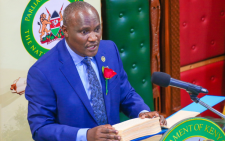

The organisation argues that Wetang’ula and Kingi have been actively participating in political mobilisation while benefiting from state resources attached to their offices. In court papers, Vocal Africa seeks orders restraining the two from leading, organising, officiating, addressing, promoting, endorsing or otherwise participating in partisan political campaign activities while serving as Speakers.
The petitioners further want the court to stop the two parliamentary leaders from using parliamentary facilities, official security details, official transport, communication platforms, parliamentary staff and other public resources for political mobilisation.
While the case revolves around constitutional principles and the neutrality of parliamentary offices, its political consequences could directly affect Ruto’s 2027 re-election strategy.
Political machinery
Since assuming office in 2022, Ruto has relied heavily on a network of elected leaders, Cabinet Secretaries, governors, MPs and political allies to popularise government programmes and defend his administration against opposition criticism. Among the most visible figures in that campaign infrastructure have been Wetang’ula and Kingi.
Both leaders were rewarded with the Speaker positions following Kenya Kwanza’s victory in the 2022 General Election. Wetang’ula, the Ford Kenya party leader, was elected Speaker of the National Assembly, while Kingi, who broke ranks with ODM before the election and aligned himself with Ruto’s coalition, secured the Senate Speaker’s position.
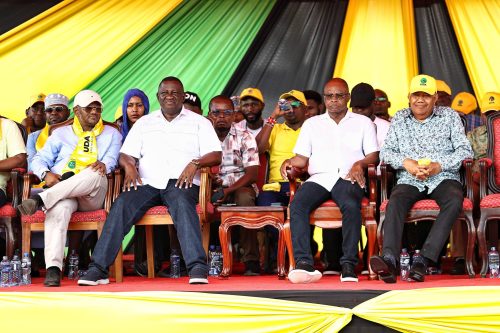
The two leaders have since become prominent faces of Kenya Kwanza’s political mobilisation efforts. They have regularly accompanied senior government officials during development tours, public rallies, economic empowerment events and political meetings designed to strengthen support for Ruto’s second-term bid.
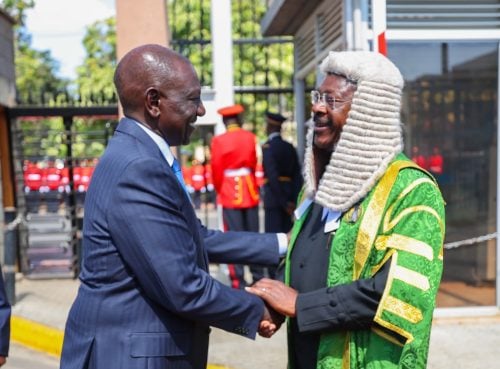
The court order now threatens to remove two of the President’s most influential campaign surrogates from active political mobilisation, at least temporarily.
The significance of the ruling is amplified by the strategic importance of Coast and Western Kenya in the 2027 presidential race.
At the Coast, Kingi remains one of Kenya Kwanza’s most recognisable political figures. His decision to support Ruto in 2022 helped the President make notable electoral gains in a region that had traditionally leaned towards opposition candidates.
In Western Kenya, Wetang’ula has played a similar role. Through Ford Kenya and his extensive political networks, he has helped Kenya Kwanza maintain a foothold in a region where political competition remains intense and where voter alignments continue to shift.
However, the influence of both leaders has increasingly come under pressure from changing political dynamics.
Linda Mwananchi threats
The emergence of the opposition-backed Linda Mwananchi movement has reshaped political conversations in several regions, including the Coast and Western Kenya. The movement’s focus on economic hardship, governance, public accountability and cost-of-living concerns has attracted support among sections of voters dissatisfied with the political establishment.
As a result, Kenya Kwanza has increasingly depended on experienced regional mobilisers such as Kingi and Wetang’ula to maintain its political presence and counter opposition advances.
The High Court ruling therefore comes at a politically sensitive moment for Ruto. With opposition leaders intensifying efforts to build a broad coalition against the President ahead of the 2027 General Election, the temporary loss of two senior political allies could complicate Kenya Kwanza’s grassroots mobilisation strategy.

Beyond electoral calculations, the case has reignited a long-running debate about the constitutional role of parliamentary Speakers.
Although the Constitution of Kenya does not expressly prohibit Speakers from belonging to political parties or maintaining political affiliations, critics argue that holders of the offices should remain politically neutral to preserve public confidence in Parliament’s impartiality.
The debate is not new. Former Speakers Kenneth Marende and Francis ole Kaparo were widely praised for maintaining a degree of political neutrality while presiding over parliamentary proceedings, setting a standard that many governance advocates believe should guide future office holders.
The matter is scheduled for mention on July 16, 2026, when the court will issue further directions.
Should the conservatory orders be upheld or ultimately converted into permanent restrictions, the ruling could reshape the role of parliamentary Speakers in Kenya’s politics. More immediately, however, it presents a fresh challenge for Ruto and Kenya Kwanza as they seek to defend political ground in the Coast and Western Kenya ahead of what is shaping up to be a fiercely contested 2027 presidential election.
Author
Latest News


Advertisement
More on Inside Politics