Advertisement
IEBC campaign spending limits 2027: Why money, trust and transparency will define Kenya’s next election
Thursday 09th July, 2026 08:20 AM|

The Independent Electoral and Boundaries Commission (IEBC) has opened a crucial debate ahead of the 2027 General Election: how much money should candidates and political parties be allowed to spend while seeking power?
The commission’s proposed campaign spending limits have placed election financing at the centre of Kenya’s political conversation. Under the draft Election Campaign Financing Regulations, presidential candidates would be allowed to spend a maximum of Ksh4.435 billion during the campaign period, while political parties would face an overall spending limit of about Ksh17.7 billion.
The figures are huge, but the bigger question is not only how much candidates spend. It is whether IEBC can create a system where money does not determine who gets heard, who reaches voters and ultimately who wins elections.
The 2027 election will test whether Kenya’s electoral reforms can move beyond setting rules on paper to enforcing them in practice.
IEBC proposes Ksh4.4 billion campaign cap
You Might Also Like
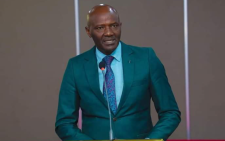
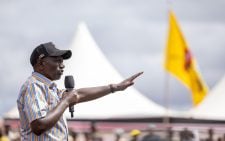
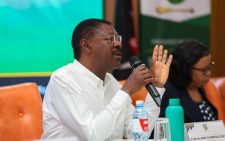
IEBC says the proposed campaign spending limits are designed to regulate election financing and create a level playing field for candidates and political parties.
The commission said it considered factors such as population, geographical size and the cost of reaching voters when developing the proposed limits.
IEBC Chairperson Erastus Edung Ethekon said the commission used a model that estimates the average cost of running campaigns while considering the minimum fixed expenses required by candidates seeking elective positions.
The proposed limits cover different levels of elections, including presidential, gubernatorial, senatorial, parliamentary and ward contests.
For political parties, the proposed Ksh17.7 billion ceiling includes Ksh5.6 billion for ward campaigns, Ksh5.2 billion for constituency campaigns and Ksh2.44 billion for county campaigns.
The commission has identified transport, media advertising, branding, campaign materials and payments to election agents as some of the authorised campaign expenses.
The proposed regulations also require candidates and parties to disclose campaign contributions and maintain financial records.
However, the introduction of spending limits does not automatically guarantee fair competition. A Ksh4.4 billion presidential campaign cap still creates a political environment where only candidates with significant financial backing may easily sustain nationwide campaigns.
The effectiveness of the rules will depend on whether IEBC can monitor spending, investigate violations and take action against those who ignore the limits.
Public participation key to IEBC campaign rules
IEBC has invited Kenyans to submit their views on the draft Election Campaign Financing Regulations before the rules are finalised.
The public has until July 15, 2026, to submit memoranda on campaign contributions, spending limits and authorised expenditures.
The commission said the process is anchored in Article 88(4)(i) of the Constitution, which gives IEBC the mandate to regulate the amount of money that may be spent by or on behalf of candidates and political parties during elections.
The Election Campaign Financing Act, Cap 7A, also gives IEBC powers to regulate campaign funds, disclosure requirements, record keeping and monitoring.
In its notice, the commission stated: “To operationalise this, the Election Campaign Financing Act, Cap. 7A, provides for the regulation, management, expenditure, and accountability of campaign funds, with candidates and parties self-regulating under IEBC oversight.”
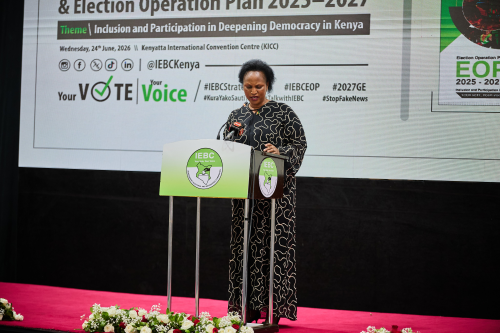
The public participation process gives voters, political parties, civil society organisations and other stakeholders an opportunity to question whether the proposed limits are realistic and enforceable.
A strong campaign financing framework requires more than setting figures. It must answer difficult questions about hidden donations, undeclared spending and the ability of wealthy candidates to influence political competition.
IEBC credibility depends on transparency
The campaign financing debate comes as IEBC continues preparing for the 2027 elections amid wider questions about public confidence in the electoral process.
One of the biggest issues facing the commission is its election technology contracts, particularly the continued involvement of Smartmatic International Technologies.
Former Attorney General Justin Muturi has on several occasions called for the termination of the IEBC-Smartmatic engagement, arguing that it threatens confidence in the electoral system.
“Terminate the contract. The proposed extension between the Independent Electoral and Boundaries Commission and Smartmatic is unlawful, irregular, and cannot stand,” Muturi said.
He further warned that delaying decisions on election technology could leave the country with limited options close to the 2027 polls. Muturi said IEBC’s independence must remain protected.
“The Commission must not allow itself to be used to serve partisan interests. Its independence is non-negotiable,” he stated.
Opposition leaders, including Wiper leader Kalonzo Musyoka, have also raised concerns about election technology and called for greater transparency around contracts.
Kalonzo said IEBC should not allow outside influence to affect its decisions.
“Kenya is a constitutional democracy. It is not possible for them to take final instructions on what to do or not to do,” he said.
He has also demanded transparency over the role of Smartmatic and Inform Lykos, the company involved in printing election materials.
“We are saying these companies must be made public and their role clarified. If necessary, new tenders should be opened so that Kenya can prepare properly,” Kalonzo said.
IEBC has also experienced leadership changes ahead of the 2027 General Election. In February 2026, Chief Executive Officer Marjan Hussein Marjan resigned after a mutual agreement to terminate his services.
IEBC Chairperson Erastus Ethekon said the transition was part of reforms aimed at strengthening institutional preparedness, internal accountability and efficiency. The exit came amid opposition pressure over his role in election preparations, including concerns raised over the Smartmatic contract.
The claims raised by political leaders have not been proven, but they show the level of scrutiny IEBC faces before 2027.
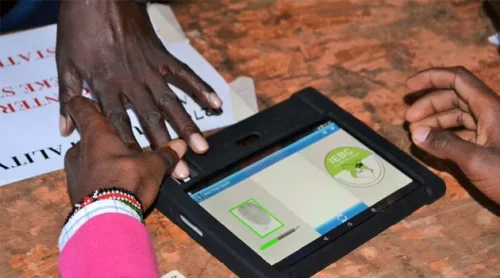
Lessons from past elections matter
IEBC is also attempting to strengthen electoral dispute management by reviewing lessons from previous elections.
The commission is set to launch the Pre-Election Disputes Resolution Report and Case Digest for the 2022 General Election, documenting disputes involving voter registration, party nominations, candidate clearance and other electoral processes.
The reports are expected to provide guidance on handling future disputes and improving election preparations.
However, recent events have continued to test the commission’s preparedness.
During the ongoing Ol Kalou parliamentary by-election campaigns, Kiharu MP Ndindi Nyoro has raised questions over IEBC’s response to claims of violence and irregularities.
“We are continuing to witness, especially in the by-election that is happening in Ol Kalou, that political actors have been given a leeway to do anything, as if they are above the law,” Nyoro said.
He argued that the by-election was an important measure of public confidence ahead of 2027.
“The real exam is next year. It is not just about releasing results. The electoral process must always be peaceful and within the confines of what is acceptable so that we continue building the confidence required as we head to next year,” he said.
The commission has also faced questions over pending bills amounting to Ksh3.77 billion and temporary disruptions affecting its online voter verification portal.
IEBC explained that the voter verification interruption resulted from routine ICT upgrades aimed at improving reliability and security.
2027 election will test IEBC reforms
Kenya’s election credibility will depend on whether IEBC can convince voters that the rules apply equally to everyone.
Campaign spending limits are an important step because they create a framework for transparency. But their success will depend on enforcement, disclosure and accountability.
A candidate spending Ksh4.4 billion is not necessarily a problem if the rules are clear and applied fairly. The danger comes when wealthy candidates can bypass regulations while smaller candidates struggle to compete.
For IEBC, the challenge is bigger than managing campaign budgets. The commission must also address concerns around election technology, voter registration, dispute resolution and internal accountability.
Public participation on campaign financing gives Kenyans a chance to shape the rules before they govern the 2027 General Election.
The credibility of the next election will not be determined only on voting day. It will depend on every decision made before then — from how campaigns are funded to how technology is managed and how disputes are resolved.
IEBC’s biggest task is therefore not just organising an election, but building confidence that every Kenyan vote will count under a transparent and trusted system.
Author
Kenneth Mwenda
Kenneth Mwenda is a business, sports, and politics digital writer with over seven years of experience in journalism, covering breaking news, feature stories, and in-depth analysis across a range of beats.
For inquiries, he can be reached at [email protected]
View all posts by Kenneth MwendaLatest News


Advertisement
More on Inside Politics