Advertisement
Lessons from 2022: How IEBC wants to prevent nomination disputes in 2027
Thursday 09th July, 2026 09:52 AM|
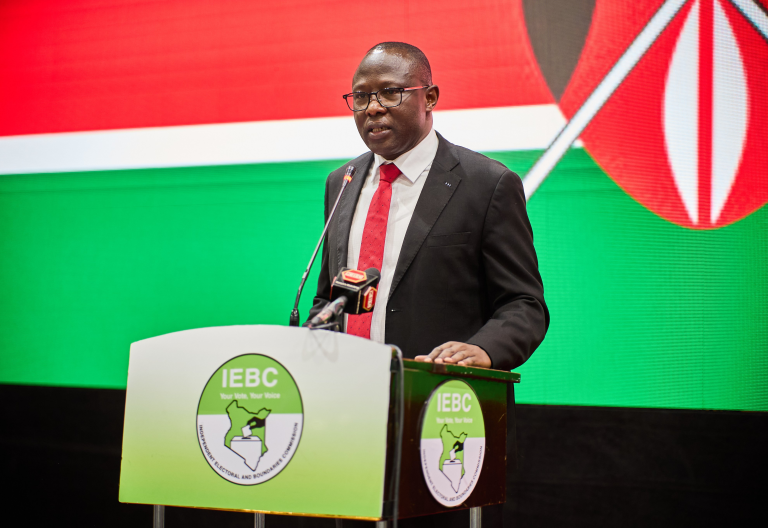
Kenya’s Independent Electoral and Boundaries Commission (IEBC) has studied the chaos of the 2022 nomination period and drawn clear plans to cut down disputes ahead of the 2027 general election.
In its Pre-Election Dispute Resolution (Pre-EDR) Report, the Commission reveals it handled 323 complaints in just ten days through its Dispute Resolution Committee (DRC). Many of these rows came from late filings, unclear rules on independent candidates, and problems with academic certificates and public officer resignations.
The DRC worked under tight rules. Section 74 of the Elections Act 2011 forced it to decide cases within ten days. Panels sat at Milimani Law Courts in Nairobi, often late into the night and at weekends. Despite the pressure, the Committee gave every complainant a hearing and produced written decisions that courts largely upheld.
What went wrong in 2022
Many disputes centred on independent candidates. Numbers rose sharply from 2017. Aspirants struggled to collect supporter signatures and ID copies because supporters demanded money or feared sharing personal data. Others missed deadlines or failed to bring proper resignation letters from public service jobs. Some Returning Officers stretched timelines in ways that looked unfair, such as the last-minute change for a governor’s running mate.
You Might Also Like

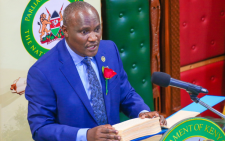
IEBC Chairperson Erastus Edung Ethekon wrote in the foreword:
“This report lays the foundation for future pre-election dispute resolution.” He praised staff and external counsel who worked hard so that no eligible citizen faced unreasonable barriers.
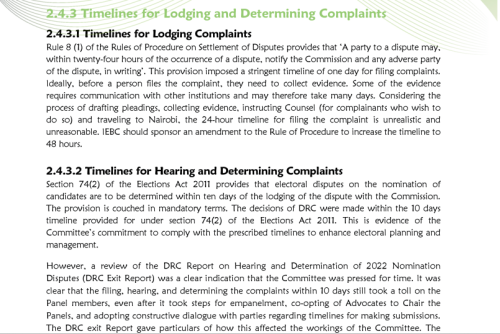
The report also notes problems with timelines. The rule that forced people to notify disputes within 24 hours proved unrealistic. Complainants needed time to gather evidence and travel to Nairobi. In several cases, parties served papers only a day before the deadline, leaving panels rushed.
Key changes IEBC proposes
For 2027, the Commission wants longer periods. It plans to ask Parliament to extend the filing window from 24 to 48 hours and the decision period from 10 to 14 working days. This extra time should improve decision quality and reduce late appeals that disrupt ballot printing and gazettement.
IEBC also suggests clearer rules on what “nomination” means. The term confuses people because political parties use it for their internal selections while IEBC uses it for final candidate registration. Sorting this will help litigants approach the right forum – DRC, Political Parties Disputes Tribunal, or courts.
On public officers, the Commission wants candidates to produce both a resignation letter and a certificate of service. It also calls for employers to confirm payroll removal within a few days when IEBC asks. For academic certificates, IEBC will rely on the Commission for University Education and KNEC instead of Returning Officers checking themselves.
Independent candidates will receive better guidance. IEBC plans more pre-nomination meetings and clearer information on supporter requirements. It may ease some burdens while still protecting the process.
The report pushes for digital tools. A legal case management system would send automatic notices, allow virtual hearings, and cut travel costs for people outside Nairobi. Panels could work more consistently across the country.
Focus on access to justice
DRC panels included experienced external advocates as chairpersons, which improved legal reasoning. The Commission avoided charging fees and did not order costs against losers. This approach helped ordinary Kenyans who represented themselves. However, IEBC now wants to discourage clearly frivolous cases without blocking genuine complaints.
Moses Sunkuli, then Acting Commission Secretary, stated in the executive summary that the reforms aim to make DRC “a more structured, accessible, and resilient quasi-judicial body”.
IEBC learned that early education, realistic timelines, and stronger inter-agency links reduce fights. Returning Officers will get extra training on fair use of discretion. The Commission will track court appeals more closely and update its guidelines quickly.
By fixing these gaps, IEBC hopes fewer nomination disputes will reach the DRC in 2027. That leaves more time and trust for the actual campaign and polling. Kenya’s voters deserve a smoother process that respects the political rights in Article 38 of the Constitution while keeping elections credible and on schedule.
Author
Kenneth Mwenda
Kenneth Mwenda is a business, sports, and politics digital writer with over seven years of experience in journalism, covering breaking news, feature stories, and in-depth analysis across a range of beats.
For inquiries, he can be reached at [email protected]
View all posts by Kenneth MwendaLatest News



Advertisement
More on Inside Politics