Advertisement
Wanjigi reveals how 2014 law change triggered Kenya’s debt crisis
Saturday 20th June, 2026 10:43 PM|
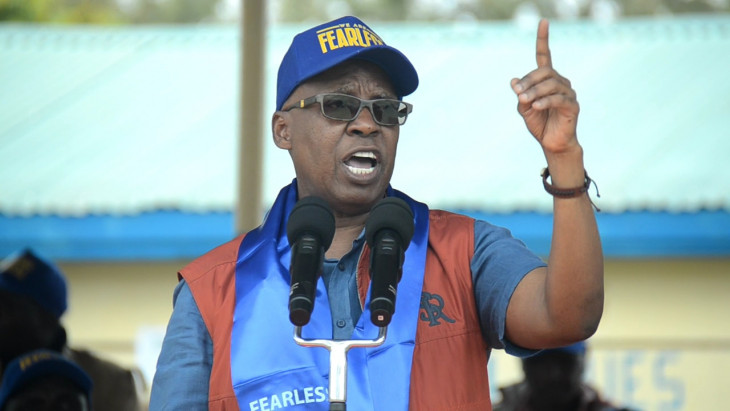
Safina Party leader Jimi Wanjigi has linked Kenya’s mounting debt burden to a 2014 amendment to the Public Finance Management (PFM) Act, arguing that the legal change weakened constitutional safeguards and opened the door to unchecked borrowing.
Speaking during an interview on a local TV station on Saturday, June 20, 2026, Wanjigi claimed that Kenya could save taxpayers up to Ksh2.8 trillion by cancelling debts he considers illegal, eliminating the need for further borrowing.
According to National Treasury figures, Kenya’s public debt has risen to about Ksh12.8 trillion, comprising Ksh7.07 trillion in domestic debt and Ksh5.76 trillion in external obligations. The country’s debt-to-GDP ratio currently stands at approximately 69.5 per cent.
Wanjigi argued that the country’s debt problem is not about debt ratios but the growing share of revenue spent on repayments. He claimed that nearly 91 per cent of tax revenue is used to service debt, leaving little room for development projects and essential public services.
You Might Also Like
“When most of your revenue is going towards debt, you end up borrowing again to fund government operations. That is not sustainable,” he said, adding that borrowing to finance recurrent expenditure is unlawful.
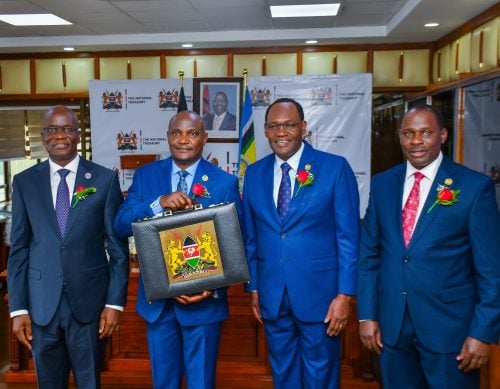
He traced what he termed the original sin of Kenya’s debt crisis to amendments made to the PFM Act in 2014. According to him, the changes exempted loan proceeds and related transactions from passing through the Consolidated Fund, the account established under Article 206 of the Constitution to receive public revenues.
Wanjigi argued that the amendment weakened oversight by Parliament, the Controller of Budget and the Auditor-General, creating loopholes that allowed large-scale borrowing with limited scrutiny. He linked the changes to Kenya’s first Eurobond issuance in June 2014.
Weak oversight
“The Auditor-General only audits consolidated funds. So they were avoiding the permission of the Controller of Budget and the audit of the Auditor-General, both anchored in law,” he said.
He further claimed that the changes concentrated significant borrowing powers within the National Treasury, allowing loans to be secured outside the constitutional framework designed to ensure transparency and accountability.
According to Wanjigi, some of the debt accumulated over the last decade may qualify as illegal or odious debt because it cannot be traced to constitutionally approved borrowing and expenditure processes.

“If it is not anchored in our laws, then it is not a debt that should be imposed on Kenyans,” he said.
The Safina boss called for a comprehensive audit of all public debt to establish how much was borrowed, where the funds went and what projects they financed.
He insisted that debts found to have been acquired illegally should be cancelled rather than repaid by taxpayers.
Wanjigi also criticised the government’s heavy reliance on domestic borrowing, which now accounts for about 55 per cent of Kenya’s total debt stock, warning that excessive government borrowing crowds out the private sector by reducing access to affordable credit for businesses and households.
The government plans to raise Ksh1 trillion from the domestic market to finance the 2026/27 budget, a move Wanjigi questioned, arguing that it could further constrain economic growth.
He also faulted Parliament for approving tax measures that have increased the cost of living while failing to deliver corresponding improvements in public services.
According to Wanjigi, Kenya’s financial challenges will continue unless the country addresses what he describes as unconstitutional borrowing and takes steps to identify and cancel questionable debts.
Author
Latest News






Advertisement
More on Inside Politics