Advertisement
Orengo: Raila did not create broad-based govt
Tuesday 10th March, 2026 12:28 AM|

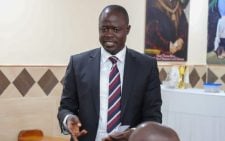
Siaya Governor James Orengo has sharply criticised the broad-based government, calling it a structure with no legal or substantive foundation and denying that it was ever genuinely created by the late Raila Odinga.
In an interview on March 9, 2026, Orengo said: “You know, the broad-based government is based on nothing. There’s no agreement. There’s nothing.”
He argued that Raila Odinga signed what resembled a Memorandum of Understanding (MoU) primarily to preserve unity within the Orange Democratic Movement (ODM) and prevent perceptions that party leaders were pursuing personal gains.
Orengo emphasised that a group of individuals independently negotiated positions in government, warning they would occupy those roles even without party backing.
You Might Also Like
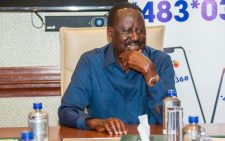

“These individuals actually negotiated positions for themselves,” he said. “It has no instrument. It has no legal foundation.”
“There’s no agreement. There’s nothing.Raila signed, like he signed the MOU, that there’s an arrangement in which ODM is participating in a broad-based government. This was a measure taken by Raila to make sure that unity in the party was maintained so that those who had negotiated for themselves to go into government would not be seen to be tearing the party apart.”
“But the truth of the matter has been told many times, and Raila himself talked about it, that these individuals actually negotiated positions for themselves.”
Contradictions in party and government roles
Orengo highlighted a key contradiction in the arrangement: ODM remains the official minority party in Parliament, holding oversight roles under the Constitution, standing orders, and law.
“It cannot be said that you are both in government and in the minority in Parliament, where you are carrying out oversight roles against the executive,” he said, describing the situation as “living the lie.”
As minority leader in both the National Assembly and Senate, ODM chairs critical committees like the Public Accounts Committee, which are constitutionally reserved for opposition members.
The governor’s critique echoes earlier claims from Saboti MP Caleb Amisi, who said Raila never genuinely wanted the broad-based deal and was pushed by allies after his failed African Union Commission bid in January 2025.

According to Amisi, arrangements were made to control where Raila appeared publicly, with efforts to fly him to Dubai before redirecting him to Mombasa for a pre-prepared signing ceremony.
Tensions persist ahead of March 7 anniversary
The MoU, signed on March 7, 2025, led to the 10-point agenda and the NADCO report, yet implementation challenges persist.
The Committee Overseeing Implementation of the Ten Point Agenda and NADCO Report (COIN-10), chaired by Agnes Zani, announced that its latest status report would be released on March 10, 2026, following stakeholder consultations.
ODM’s role in the pact has blurred the lines between government and opposition, prompting internal debates. While some ODM figures, including CSs John Mbadi and Gladys Wanga, support cooperation for development, Orengo and other sceptics warn that the party risks being absorbed by UDA.
Author
Latest News



Advertisement
More on Inside Politics
