Advertisement
Ol Kalou by-election security crisis: What Linda Mwananchi’s campaign shift reveals about 2027 polls
Saturday 11th July, 2026 09:32 PM|
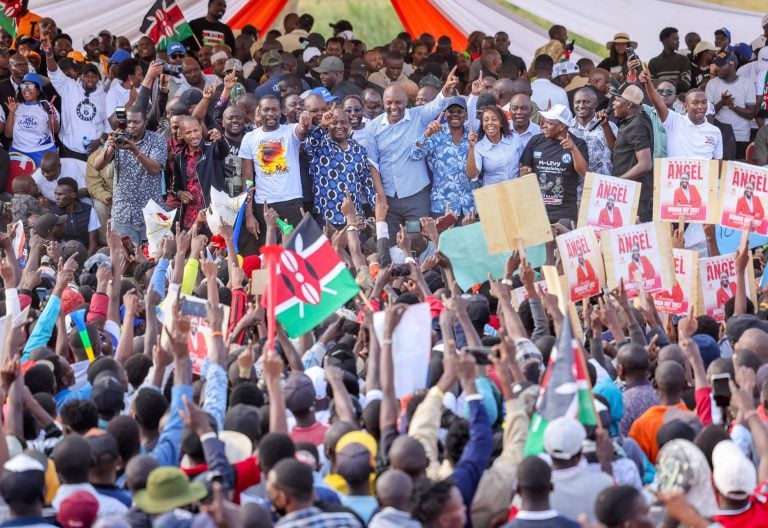
The security concerns surrounding the Ol Kalou parliamentary by-election have opened an early window into the challenges that could define Kenya’s 2027 General Election, with questions emerging over political violence, campaign safety, institutional preparedness and public confidence in the electoral process.
Linda Mwananchi’s decision to alter its campaign programme ahead of the July 16 by-election, citing alleged plans to target its team with violence, has transformed a local constituency contest into a wider national debate on whether Kenya is adequately prepared to manage political competition as the country moves closer to the next presidential race.
In a statement issued on Saturday, July 11, 2026, the movement said it had redirected its campaign activities to Nyahururu after receiving what it described as intelligence of possible attacks against its convoy during engagements in Ol Kalou.
Linda Mwananchi claim that organised groups had been mobilised to disrupt its campaign trail, claiming the objective was to create chaos that could affect the conduct of the by-election. The claims have not been independently verified, but they have added to growing concerns about the security environment surrounding political activities.

You Might Also Like



“Squads, goons have been mobilised from (other counties), and deployed to attack the Linda Mwananchi convoy along the trail during Ol Kalou tour,” the faction claimed.
The decision came shortly after the Independent Electoral and Boundaries Commission (IEBC) warned that continued violence, voter bribery, destruction of campaign materials and breaches of the electoral code of conduct could force it to postpone or cancel the Ol Kalou by-election if conditions were deemed unsuitable for voting.
For Kenya’s political landscape, the developments in Ol Kalou represent more than a constituency-level dispute. They offer an early test of the country’s ability to manage electoral tensions ahead of the 2027 General Election, a contest expected to be one of the most consequential political moments of President William Ruto’s presidency.
Ol Kalou as an early warning sign for 2027
Political contests held before a general election often provide clues about the state of national politics. They reveal how parties mobilise supporters, how security agencies respond to threats, and whether electoral institutions can maintain public trust during periods of heightened competition.

The events in Ol Kalou are unfolding against a backdrop of broader warnings that Kenya’s 2027 election could face significant vulnerabilities.
A new Electoral Vulnerability Index (EVI) 2026-2027 report by the Kofi Annan Foundation indicates that while Kenya has stronger democratic institutions compared with many countries in the region, it remains exposed to election-related tensions.
The report gives Kenya an Electoral Vulnerability Index score of 45.4 and projects an 84.1 per cent probability of some form of electoral violence during the 2027 polls.
The findings point to a fragile political environment where disputes over campaigns, security responses, public demonstrations and electoral credibility could become major flashpoints.
The risks facing Kenya’s next election may not be limited to areas historically associated with electoral conflict.
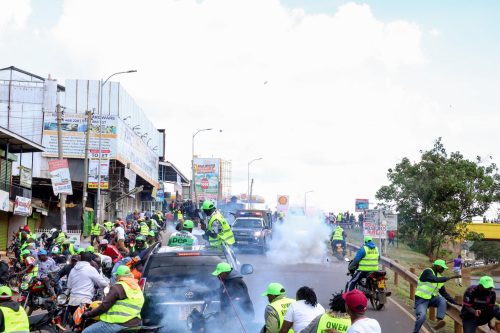
The EVI report warns that urban protests, youth activism and digital mobilisation are changing the nature of electoral risks, creating new pressure points beyond traditional political hotspots.
“Security planning should take account of both traditional hotspots and new forms of mobilisation. Urban protests, youth activism and digital campaigns may reshape risk geography,” the report notes.
This means future electoral tensions could emerge in cities and online spaces where economic frustrations, political grievances and public anger intersect.
Recent incidents involving disruptions at public gatherings, opposition events and religious spaces have intensified debate about the rise of organised groups capable of influencing civic environments.
From violence reported in Witima to the disruption witnessed at Nairobi’s All Saints Cathedral, concerns have grown over whether political competition is increasingly spilling into spaces beyond conventional campaign arenas.

Security agencies and the election credibility test
One of the biggest challenges ahead of 2027 will be how security agencies respond to political tensions.
The EVI report identifies police conduct and protest management as critical factors that could either calm or worsen electoral disputes.
“Heavy-handed policing during campaign rallies, demonstrations, or post-result protests could rapidly escalate tensions, particularly in urban areas and opposition strongholds,” the report warns.
The Ol Kalou situation therefore places attention on how authorities handle allegations of intimidation, protect political actors across the divide and ensure voters can participate without fear.
For IEBC, the challenge will be maintaining confidence that elections can proceed in a free, fair and secure environment. For political parties, the challenge will be ensuring mobilisation does not become a pathway to confrontation.

Election reforms
The concerns over electoral security are also emerging alongside renewed calls for constitutional reforms ahead of 2027.
Civil society group Kuna Dawa has proposed reforms that would temporarily remove executive authority from the sitting president during election periods, transferring power to the Chief Justice until a president-elect is sworn in.
Supporters of such proposals argue that reforms could reduce concerns over incumbency advantages and strengthen confidence in electoral transitions.
Critics, however, are likely to debate the practicality and constitutional implications of such changes.
The debate reflects a wider concern that election credibility depends not only on voting day procedures but also on the political environment surrounding the contest.
The Ol Kalou by-election will not determine the outcome of the 2027 General Election, but the issues emerging from the campaign provide an early measure of the challenges ahead.
Questions around political violence, campaign security, institutional independence and public trust are likely to remain central as parties begin positioning themselves for the next national contest.
How authorities manage the current tensions, how political actors conduct campaigns and how institutions respond to threats will shape perceptions of Kenya’s democratic resilience.
As the country moves toward 2027, Ol Kalou has become an important reminder that election stability is built long before voters enter polling stations.
Author
Latest News






Advertisement
More on Inside Politics