Advertisement
Gakuya slams Ruto over unfulfilled 10-point agenda
Wednesday 11th March, 2026 08:43 AM|

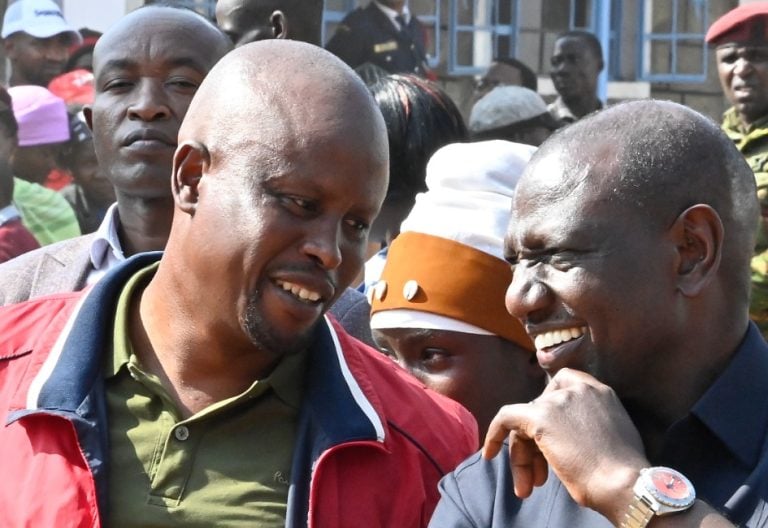
Embakasi North Member of Parliament (MP) James Gakuya has criticised President William Ruto, accusing his administration of failing to deliver on the 10-point reform agenda.
Speaking on Wednesday, March 11, 2026, on a local TV station, Gakuya highlighted what he described as a gap between promises and reality, calling out delays in compensation for victims of police brutality, the Hustler Fund, and broader economic reforms.
“As much as President Ruto wants to convince Kenyans that his government is working, the situation on the ground is different. The 10-point agenda has not been fulfilled, from the compensation of demonstration victims to the Hustler Fund and the poor state of the economy,” he said.
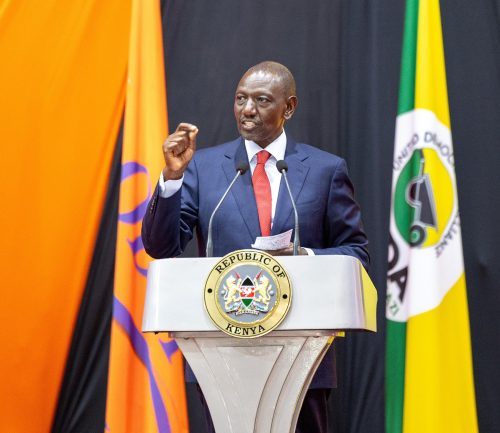
Gakuya’s remarks come amid ongoing coalition discussions between Ruto’s United Democratic Alliance (UDA) and the Orange Democratic Movement (ODM), following their March 7, 2025, pact intended to calm political tensions.
You Might Also Like
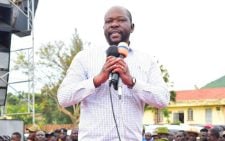
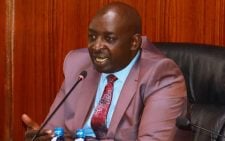

The MP suggested that political considerations may have influenced the rollout of the agenda.
“No matter the personnel, the government does not follow through on the fullness of the Constitution.If the government adhered strictly to constitutional requirements, then we would see real change. But it seems that the pressure to accommodate ODM interests has influenced the 10-point agenda. Those who can say it is fulfilled are not ourselves, but ODM, because they were the ones demanding it,” the legislator stated.
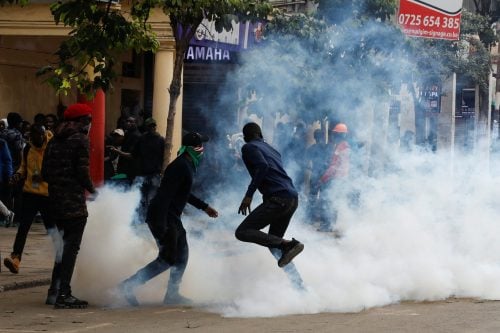
Moreover, Gakuya also emphasised the slow progress in compensating victims of police brutality.
“It is already a full year since the pledge, and I have not heard of a single person who has been properly compensated. So even though the government may claim progress, there is no tangible fulfilment on the ground.”
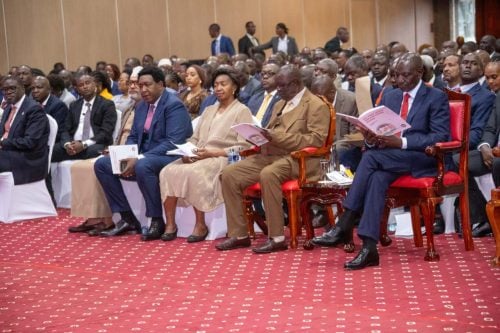
The compensation plan
The controversy arises as the Ruto administration implements a Ksh2 billion reparations plan for victims of demonstrations dating back to 2017.
President Ruto has confirmed that the funds have been earmarked and that a court-mandated panel has been established to oversee disbursement.
“It is our belief that, unless something else happens, we should be able to conclude this exercise by June,” the Head of State said.
Even so, civil society groups and opposition leaders, including Gakuya, have criticised delays and called for faster implementation.
PHOTO/@channelafrica1/X
A report chaired by Senator Agnes Zani recommended a multi-agency task force, including the National Treasury, Kenya National Commission on Human Rights (KNCHR), Law Society of Kenya (LSK), and the Office of the Attorney-General, to supervise compensation.
The report cited figures from the Independent Policing Oversight Authority (IPOA), noting that from 2023 to 2025, IPOA handled 820 cases of alleged police misconduct during public order events. Of these, 35 cases led to convictions involving 49 officers, while 30 officers were recommended for disciplinary action.
Despite these efforts, critics maintain that the government has yet to meet expectations on key agenda points, including the Hustler Fund initiatives, economic reforms, and systemic accountability.
“What the government says and what citizens experience are worlds apart,” Gakuya said.
Yet, more than a year later, the agenda’s impact remains limited, prompting calls for accelerated action.
Author
Latest News


Advertisement
More on Inside Politics