Advertisement
March 7 aftermath: Who really won in the Ruto–Raila broad-based govt pact?
Wednesday 11th March, 2026 06:50 AM|

One year after the landmark political pact between President William Ruto and the late Raila Odinga, Kenya’s broad-based government experiment has become one of the most debated political arrangements in recent history.
Signed on March 7, 2025, the agreement between the ruling United Democratic Alliance (UDA) and the opposition Orange Democratic Movement (ODM) was meant to calm political tensions following youth-led protests and deep economic frustrations.
But in the aftermath of the March 7 anniversary in 2026, a key question dominates Kenya’s political discourse: who really benefited from the pact?
The 10-point Memorandum of Understanding (MoU) emerged at a moment of vulnerability for President Ruto’s administration. In 2024, anti-tax protests led largely by young Kenyans shook the government and forced a political rethink.
You Might Also Like
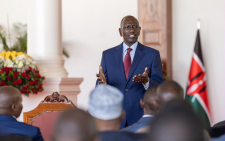
The deal with Odinga was presented as a national reset. It promised reforms drawn largely from the recommendations of the National Dialogue Committee (NADCO), which had been formed to address grievances arising from the disputed 2022 election.
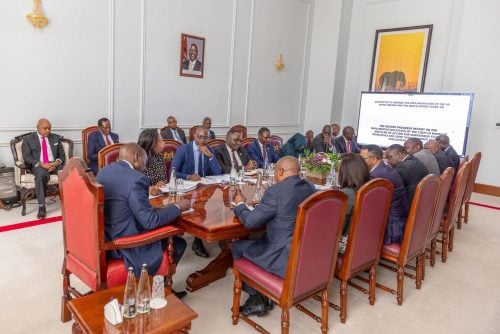
Key commitments included strengthening devolution, protecting the right to peaceful protest, expanding economic opportunities for youth, tackling corruption and reducing national debt. The agreement also pledged compensation for victims of past political protests.
However, the process remains unclear, raising questions about how the money will be distributed and who qualifies as a beneficiary.
“It is our belief that unless something else happens, we should be able to conclude this exercise by June.”
“While life cannot be compensated, we can provide support to victims’ families. We have already identified victims from as far back as the 2017 demonstrations, allocated resources including Ksh2 billion for compensation, and established a court-mandated panel to expedite the process,” the President said.
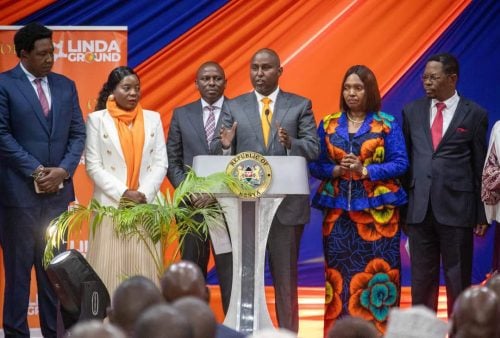
While the government says a court-mandated panel is verifying victims, critics argue that the initiative illustrates the broader problem with the pact: ambitious promises but slow implementation.
ODM’s internal split
The March 7 anniversary has exposed deep divisions within ODM itself.
Interim party leader Oburu Oginga and ODM chairperson Gladys Wanga maintain that the agreement was never meant to expire after a year. Instead, they describe it as a continuing political partnership aimed at stabilising the country.
But another faction led by Nairobi Senator Edwin Sifuna insists the MoU effectively ends on March 7 because it contains no extension clause. Allies such as Siaya Governor James Orengo argue that remaining in the pact without Odinga’s endorsement would undermine the opposition’s role.

“Anybody who wants to extend this MoU must have Baba’s signature. No ODM official has the power to alter or prolong the agreement,” Sifuna said.
For critics within ODM, extending the deal without the late opposition leader risks eroding his legacy and weakening the party’s independence.
“A narrative is now being pushed by pro-regime voices within ODM claiming that the agreement had no timeline and that March 7, 2026, merely marks the first anniversary of a symbolic signing ceremony at KICC. This interpretation is inaccurate and misleading,” ODM co-deputy party leader Godfrey Osotsi in a statement.
Political winners and losers
Despite the internal dispute, analysts say ODM appears to have gained the most politically from the broad-based arrangement.
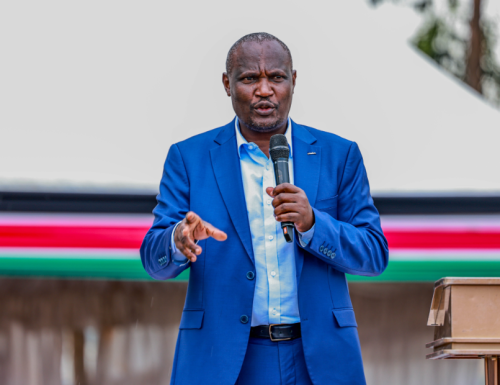
Several of Odinga’s allies secured influential government positions after the agreement. Among them are John Mbadi, who now serves as cabinet secretary for the National Treasury, and Hassan Joho, appointed cabinet secretary for mining, blue economy and maritime affairs.
The pact also softened relations between ODM and UDA lawmakers in Parliament, allowing the government to pass key legislation with reduced resistance.
However, the arrangement has also created tension within Ruto’s political camp. Some loyalists who expected appointments after the 2022 election lost out to ODM figures once the coalition arrangement took shape.
That quiet resentment reflects a deeper political trade-off: Ruto gained stability, but at the cost of sharing power with his former rival.
Implementation challenges
Oversight of the MoU’s implementation has been uneven. A monitoring committee formed in August 2025 was given six months to track progress on reforms, but momentum slowed significantly after Odinga’s death in October 2025.
Recent meetings reviewing the pact have also exposed disagreements. UDA chairperson Cecily Mbarire questioned the lack of clear recommendations on the two-thirds gender rule, while Mathare MP Anthony Oluoch demanded revisions to the committee’s report.
Meanwhile, ODM co-deputy party leader Godfrey Osotsi has warned that claims the agreement had no timeline risk rewrite the political intent behind the pact.
President Ruto has defended the arrangement, arguing that the commitments were made to the Kenyan people rather than political factions. In his response with Oburu, he said many of the agenda items had been implemented.
“There are some people who want to appoint themselves supervisors as if we made the commitment to them. We did not make the commitment to them. We made the commitment to the people of Kenya, and our responsibility and reporting is to the people of Kenya,” Ruto said.
Yet the broad-based government continues to reshape Kenya’s political landscape. By bringing parts of the opposition into government, the pact weakened traditional political divides while simultaneously fracturing the opposition itself.
In the short term, the deal arguably stabilised Ruto’s administration during a volatile period.
In the longer term, however, it has blurred the line between government and opposition, a development that may redefine the country’s politics heading into the 2027 elections.
Author
Latest News

Advertisement
More on Inside Politics