Advertisement
Fuel protests: Nelson Havi calls out MPs over inaction on VAT zero-rating push
Monday 18th May, 2026 03:57 PM|

Former Law Society of Kenya (LSK) President Nelson Havi has criticised Parliament’s handling of rising fuel prices, accusing Members of Parliament (MPs) of failing to act decisively against what he described as excessive executive influence on taxation policy.
These remarks come at a time of heightened public anger over fuel costs and renewed political pressure to ease the tax burden on petroleum products.
In a Facebook post published on Monday, May 18, 2026, Havi argued that Parliament has abdicated its constitutional responsibility to protect citizens from economic hardship driven by high fuel prices and taxation, adding that legislative inaction has worsened the cost-of-living crisis affecting millions of Kenyans across transport, trade, and household sectors.
“In a functional constitutional democracy, Parliament would have intervened in the excesses of the Executive on the high fuel prices. However, Parliament is captured by the Executive. Few well meaning Parliamentarians can only complain like the rest of us. Sad!” Havi wrote.
You Might Also Like
His criticism also comes amid growing pressure on Parliament following a formal appeal by Kiharu Member of Parliament Ndindi Nyoro, who has urged the Speaker of the National Assembly to recall the House from recess to urgently deliberate on proposed tax amendments aimed at reducing fuel prices.

Nyoro requested on Saturday, May 15, 2026, shortly after the Energy and Petroleum Regulatory Authority (EPRA) announced a sharp rise in pump prices.
Nyoro said the recall would allow MPs to consider urgent reforms, including reducing Value Added Tax (VAT) on fuel from 8 per cent to zero, lowering the Road Maintenance Levy, and introducing targeted relief measures to cushion consumers from escalating transport costs.
“Following our proposal to amend various laws with the aim of reducing fuel prices, we have written to the Speaker of the National Assembly with a request to recall the House from recess at the earliest, preferably Monday, to process the various proposed amendments,” he stated on his X account.
He argued that the proposals would provide immediate relief to households and businesses struggling under rising inflation.
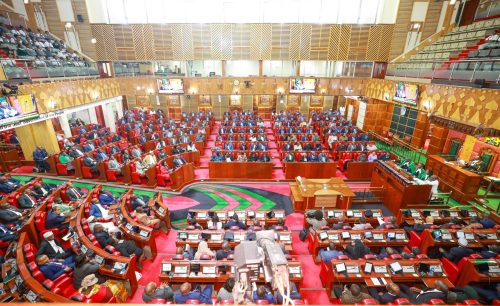
Nyoro writes to Wetang’ula
Fuel prices have surged significantly following EPRA’s latest monthly review, with Super Petrol increasing by Ksh16.65 per litre and Diesel rising by Ksh46.29 per litre, while Kerosene remained unchanged. In Nairobi, Super Petrol now retails at Ksh214.25 per litre, Diesel at Ksh242.92, and Kerosene at Ksh152.78, triggering immediate fare adjustments by public service vehicles and logistics operators.
EPRA attributed the increase to higher global crude oil prices, exchange rate pressures, and statutory taxation under the existing VAT framework. The regulator also confirmed that the government would deploy approximately Ksh5 billion from the Petroleum Development Levy Fund to cushion consumers of diesel and kerosene.
The price hike has intensified political and public pressure, with Vihiga Senator Godfrey Osotsi also joining calls for urgent intervention. Speaking at a burial ceremony in Busali on Saturday, May 16, 2026, Osotsi said Parliament must act decisively to protect citizens from punitive fuel taxation, including pushing for VAT on fuel to be reduced to zero.

“In the Senate, we are going there to push for VAT to be reduced further to zero per cent, so that it becomes zero-rated,” Osotsi said.
“We also want the road maintenance levy to be reduced. We should not place an even heavier burden on our people. Taxes have already gone up, the cost of everything has increased, and now we are again increasing fuel prices for them.”
Transport operators have also escalated pressure on the government, warning of a nationwide strike beginning Monday, May 18, 2026, in protest against the latest fuel price adjustments. Under the Transport Alliance, boda boda riders, matatu operators, long-distance transporters, and logistics companies accused the government and EPRA of imposing unjustified increases that have worsened operating conditions and threatened livelihoods.
The operators warned that continued increases in pump prices would lead to higher transport fares, increased cost of goods, and further strain on households already facing high inflation and taxation pressures.
Author
Latest News





Advertisement
More on Inside Politics