Advertisement
PS Kiptoo: Nearly half of Kenya’s ordinary revenue goes to debt repayment
Monday 22nd December, 2025 09:52 AM|

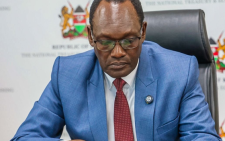
Treasury Principal Secretary Chris Kiptoo has revealed that Kenya is spending nearly half of its ordinary revenue on debt servicing, describing the country’s debt vulnerability as a matter that urgently needs to be addressed.
Speaking during an interview on a local TV station on Sunday, December 21, 2025, PS Kiptoo disclosed that 48.5% of revenue collected by the Kenya Revenue Authority (KRA) goes towards servicing debt and other consolidated fund services.
“Debt is actually a big problem. It is 48.5% of what you receive as ordinary revenue from KRA is actually what is used to service debt, what we call CFS, consolidated fund services, including interest payments, together with pension and all that. We are almost taking 50% of what we get to service debt,” Kiptoo stated.
Public debt figures
The PS revealed that Kenya’s public debt currently stands at Ksh11.5 trillion, representing 64% of the country’s Gross Domestic Product (GDP).
You Might Also Like


According to Kiptoo, the current budget allocates Ksh1.1 trillion for servicing interest payments on the national debt.
“So, debt vulnerability is a matter we need to address,” he emphasised.
Kiptoo further acknowledged that government spending pressures are high while revenues remain low, citing population growth and expanding public services as key drivers of expenditure.
The PS noted that Kenya’s population has grown from 54 million three years ago to 57 million currently, with education alone consuming a significant portion of the budget.
“If I were to tell you in terms of a budget, a budget for education is about… We’re talking about 767 billion out of a budget of about 2 trillion. That is… Education is taking 27% of it. And the children are increasing. Every year, we have about a million coming to school,” he explained.
Tax base expansion strategy
Rather than increasing tax rates, PS Kiptoo said the government’s medium-term revenue strategy focuses on broadening the tax base to ease the burden on salaried workers.
He revealed a stark disparity in tax contributions, noting that 3.2 million employed Kenyans paid Ksh600 billion in Pay As You Earn (PAYE) tax, while 17 million others in the working-age population contributed only Ksh18 billion in personal income tax.
“We have 3.2 million Kenyans who are employed currently. Those ones paid 600 billion in terms of PAYE. And then, you know, we have a working-age population of about 20 million. So, 20 million minus 3.2 is about 17 million. We have these 17 million Kenyans who paid personal income tax of only 18 billion,” Kiptoo said.
The PS emphasised that there is significant scope to bring more taxpayers into the system to lighten the burden on salaried employees.
“It tells you there is a very big scope to be able to reach out to these others, to be able to also bring them on board, so that it becomes lighter. Because right now, only the salaried people are bearing the burden when it comes to taxes. There are too many people out there who need to also contribute to the fair share of taxation in Kenya,” he stated.

Future tax reforms
Kiptoo outlined plans to reduce VAT in the medium term and lower corporate tax rates from 30% to around 25%, contingent on the successful expansion of the tax base.
“Our idea is not to focus more on… If you look at our medium-term revenue strategy, we intend actually to ease the burden of Kenyans by ensuring that we don’t increase tax rates. On the contrary, VAT comes down in the medium-term. Also, the company… What we charge to the company is from 30% to lower, maybe around 25%. But this is on the basis that we are successful in broadening the tax base,” he explained.
Author
Cy Muganda
View all posts by Cy MugandaLatest News




Advertisement
More on Business