Advertisement
Inside the Kaptagat Forest conservation approach that impressed Kindiki
Sunday 12th July, 2026 10:55 PM|
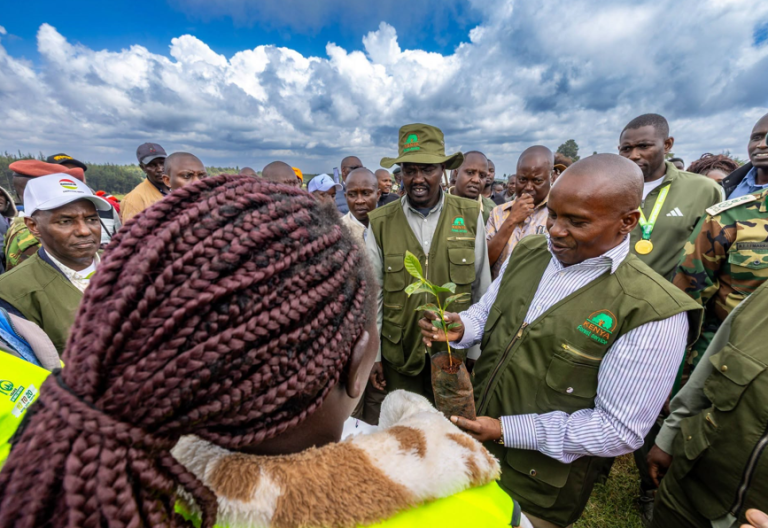
Ten years ago, those leading the restoration of Kaptagat Forest began with a question that challenged conventional conservation thinking. Why were people going into the forest, and what was driving its degradation?
Rather than blaming communities living around the forest, the architects of what is now the Kaptagat Integrated Conservation Programme (KICP) set out to understand the daily realities that shaped their relationship with one of Kenya’s most important water towers. The answers revealed that the pressures on the forest were rooted not in disregard for nature, but in the everyday needs of households.
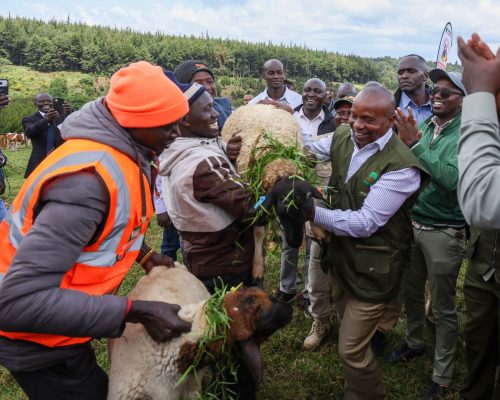
Families relied on the forest for firewood because clean cooking energy was limited. Livestock grazed beneath the forest canopy because shrinking farms could no longer produce enough fodder, while dairy farming remained a primary source of income. At the same time, declining rivers, expanding agriculture and growing demand for irrigation meant communities were competing for fewer water sources. Those findings shaped an approach that would later draw praise from Deputy President Prof. Kithure Kindiki, who described the programme as an example of conservation that improves lives while protecting the environment.
Speaking during the programme’s 10th anniversary celebrations, held in Kaptarkok Primary and Junior School, Kindiki said the initiative demonstrated why communities should remain central to environmental conservation.
You Might Also Like


“It is very important to involve the local community in the conservation of the environment,” he said. “I have seen that the programme gives farmers grade cows so they can get more milk. I have seen others getting cooking gas and many livelihoods that will help them put money in their pockets, Pesa Mfukoni.”
The programme’s Patron and Principal Secretary to the National Treasury, Dr Chris Kiptoo, said the approach was born from listening rather than prescribing solutions.
“This is an economy powered by the forest,” he said. “Today, I am proud of what those ten years have given birth to: Mazingira Safi, Maji Safi Nyumbani, Kawi Safi and Pesa Mfukoni. These are not just programmes; they are community-driven solutions born from listening to the very needs that once pushed people into the forest.”
Rather than treating conservation and development as separate goals, the Kaptagat Integrated Conservation Programme was built on a simple principle: when people’s lives improve, the forest has the opportunity to recover. Its four thematic pillars are connected through a model of circularity, where every intervention strengthens another, creating a self-reinforcing system that benefits people, nature and the economy.
Pesa Mfukoni (Money in the Pocket) creates the economic foundation by supporting viable enterprises that increase household incomes. Farmers receive high-value crop seedlings such as coffee, tea, avocado and macadamia, while improved agribusiness support and market linkages enable them to earn more from dairy and other agricultural produce.
That prosperity supports Mazingira Safi (Healthy Environment), which focuses on restoring Kaptagat Forest, protecting water catchments and strengthening the ecosystem on which surrounding communities depend.
Healthy forests, in turn, secure water sources, making Maji Safi Nyumbani (Clean Water at Home) possible. Protected catchments allow clean water to be reticulated to households while also supporting irrigation infrastructure that improves agricultural productivity and reduces competition for scarce water resources.
The cycle is completed through Kawi Safi Nyumbani (Clean Energy at Home). Households replace low-yielding livestock with high-yielding dairy cows managed under zero-grazing systems, reducing pressure on forest grazing. The cows produce more milk, increasing household incomes, while their dung is converted into biogas for clean cooking, reducing dependence on firewood.
The nutrient-rich slurry generated from the biogas system is returned to farms as organic manure, improving fodder production and crop yields. That circularity, where dairy supports clean energy, clean energy supports healthier forests, healthier forests secure water, and improved livelihoods reinforce conservation, is what defines the Kaptagat approach.
Over the past decade, that philosophy has expanded beyond forest restoration. Kaptagat has become a destination where conservation also supports economic opportunity through high-altitude sports, agritourism and cultural heritage.
The Kaptagat Cycling Challenge and Kaptagat Forest Marathon bring athletes into a race environment set entirely within a forest ecosystem, enhancing the sports economy through prize money while contributing to forest conservation. Sergon- The Cow Hotel demonstrates how professional dairy management, biogas and zero-grazing can increase farmer incomes while reducing pressure on the forest. Meanwhile, the Keiyo History, Culture and Heritage Centre, currently under development, aims to create jobs through cultural tourism while preserving indigenous knowledge.
Author
Francis Muli
Francis Muli is an editor and passionate digital journalist with extensive experience in crafting compelling stories across various platforms. His major focus is in business, politics and current affairs. He has a keen eye for detail and a commitment to uncovering the truth. He has contributed to leading publications across the country. When not chasing stories, you can find Muli exploring new technologies, attending local events, or reading fiction. Connect with Francis Muli on X @FMuliKE and Facebook (Francis Muli) to follow his latest stories and insights.
View all posts by Francis MuliLatest News






Advertisement
More on News