Advertisement
KNBS: How Kenya’s kitchen basket is quietly becoming more expensive
Wednesday 01st July, 2026 12:34 AM|
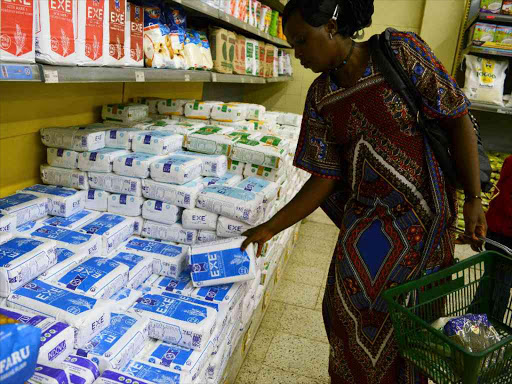
For many Kenyan households, inflation is no longer just a figure announced in economic reports. It is reflected in the shrinking shopping basket, smaller portions on dinner plates and difficult choices made every day at markets and shops.
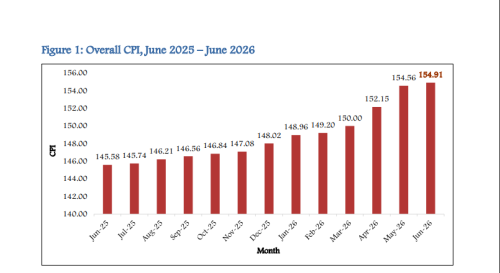
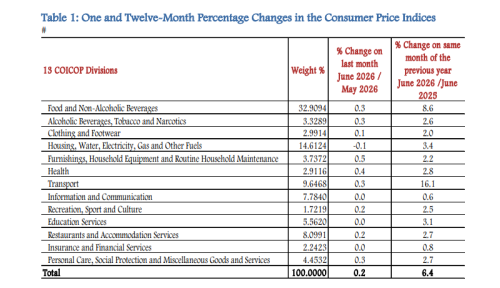
The latest Consumer Price Index (CPI) and Inflation Report by the Kenya National Bureau of Statistics (KNBS) show that the cost of living remained under pressure in June 2026, with annual inflation reaching 6.4 per cent.
“The increase was mainly driven by rising prices in Food and Non-Alcoholic Beverages, Transport, and Housing, Water, Electricity, Gas and other fuels,” KNBS says
The numbers tell a story beyond percentages: Kenya’s everyday kitchen basket is quietly becoming more expensive. A family that once comfortably bought vegetables, cooking oil, flour and milk with a fixed amount of money is now finding that the same cash buys fewer essentials.
You Might Also Like



KNBS defines the Consumer Price Index as a measure of changes in the retail prices consumers pay for a fixed basket of goods and services. The inflation rate reflects the percentage change in this basket over time.
The food basket has become one of the biggest pressure points for households. The report shows that Food and Non-Alcoholic Beverages recorded annual inflation of 8.6 per cent by June 2026.
Among the most visible increases is the price of vegetables that form the foundation of many Kenyan meals.
“Kale, popularly known as sukuma wiki, recorded one of the sharpest increases. The price rose to Ksh114.44 per kilogramme, representing a 26.6 per cent increase compared with June 2025,” the report reveals.
Cabbages also became significantly more expensive, increasing by 25.3 per cent over the year.
For many households, these are not luxury items. They are daily food choices, meaning price movements directly affect how families budget for meals.
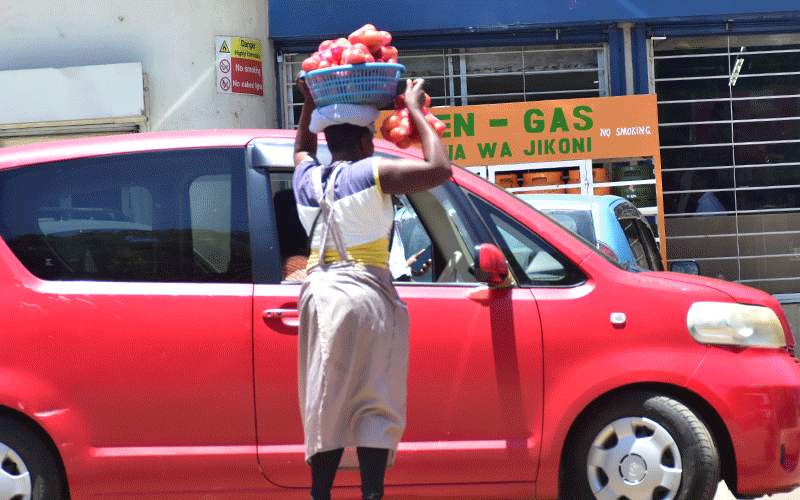
Tomatoes, another common kitchen ingredient, showed a mixed trend. Although prices fell slightly between May and June 2026, KNBS reported that tomatoes were still 40.5 per cent higher than the same period a year earlier.
Cooking oil, another essential household commodity, also remained elevated. KNBS reported that the price of salad cooking oil increased from Ksh355.79 to Ksh358.63 per litre between May and June 2026.
The impact of inflation is not limited to food. Transport costs continue to weigh heavily on household budgets and business operations. KNBS reported that transport recorded the highest annual increase among major categories at 16.1 per cent.
The report notes that diesel prices remained a key factor, although there was a monthly decline. Diesel prices in Nairobi fell from Ksh232.86 to Ksh222.86 per litre between May and June 2026. Despite the short-term decline, transport costs remained significantly higher compared with the previous year.
The pressure on households comes from multiple directions. While some commodities recorded declines, the overall cost environment remains challenging because food, transport and household expenses account for a large share of family spending.
KNBS noted that food and non-alcoholic beverages, transport, and housing-related costs together account for more than 57 per cent of the total weight across the 13 major expenditure categories measured in the CPI.
The June 2026 inflation picture therefore reflects more than an economic statistic. It captures the daily reality of families adjusting their spending, traders managing higher costs, and consumers searching for ways to stretch every shilling.
For millions of Kenyans, the real measure of inflation is not found only in official tables; it is seen in the market basket, where every additional coin spent on food and transport changes how households live.
Author
Latest News








Advertisement
More on Business