Advertisement
IEA warns Middle East conflict raises oil supply risks despite stable global markets
Thursday 23rd July, 2026 06:16 AM|

The International Energy Agency (IEA) has warned that escalating conflict in the Middle East is increasing risks to global oil supplies, even as strong production, emergency stock releases and weaker demand from China continue to keep international energy markets relatively stable.
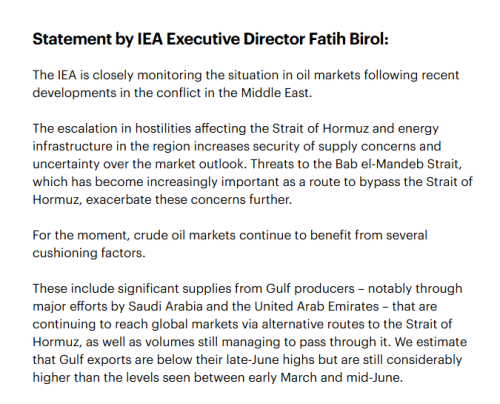
In a statement on Wednesday, July 22, 2026, IEA Executive Director Fatih Birol said the agency is closely monitoring the situation in oil markets following the latest developments affecting the Strait of Hormuz and other critical energy infrastructure in the region.
“The escalation in hostilities affecting the Strait of Hormuz and energy infrastructure in the region increases security of supply concerns and uncertainty over the market outlook,” Birol said.
The warning comes as the Strait of Hormuz, through which roughly one-fifth of the world’s traded oil passes, remains one of the most strategically important shipping routes for global energy markets. The IEA also expressed concern over growing threats to the Bab el-Mandeb Strait, an increasingly important alternative route used by oil tankers seeking to bypass Hormuz.
You Might Also Like



Although the security outlook has deteriorated, the agency said several factors are preventing a major disruption to global oil prices and crude supplies.
Strategic reserves help stabilise oil markets
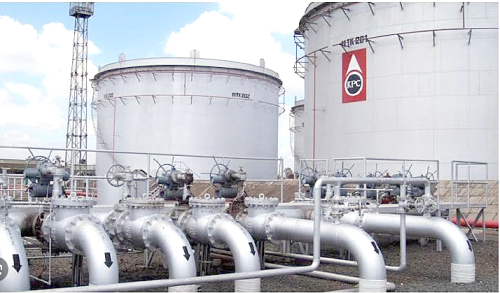
According to the IEA, Gulf producers, particularly Saudi Arabia and the United Arab Emirates, have continued delivering significant volumes of crude oil to international markets through alternative export routes, while shipments are still moving through the Strait of Hormuz.
“We estimate that Gulf exports are below their late-June highs but are still considerably higher than the levels seen between early March and mid-June,” Birol said.
The agency added that higher oil exports from the United States, Brazil, Venezuela and Kazakhstan have offset part of the supply losses from the Gulf, helping maintain balance in global crude markets.
Demand has also played a stabilising role. The IEA said China’s crude oil imports have declined by nearly 50 per cent compared with pre-war levels, easing pressure on international oil supplies during the conflict.
Emergency oil stock releases by IEA member countries have provided another major buffer against supply shocks.
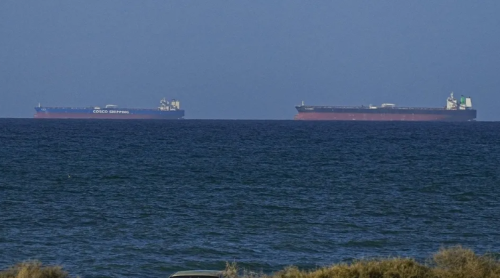
Since announcing a coordinated response on March 11 to make 400 million barrels available to the market, member countries have already released around 290 million barrels. The agency noted that more supplies continue to flow into global markets, while IEA members still hold more than one billion barrels of government-controlled emergency oil reserves.
These combined measures have helped prevent a severe oil market disruption despite growing geopolitical tensions.
Diesel, gasoline and LNG markets remain under pressure
While crude oil supplies have remained relatively resilient, the IEA warned that refined fuel markets tell a different story.
“There is no room for complacency on oil security amid the escalation in hostilities and a continued drawdown of available commercial inventories,” Birol said.
According to the agency, refinery activity has not recovered as quickly as crude oil deliveries, leaving supplies of refined petroleum products, including diesel and gasoline, considerably tighter than crude markets. That imbalance could place upward pressure on fuel prices if disruptions continue or worsen.
Natural gas markets are also facing continued challenges. The IEA said increased liquefied natural gas (LNG) exports from the United States and Canada have replaced around 70 per cent of the gas supplies lost through disruptions affecting the Strait of Hormuz. However, the agency warned that any prolonged delay in restoring Gulf LNG exports could keep global gas markets tight for longer.
“This will be felt by all LNG importers, including Europe as it looks to refill its gas storage for next winter,” Birol said.
For households and businesses, prolonged disruption to energy exports from the Middle East could eventually lead to higher fuel costs, increased shipping expenses and renewed inflationary pressures if supplies of crude oil or refined fuels tighten further.
The IEA stressed that resolving the conflict remains the most effective way to safeguard global energy security.
“The IEA continues to maintain that a resolution to the ongoing conflict that includes a full and unconditional reopening of the Strait of Hormuz will be essential to avoid a further deterioration in global energy security,” Birol said.
The agency’s latest assessment suggests that while diversified oil production, strategic petroleum reserves and weaker demand have so far shielded global energy markets from a major shock, the outlook remains highly dependent on developments in the Middle East.
A sustained reopening of the Strait of Hormuz, it said, will be crucial to maintaining stable oil prices, protecting global energy security and preventing wider economic fallout.
Author
Latest News





Advertisement
More on Business