Advertisement
How irrigation is changing the once deserted land in Galana Kulalu
Tuesday 02nd December, 2025 02:17 AM|
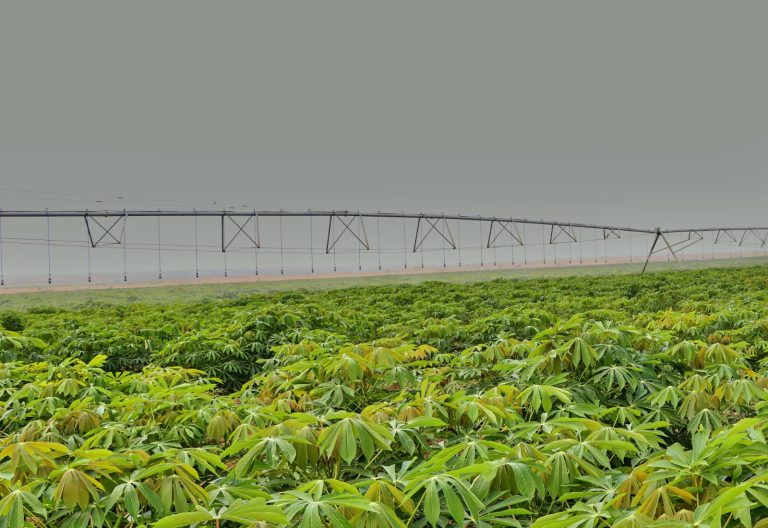
The Galana Kulalu Irrigation Project, located along the Galana River at the edge of Tsavo National Park, between Kilifi and Tana River Counties, is rapidly reshaping one of the harshest and previously unproductive landscapes.
Once marked by vast stretches of dry bushland, the 1.8 million acres of land is now emerging as a major food security hub powered by sustainable water management, science, and engineering.
The government announced plans to gazette Galana Kulalu as a Special Economic Zone (SEZ), to establish a One-Stop Land Commercialisation Office, and to accelerate private-sector participation in unlocking idle public land across the country.
Speaking on Friday, November 28, 2025, Agriculture Cabinet Secretary (CS) Mutahi Kagwe said the move to designate Galana Kulalu as an SEZ will offer strong investment incentives, attract global agribusiness players, and fast-track value addition in edible oils, cereals, horticulture, livestock and industrial crops.
You Might Also Like



He revealed that the SEZ status will also enable tax benefits, simplified regulatory approvals, and enhanced infrastructure support for investors working within the expansive block.

Nyumba Agri
In the heart of the once wilderness, Nyumba Agri is currently leasing 300,000 acres within the Galana Kulalu project. In November 2022, the firm began the ambitious plan to turn the barren Galana Kulalu ranches into a reliable food-production zone capable of feeding millions of Kenyans.
What followed was one of the most comprehensive agricultural engineering missions ever undertaken in the country.
By early 2023, feasibility studies began. Teams of experts mapped the terrain, conducted ecological assessments, and identified wildlife corridors, including ancient elephant paths, to ensure the project coexisted harmoniously with the surrounding Tsavo ecosystem.
A detailed study of the Galana River followed, forming the backbone of the irrigation design. In March 2023, more than 100 machines rolled into the region, kicking off massive land preparation and engineering works.
A system built on gravity and sustainability
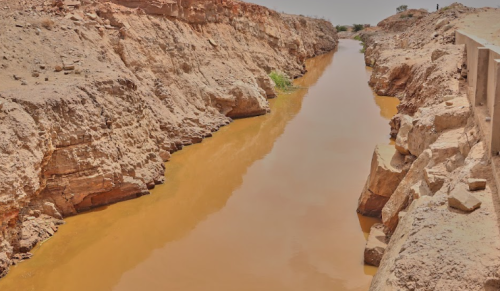
Only 1% of the Galana River’s water is needed to irrigate the planned acreage. As a result, a large spillway was constructed to channel the remaining 99% back into the river, maintaining ecological balance and safeguarding downstream users.
Additionally, a 278-metre weir was built along the river, and an 18-kilometre trapezoidal canal was excavated. Because the land is uneven, sections were dug deeper to allow water to flow by gravity alone, eliminating the need for expensive pumping infrastructure.
Speaking on November 30, 2025, Nyumba Agri Engineer Phillip Manwa revealed that to guarantee a steady water supply, 13 reservoirs with a combined storage of 3.6 million cubic metres were completed.
“Our crop water demand is just about 1% of the capacity of the Galana River, but at the moment we are using just about 0.36%. We also have a water and soil conservation plan that involves harvesting surface runoff during rain events. After assessing the hydrological basin, we found adequate water. Our methods ensure that downstream users also get sufficient, uncontaminated water,” Manwa stated.

Data-driven design in an untamed landscape
The project formally commenced on January 1, 2023, with extensive data collection: topographic surveys, soil sampling, hydrological assessments, and ecological studies, essential because no prior mapping had ever been done in the area.
“We walked into a place with absolutely no data. All the studies, including topological, ecological, soil survey, hydrographic, and environmental, were done from scratch. This informed the design philosophy: a gravity-fed system supplemented by solar energy due to limited access to electricity,” Manwa said.
By mid-2025, after nearly six months of infrastructure setup, irrigation testing began.
Turning bushland into farmland
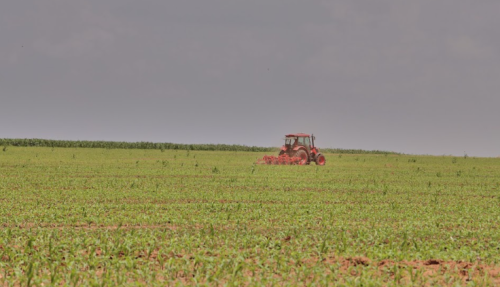
Thousands of acres of dense bush were cleared to pave the way for cultivation. In December 2024, the project introduced 100 cows to produce organic manure, enriching the soil.
Similarly, a 1MW solar power plant, complete with battery storage, was installed to sustainably power irrigation systems.
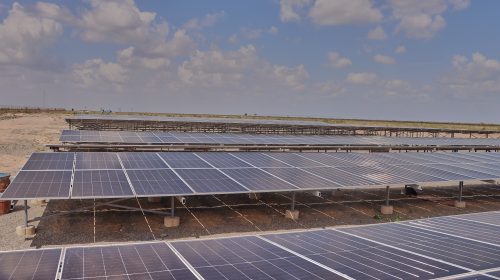
By January 2025, the first centre-pivot system was installed. Cover crops such as cowpeas were planted in February, and by May 2025, the first harvest was realised.
Furthermore, by November 2025, 18 pivots irrigate 2,500 acres, producing maize, green gram, cassava, paprika, lucerne, and stevia. Cover crops include pearl millet, cowpeas, sorghum, and lablab.
The cost of the project
According to Nyumba Foundation Director Kirtan Hasmukh Kanji, more than Ksh6.4 billion has been injected into the project since it began.
Speaking on Friday, November 28, 2025, during the Intergovernmental Agriculture Forum in Naivasha, Kanji said the project has been running on a daily expenditure of between Ksh4 million and Ksh5 million, channelled into major infrastructure development to support large-scale irrigation.
“In the past two years, we have spent over Ksh6.4 billion in this project, equivalent to spending Ksh4 million or Ksh5 million every single day. We have done a large infrastructure on dams and canals, and currently have 10 million cubic metres of water for irrigation.”

He emphasised that the goal was not only to transform the land but to make it better than they found it through soil improvement and responsible water usage.
“Our main goal was to make it better than it was, create a better place than it was by improving the soil. By using water from the river to reserve and use it on a large scale,” he explained.
Further, he outlined three core priorities guiding the project, including restoring and improving the land and creating employment opportunities, as well as producing enough food to reduce importation and lower market prices.
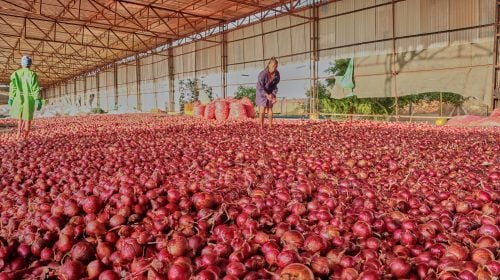
“As we speak, we are currently harvesting onions in large scale and have brought the cost of onions down in the Coast region,” he said.
The harvests
According to Nyumba Agri General Manager Jan Coertze, the results have been significant, with over 200 acres of maize and 75 acres of onions harvested.
“We lift our onions electronically, windrow them, cure them in the field, pick them in crates, then process and package them before transporting to Mombasa and Nairobi markets,” Coertze stated.
“We are doing 25 to 30 tonnes per acre of onions in our first yields. Prices range between KSh 45 and KSh 50 depending on the buyer.”
Additionally, the construction of the 14th reservoir, the largest yet, 6 km long and 7 metres wide, set to hold 6 million cubic metres of water to expand irrigation capacity, is ongoing.
Author
Latest News







Advertisement
More on Business