Advertisement
Govt engages oil marketers amid concerns over global supply disruptions
Tuesday 10th March, 2026 12:22 PM|

Days after the government assured Kenyans of having adequate petroleum stocks, it has called for an emergency meeting with the oil marketers amid concerns over fuel shortage.
The Cabinet Secretary for Energy and Petroleum, Opiyo Wandayi, had intimated that despite escalating tensions in the Middle East, which have raised concerns about global oil supply disruptions, the supply would sustain Kenya for some time.
However, the CS appear to take a new turn hours after holding talks with companies supplying oil to the country under the G-2-G agreement.
You Might Also Like

“We continue to engage very closely with our government-to-government suppliers, that is, Saudi Aramco, ADNOC and ENOC in terms of contingency planning,” Wandayi said.

“For that reason, there is really no cause for alarm. In the short to medium term, we have security of supply, and we continue to monitor the situation very closely.”
He further revealed that the government is in talks with the oil-producing nations with which the government has a G-2-G deal, such as Saudi Arabia’s ARAMCO, in a bid to ensure that the oil in the country is sufficient for the longest time possible based on contingency planning, and thus there should be no reason for alarm.
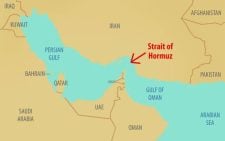
This follows the situation in the Middle East, which is very dire, with Iran issuing the closure of the Strait of Hormuz, a passage responsible for 21 per cent of the global oil supply, as a result of the conflict in the region.

Surging global fuel prices
This comes days after it emerged that Kenya is anxiously tracking a Red Sea tanker carrying fuel from the Middle East, critical for the country’s fuel supply, as the U.S.- and Israel-led war on Iran raises fears of broader supply shocks in Africa.
The Director General of the Energy and Petroleum Regulatory Authority (EPRA), Daniel Kiptoo, revealed that authorities are keenly monitoring the fuel loading planned for Friday, March 13, 2026, in the Red Sea, without giving more details or identifying the vessel, which is expected to land on the Kenyan Coast by the beginning of April.
This tracking is a precautionary measure due to heightened geopolitical tensions in the Middle East, which have forced vessels to undertake costlier reroutes, impacting fuel supply chains in the long run.
Kenya’s concerns reflect those of buyers around the world as the war in the region enters its eleventh day and chokes off energy supplies that have driven up prices of oil and gas.
Kenya lacks fuel production facilities. It renewed a supply contract last year with Saudi Aramco, Emirates National Oil Company and Abu Dhabi National Oil Company in a bid to sustain the nation’s oil supply without any sort of disruptions.
While nations on the continent, such as Nigeria, produce several million barrels of crude oil a day, they lack refining capacity and must import most of their petroleum products from the Middle East.
EPRA is expected to release new pump prices on Saturday, March 14, amid growing concerns of a fuel shortage despite assurances from the government.
Author
Latest News






Advertisement
More on Business