Advertisement
EAC trade hits Ksh4.9T in Q2 2025 on export surge
Tuesday 11th November, 2025 04:43 PM|
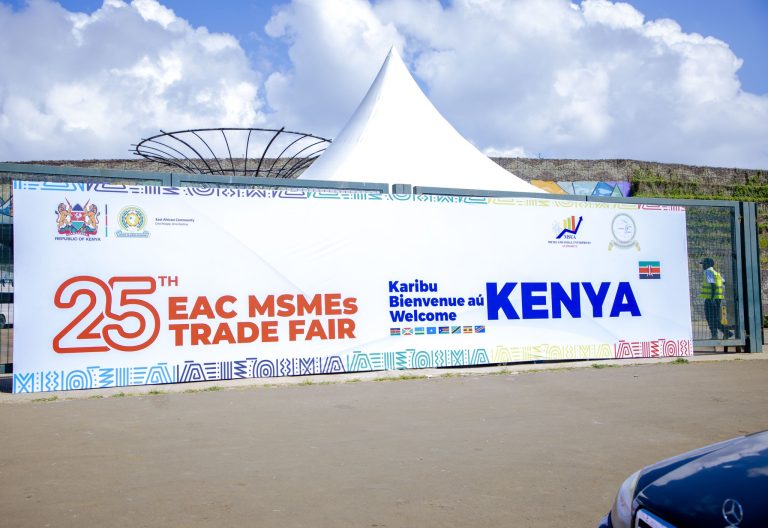
Trade in the East African Community (EAC) rose sharply in the second quarter of 2025, reaching Ksh4.93 trillion, up from Ksh3.83 trillion in the same quarter last year.
According to the latest EAC Quarterly Statistics Bulletin, exports drove the growth, jumping 40.5 per cent to Ksh2.4 trillion (USD 18.6 billion) as global demand for EAC products increased. Imports grew more moderately, rising 18.8 per cent to Ksh2.53 trillion (USD 19.6 billion). The trade deficit narrowed from Ksh414 billion (USD 3.2 billion) to Ksh116 billion (USD 0.9 billion).
Trade with African partners outside the EAC expanded 42.9 per cent to Ksh1.2 trillion (USD 9.3 billion), accounting for 24.5 per cent of total trade, while intra-EAC trade rose 24.5 per cent to Ksh596 billion (USD 4.6 billion), representing 12.1 per cent of total trade. Links with COMESA and SADC contributed 9.9 per cent and 15.2 per cent, respectively.
China, the UAE, South Africa, Hong Kong, and Singapore absorbed 62.8 per cent of total exports, up from 40.1 per cent a year earlier. Malaysia and South Africa recorded the fastest quarter-on-quarter growth. The top five export commodities – copper, precious stones and metals, coffee and tea, mineral fuels, and ores – made up 79.6 per cent of exports, signalling a focus on high-value goods.
Imports, inflation, and credit growth
You Might Also Like
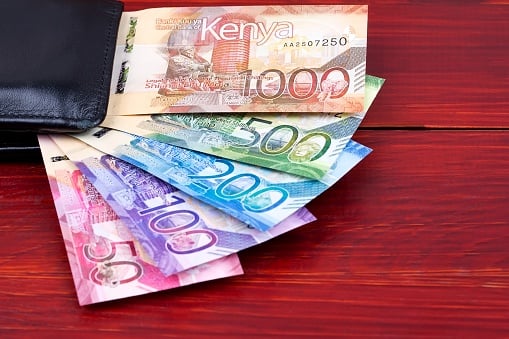


On the import side, China led with Ksh607 billion (USD 4.7 billion), or 24.2 per cent of total imports, followed by the UAE, India, South Africa, and Japan.
Key imported goods included petroleum products (Ksh531 billion/USD 4.1 billion), machinery (Ksh232 billion/USD 1.8 billion), vehicles (Ksh194 billion / USD 1.5 billion), and precious metals (Ksh194 billion / USD 1.5 billion).
Inflation remained high, with annual headline inflation at 22.7 per cent in June 2025, down slightly from 24.0 per cent in May 2025 but up from 13.7 per cent in June 2024. South Sudan and Burundi recorded the largest increases at 179.4 per cent and 34.1 per cent, respectively. Core inflation, excluding food and energy, stood at 19.3 per cent.
Short-term interest rates rose across most EAC states, except Kenya, where the 91-day Treasury bill rate fell to 8.2 per cent. Lending rates dropped in Kenya and Tanzania but rose in Uganda. The region’s money supply (M3) grew 19.1 per cent, mainly due to a 19.2 per cent rise in credit to the private sector.
The EAC Secretariat, together with national statistics offices and central banks, compiles the Quarterly Statistics Bulletin to provide harmonised data on trade, inflation, and monetary trends to guide policy and planning.
Author
Kenneth Mwenda
Kenneth Mwenda is a business, sports, and politics digital writer with over seven years of experience in journalism, covering breaking news, feature stories, and in-depth analysis across a range of beats.
For inquiries, he can be reached at [email protected]
View all posts by Kenneth MwendaLatest News







Advertisement
More on Business