Advertisement
Concern as audit report reveals Turkana oil flagged over Ksh4.5B deficit
Friday 16th January, 2026 05:00 PM|

Concerns have emerged over Kenya’s oil journey after an audit report revealed that the Turkana Early Oil Pilot Scheme (EOPS) recorded a deficit of more than Ksh4.5 billion, despite successfully placing the country on the global crude oil map.
According to the report, Kenya earned about Ksh3.6 billion from crude oil sales under the pilot project, which was completed around 2020.
The scheme involved exporting oil from the South Lokichar fields in Turkana to test global market demand, pricing, and logistics. It was widely viewed as a critical first step toward commercial oil production.
However, the audit shows that the cost of running the project far exceeded the revenue earned. Total expenditure on drilling, storage, and transportation stood at approximately Ksh8.1 billion, resulting in a net loss estimated at Ksh4.5 billion.
You Might Also Like
While the government maintains that the deficit is classified as recoverable exploration expenditure, the figures have raised questions among lawmakers and the public about value for money and long-term benefits for taxpayers.
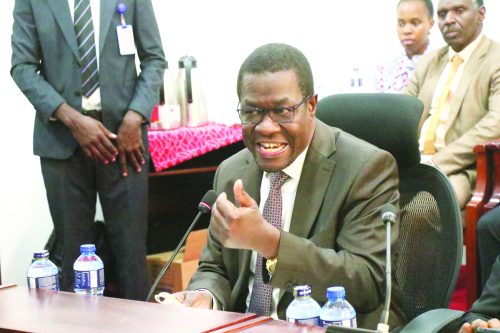
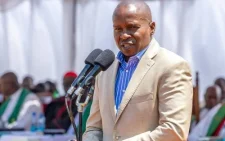
Energy and Petroleum Cabinet Secretary Opiyo Wandayi acknowledged the cost challenges but defended the project, saying the pilot scheme achieved its main goal.
“The project successfully proved that Kenya’s crude can compete on the world stage,” Wandayi said, noting that the exercise helped test “global market demand, pricing and logistics.”
Wandayi defends the plan
He added that although logistics and storage costs overwhelmed revenues, the lessons learned were crucial as Kenya prepares for full commercial production expected in December 2026.
The audit findings come at a time when the government is seeking parliamentary approval for the South Lokichar Field Development Plan (FDP) and revised Production Sharing Contracts (PSCs) for Blocks T6 and T7.
Appearing before a joint sitting of the National Assembly’s Departmental Committee on Energy and the Senate Standing Committee on Energy on January 12, 2026, Wandayi insisted that the FDP is legally sound and economically justified.
“The plan complies with the Petroleum Act, 2019 and the Constitution,” he told the committees, adding that while commercial oil discoveries had been made, the fields were marginal if developed separately.
To address this, the government adopted a joint development strategy covering Blocks T6 and T7. “The joint development ensures optimal utilisation of infrastructure, including a shared central processing facility, and aligns with international industry best practice,” Wandayi said.
The South Lokichar Basin is estimated to host 2.85 billion barrels of oil in place, with recoverable resources projected at 429 million barrels over the life of the project. Key fields include Ngamia, Ekales, Amosing, and Twiga.
Another controversial issue is the decision to raise the cost recovery ceiling to 85 per cent, up from 55 per cent for Block T6 and 65 per cent for Block T7. Critics argue that this heavily favours investors at the expense of the state.
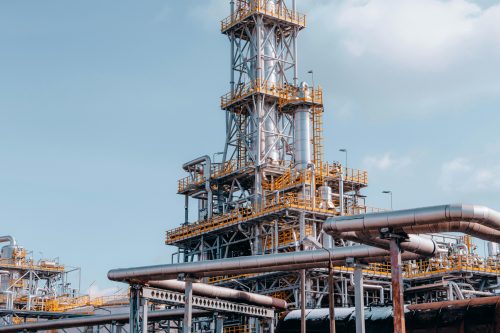
Wandayi defended the move, saying it was necessary to attract financing for what he described as a “capital-intensive and marginal project” facing reduced global investment in hydrocarbons.
“Comparable petroleum-producing countries such as Angola, Cameroon and Ghana allow cost recovery ceilings of between 85 and 100 per cent,” he said, adding that Kenyan law does not set a fixed limit.
Despite the losses recorded during the pilot phase, the government insists that the Turkana oil project remains vital to Kenya’s energy future.
Parliament is expected to deliberate on the FDP and PSCs, with public hearings scheduled in Turkana, West Pokot, Lamu, Mombasa, Trans Nzoia and Uasin Gishu counties.
Author
Latest News



Advertisement
More on Business