Advertisement
How Ruto’s govt plan to suppress dissent amid looming protests
Thursday 04th June, 2026 06:26 AM|

The Kenya Kwanza administration is facing renewed pressure as opposition leaders, civil society groups and sections of the public raise concerns over what they describe as growing efforts to suppress dissent ahead of anticipated nationwide protests linked to the Finance Bill 2026 and the upcoming Gen Z anniversary.
The mounting tension comes even as demonstrations continue in parts of the country, including Nanyuki, where residents have been protesting against the proposed establishment of an Ebola treatment and isolation facility.
At the same time, debate over the Finance Bill 2026 is gathering momentum, with critics warning that the government risks igniting fresh unrest similar to the anti-Finance Bill demonstrations witnessed in 2024.
Opposition leaders have accused President William Ruto’s administration of ignoring lessons from the June 25, 2024, protests, which saw thousands of Kenyans take to the streets to oppose controversial tax measures.
You Might Also Like
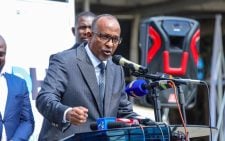
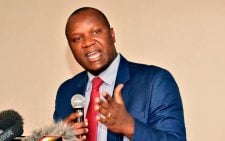

In a statement shared by Wiper Democratic Movement leader Kalonzo Musyoka on Wednesday, June 3, 2026, opposition leaders argued that the latest Finance Bill reflects a continuation of policies that have placed immense pressure on households and businesses.
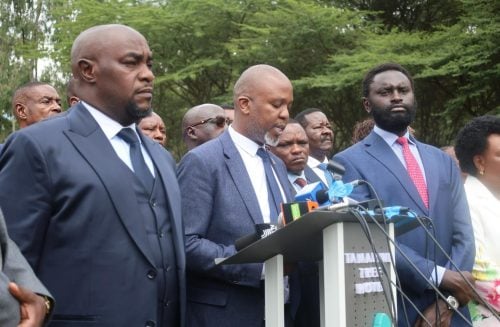
“The Finance Bill 2026 is further proof that the Ruto regime has learnt nothing and forgotten everything from the June 25 revolution,” the statement read in part.
The opposition maintains that despite government assurances that the Finance Bill 2026 introduces no new taxes, Kenyans remain burdened by the cumulative effects of previous tax increases, high public debt, unemployment and the rising cost of living.
“Kenyans are not refusing to contribute to nation-building. They are demanding accountability and value for money,” the leaders stated.
They further criticised what they termed as continued wasteful expenditure, inflated procurement costs and failure to decisively tackle corruption, arguing that ordinary citizens are paying the price for government inefficiencies.
Lobby groups have echoed similar concerns, warning that pushing through contentious policies while public frustration remains high could trigger another wave of protests across the country.

Use of technology
As pressure builds, the government is increasingly shifting its focus towards technology-driven policing and surveillance as part of broader efforts to maintain public order and respond to emerging security threats.
Interior Cabinet Secretary Kipchumba Murkomen recently revealed plans to establish the Nairobi Metropolitan Police Unit (NMPU) a specialised security formation expected to play a key role in securing the capital and surrounding areas.
The announcement followed a benchmarking tour in New York, where Kenyan officials studied how the New York Police Department (NYPD) uses advanced technology, intelligence gathering and data analytics to prevent and respond to crime.
Notably, the NYPD relies on extensive surveillance infrastructure, including camera systems, social media monitoring, facial recognition technology and vehicle identification systems.
“We are taking these lessons and best practices back home as we gear up for the establishment of the Nairobi Metropolitan Police Unit,” Murkomen said.

The model being considered is the use of real-time intelligence and data collection to enhance decision-making and improve the deployment of security personnel.
“Our goal is to build a modern, professional, and technology-driven police unit capable of effectively responding to emerging security threats and safeguarding our City and its environs,” he said.
Government officials argue that the proposed NMPU is intended to strengthen security, restore and maintain public order, and address emerging criminal threats within Nairobi, one of Africa’s fastest-growing metropolitan centres.
However, the timing of the initiative has sparked concern among rights activists and opposition figures who fear that expanded surveillance capabilities could be used to monitor activists, protesters and government critics ahead of the 2027 General Election.
The debate comes amid heightened scrutiny of police conduct following a series of incidents involving brutality during demonstrations and public gatherings.
Tightening grip on police misconduct
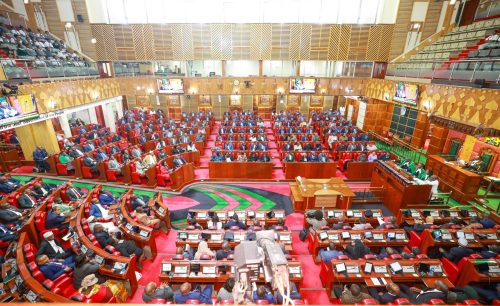
In a related development, Members of Parliament (MPs) have endorsed the adoption of modern technologies to monitor police conduct during protests.
The proposal emerged during a meeting between the National Assembly Departmental Committee on Administration and Internal Security and the Independent Policing Oversight Authority (IPOA).
Lawmakers urged IPOA to embrace tools such as body cameras, drones and digital surveillance systems to improve accountability and transparency in policing operations.
Committee Chairperson Gabriel Tongoyo questioned the oversight body’s position on the integration of technology into law enforcement.
“From where you sit as IPOA, what is your position on the intended use of body cameras and drones by the police?” he asked.
While many legislators supported the move, concerns were raised about the practical limitations of some technologies and the need to balance security interests with civil liberties.
As the Finance Bill 2026 debate intensifies and public frustration simmers over economic hardships, the government faces a delicate balancing act between maintaining order and safeguarding democratic freedoms.
With protests already emerging in various parts of the country and memories of the June 25 demonstrations still fresh, the coming weeks are expected to test both the government’s security strategy and its ability to address growing public discontent without escalating tensions further.
Author
Latest News




Advertisement
More on Inside Politics