Advertisement
World Bank: How Middle East oil disruptions are quietly driving hunger in East Africa
Saturday 02nd May, 2026 12:56 AM|

A conflict unfolding thousands of kilometres away in the Middle East is steadily tightening the grip of hunger across East Africa, revealing how global energy shocks can cascade into everyday survival.
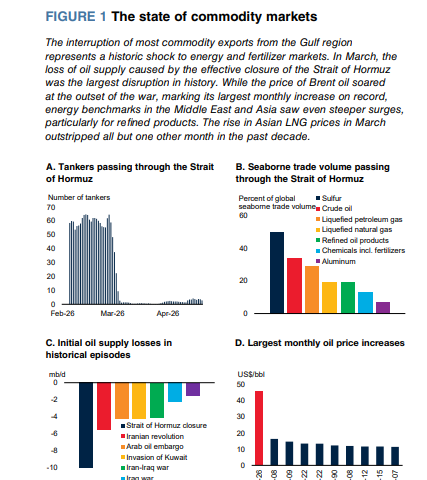
According to the World Bank’s latest Commodity Markets Outlook (April 2026) the war has triggered the largest oil supply shock in history, slashing global supply by an estimated 10 million barrels per day and pushing energy prices sharply higher.
Global energy prices are now projected to rise by 24 per cent in 2026, a surge already rippling through economies dependent on fuel imports, including Kenya.
But the true impact is not being felt at fuel pumps alone; it is unfolding more quietly in farms, food markets and household kitchens.
You Might Also Like
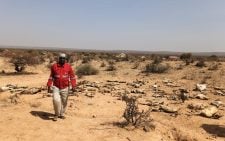


In Kenya’s breadbasket regions, farmers are confronting a painful reality: the cost of producing food is rising faster than they can keep up.
In Uasin Gishu, smallholder farmer Peter Kimani, interviewed by the World Bank, has reduced his fertiliser use this planting season after prices nearly doubled.
“I had to cut back. If I buy full fertiliser, I can’t meet other basic needs,” he says.
His situation reflects a wider regional pattern. The World Bank projects fertiliser prices will surge by 31 per cent this year, with urea, one of the most widely used fertilisers, rising by about 60 per cent due to disrupted exports and soaring input costs.
The link between oil and fertiliser is direct. Fertiliser production depends heavily on natural gas, meaning energy price shocks quickly translate into higher input costs for farmers.
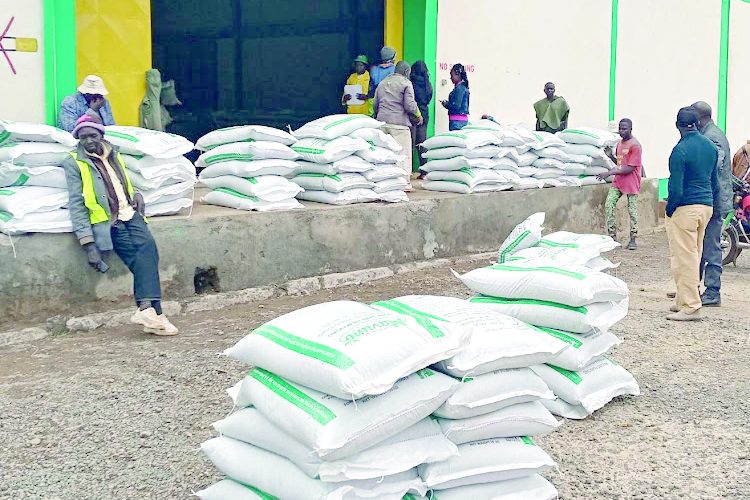
As prices climb, many smallholders across sub-Saharan Africa are reducing fertiliser use. The report warns that such cutbacks can significantly lower crop yields, particularly in regions where farmers are already operating at minimal input levels.
Agricultural economists say the consequences are predictable. Lower fertiliser use leads to weaker harvests, tightening food supply and pushing up prices within months.
In Kenya, where maize is a staple, even a modest decline in yields can trigger sharp price increases. While government subsidies have attempted to cushion farmers, global price pressures are outpacing local interventions.
Rising prices and deepening hunger
The effects are now spreading beyond farms into markets and households.
Kenya’s reliance on imported fuel and fertiliser leaves it highly exposed to global shocks. As oil prices rise, transport costs increase, making it more expensive to move food from farms to markets. At the same time, reduced agricultural output tightens supply.
This combination, higher production costs and lower yields, is pushing food prices upward across the country.
The impact is most severe in arid and semi-arid regions such as Turkana and Garissa, where communities depend heavily on purchased food due to limited agricultural production.
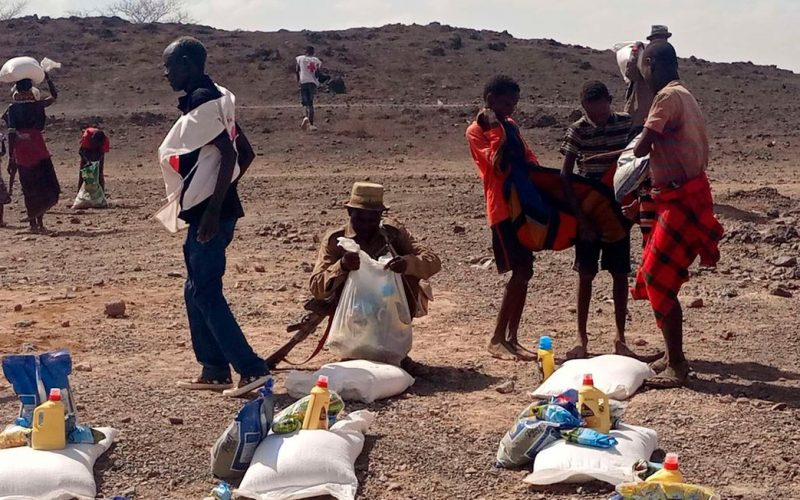
Humanitarian agencies warn that these areas are especially vulnerable. When food prices rise, households have little room to adjust, often reducing meal sizes or skipping meals entirely.
Globally, the outlook is equally troubling. The World Bank estimates that if energy disruptions persist and oil prices remain elevated, up to 45 million more people could fall into acute food insecurity in 2026.
The crisis highlights a largely invisible but powerful chain reaction. Higher oil prices increase fertiliser costs, which reduce farm productivity, which in turn drives up food prices, ultimately squeezing household incomes and access to food.

Over time, these pressures compound. The report notes that sustained increases in fertiliser costs could have a “long tail” effect, reducing crop yields in future seasons and prolonging food insecurity beyond the immediate shock.
While global food prices have not surged as sharply as energy prices yet, the underlying pressures are building.
For farmers like Kimani, the consequences are already clear.
“If I harvest less this season. then next season will be even harder,” he says.
From disrupted shipping lanes in the Gulf to shrinking harvests in East Africa, the link between geopolitics and hunger is no longer abstract; it is unfolding in real time, one planting season at a time.
Author
Latest News








Advertisement
More on News