Advertisement
Willis Otieno advises on what Kenyans must avoid while choosing leaders
Sunday 17th August, 2025 01:15 PM|
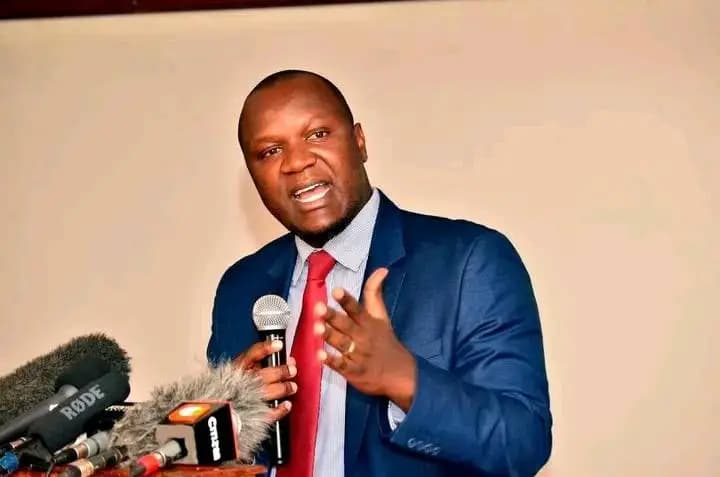
Political commentator and constitutional lawyer Willis Evans Otieno has stirred debate on Kenya’s political future, calling on citizens to move beyond ethnic loyalties and embrace national values.
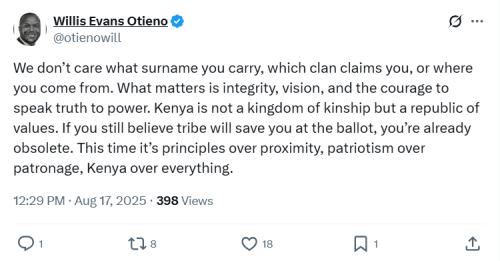
In a post on his X account on August 17, 2025, Otieno declared, “Kenya is not a kingdom of kinship but a republic of values. If you still believe the tribe will save you at the ballot, you’re already obsolete. This time it’s principles over proximity, patriotism over patronage, and Kenya over everything,” read his post.
“We don’t care what surname you carry, which clan claims you, or where you come from. What matters is integrity, vision, and the courage to speak truth to power. Kenya is not a kingdom of kinship but a republic of values.”
Tribal politics under scrutiny
Kenya’s history has long been shaped by tribal alignments, with alliances often built around ethnic blocs rather than policy platforms.
You Might Also Like


“Without ethnicity, they are empty. No ideology, no policy, no plan. It’s time to rise above tribe and unite in pain, in purpose, and in power,” he wrote. He warned that clinging to ethnic mobilisation entrenches divisions and stalls progress on pressing challenges such as ballooning public debt, unemployment, and inequality.
Principles over proximity
Otieno’s comments have resonated with reform-minded Kenyans, especially the youth, who have increasingly demanded issue-based politics amid recent protests against police brutality and impunity. On July 31, he criticised Interior Cabinet Secretary Kipchumba Murkomen for downplaying police excesses, accusing him of enabling abuse of power.
Moses Wetang’ula, a close ally of the President, has continued to defend the Kenya Kwanza administration, recently praising its performance during a church service in Meru County. Yet Otieno insists that Kenya’s future depends on voters embracing leaders who stand for values rather than kinship.
His rallying cry—“principles over proximity, patriotism over patronage”—has positioned him as an emerging voice in a tense political season. However, analysts caution that dismantling tribalism will require more than words, pointing to the need for equitable resource distribution and robust anti-corruption reforms.
As 2027 approaches, the question remains: will Kenyans embrace Otieno’s vision of a republic of values, or will old divisions continue to shape the ballot?
Author
Latest News







Advertisement
More on News