Advertisement
Kenya’s green energy dream faces funding crunch as Africa falls behind on 2030 devt goals – report
Friday 03rd July, 2026 10:13 PM|

Kenya has emerged as one of Africa’s clean energy success stories, with geothermal power from the Rift Valley helping the country build one of the continent’s greenest electricity grids.
But a new continental assessment warns that even Africa’s top renewable energy performers could struggle to sustain momentum as international development financing tightens and investment falls far short of what is needed to achieve the 2030 Sustainable Development Goals (SDGs).
The 2026 Africa Sustainable Development Report, jointly published by the African Union, the African Development Bank, the United Nations Development Programme and the United Nations Economic Commission for Africa (ECA), identifies Kenya as an example of how targeted investments in geothermal energy are expanding access to clean electricity.
At the same time, the report paints a sobering picture of a continent falling behind on SDG 7, Affordable and Clean Energy, because of widening financing gaps, rising debt burdens and declining donor support.
You Might Also Like

“Progress towards SDG 7 remains uneven and insufficient,” the report says, noting that structural constraints, investment shortfalls and recent reversals in key indicators underscore the urgency of accelerated and coordinated action.
For Kenya, the findings raise a critical question: can the country maintain its renewable energy leadership if concessional financing and climate funding continue to decline?
The report highlights Kenya’s expansion of geothermal energy production in the Rift Valley as a model for the continent, alongside Morocco’s large-scale solar investments. It says such projects demonstrate how coherent national policies and sustained investment can accelerate the transition to clean energy while supporting economic growth.
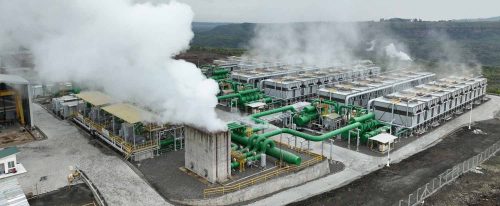
Kenya’s flagship geothermal developments at Olkaria and Menengai, together with projects such as Lake Turkana Wind Power, have significantly reduced dependence on fossil fuels while positioning the country as a regional renewable energy hub.
The government’s Last Mile Connectivity Programme and the recently launched Kenya National Energy Compact are also aimed at expanding electricity access and supporting industrial development.
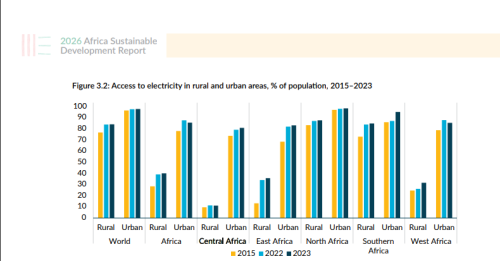
Yet the report warns that Africa still faces the world’s largest electricity access gap. Electricity access across the continent increased from 46 per cent in 2015 to 53 per cent in 2023, but nearly 600 million Africans remain without electricity, with rural communities continuing to lag far behind urban areas. Africa also accounts for nearly 85 per cent of the global population without electricity, underscoring the scale of the challenge.
The situation is even more alarming for clean cooking, where only 33.9 per cent of Africans had access to modern cooking fuels and technologies in 2023, leaving more than 970 million people dependent on traditional biomass such as charcoal and firewood.
The report says indoor air pollution linked to these fuels contributes to more than 400,000 premature deaths annually.
Although Kenya has become a continental leader in geothermal generation, experts say maintaining that momentum will require billions of shillings in fresh investment.
The report identifies financing as the biggest obstacle threatening Africa’s clean energy transition. It notes that annual investment in energy access remains well below what is required to achieve SDG 7 by 2030, limiting grid expansion, renewable generation and decentralised solutions such as mini-grids and solar home systems.
The broader development financing outlook is equally concerning. According to the report, official development assistance to developing countries could decline by 9 to 17 per cent, potentially reducing aid by as much as Ksh4.53 trillion compared to 2024 levels.

At the same time, rising public debt and declining foreign direct investment are shrinking the fiscal space available for governments to finance critical infrastructure. More than 20 African countries are already at high risk of, or in, debt distress.
For Kenya, these pressures come as the government seeks to expand manufacturing, attract data centres, promote electric mobility and lower electricity costs to improve industrial competitiveness.
The report argues that countries cannot rely on donor funding alone. Instead, it calls for greater domestic resource mobilisation, stronger regional power integration, increased private sector investment and expanded access to climate finance to bridge Africa’s widening infrastructure gap.
It also urges governments to invest in smart grids, innovation and resilient energy systems capable of supporting long-term economic transformation.
The stakes extend beyond electricity generation. Reliable, affordable power underpins manufacturing, job creation, digital services and Kenya’s ambition to become East Africa’s industrial hub. Without sustained investment, analysts warn that gains made in renewable energy could slow just as demand accelerates.
“Investment in improving all dimensions of implementation capacities, technical, institutional and financial, will be crucial for accelerating progress on the SDGs and Agenda 2063,” the report observes.
Author
Latest News



Advertisement
More on News