Advertisement
How AI will track Kenyan civil servants’ performance under new govt reforms
Friday 03rd July, 2026 11:04 PM|

The government has unveiled how artificial intelligence (AI) will be used to monitor the performance of civil servants as part of sweeping reforms that will replace seniority-based promotions with a merit-driven system.
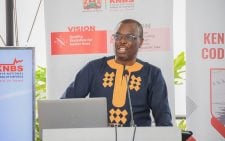
Public Service Cabinet Secretary Geoffrey Ruku announced on Friday, July 3, 2026, that AI will become a central tool in evaluating the productivity of government employees by automating routine administrative tasks and tracking Key Performance Indicators (KPIs) in real time.
According to Ruku, the technology will enable ministries and state agencies to continuously measure the performance of public officers, providing data that will guide decisions on promotions, career progression and rewards.
“Moving forward, Artificial Intelligence will be instrumental in automating routine tasks and tracking Key Performance Indicators (KPIs) in real-time,” Ruku said.
You Might Also Like
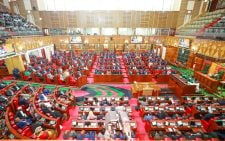


The CS explained that the reforms are designed to ensure promotions are based on measurable results rather than years of service.

“Career progression cannot be based on seniority and years of service. Instead, merit, demonstrated results, and innovation should and must now become the levers that determine promotions,” he said.
Under the new framework, officers who consistently meet or exceed their performance targets and introduce innovative solutions in service delivery will stand a better chance of earning promotions and career advancement.
Those who repeatedly fail to meet expectations could face disciplinary action.
The AI-driven performance monitoring system forms part of the government’s wider digital transformation agenda aimed at improving efficiency, accountability and service delivery across the public sector.
Ruku said the reforms also align with President William Ruto’s directive requiring ministries, departments and state agencies to adopt a whole-of-government approach to modernising the public service through technology and improved productivity.
Service delivery
The announcement comes weeks after the Salaries and Remuneration Commission (SRC) revealed plans to overhaul the public sector wage bill by introducing performance-based remuneration.

Speaking on June 16, SRC Chairperson Sammy Chepkwony said the commission was studying international best practices, including Singapore’s model, where employees’ earnings are closely linked to their productivity rather than automatic salary progression.
He said the proposed approach would allow high-performing workers to earn more based on measurable output.
“When the President said we are moving to Singapore, I personally went there and looked at how they pay their workers. Surprisingly, they do not have things like automatic payment processes, which we have here in Kenya,” Chepkwony said.
The latest reforms also build on resolutions adopted during the First National Productivity and Performance Conference held from June 17 to 19, 2026, at the Kenya School of Government’s Lower Kabete Campus in Nairobi.
Among the key resolutions is the gradual elimination of automatic salary increments and career progression across ministries, departments, agencies and county governments. Instead, promotions and salary growth will increasingly depend on measurable productivity, performance and service delivery outcomes.
The government also plans to overhaul the current performance contracting framework by placing greater emphasis on productivity.
Under Resolution Three of the conference, productivity indicators will account for at least 50 per cent of institutional and individual performance assessments by June 2028, up from the current three per cent.
Author
Latest News



Advertisement
More on News