Advertisement
Will Netanyahu exit change Israel-Palestine matrix?
Thursday 03rd June, 2021 12:00 AM|
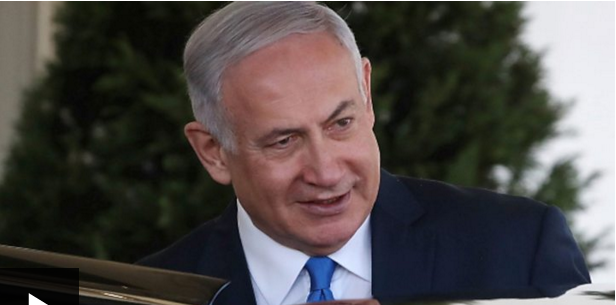
The time is nigh for Israeli Prime Minister Benjamin Netanyahu. At least this seems to be the verdict by many political pundits and Israel watchers since Monday after Israel’s Opposition closed ranks and committed themselves to form a government of national unity come Wednesday.
If current coverage by the international media is anything to go by, the Israeli leader is on his way out.
The predominantly Western media should know. These major outlets have intimated that Netanyahu’s grip on power is sliding as the country’s opposition parties coalesce around opposition leader Yair Lapid to form a government of national unity.
Lapid, who is the head of the centrist Yesh Atid 17-seat party received a major boost on Sunday after his initiative received explicit support from far-right party leader Naftali Bennett.
By acting as kingmaker with his Yamina party’s six key seats in Parliament, Bennet seems willing to play second fiddle in a power sharing arrangement to the man who actually came second to Netanyahu in the 2017 indecisive elections.
Now there is a real chance that things might change, given the fact that the latest attempt is being buoyed in less obvious ways.
On May 27, the Irish Parliament passed a motion tabled by the opposition Sinn Fein party condemning Israel’s ‘de facto annexation’ of Palestinian land.
The fact that the motion received cross-party support could have been a timely hint to Israel’s opposition to drop their differences and unite for a common cause.
In addition to isolating the US on its long standing support for Israel, Ireland’s unprecedented action might symbolise the unspoken international community’s agenda of the top priority facing a new Israeli government.
The Palestinian crisis cannot be left as a bi-lateral issue between the two adversaries any more.
The decision by Netanyahu’s administration to bomb the international media center in Gaza during the skirmishes could have acted as a red flag of his government’s perennial obstinacy.
This loss of otherwise amenable Western allies to continued impunity could be a signal of changing attitudes against the country.
But assuming that Netanyahu is finally forced out of office, experts are pondering whether the eventuality would have any positive impact on internal Israeli politics in general, and the wider Palestinian question in particular.
For the Palestinian conflict, experts see some light at the end of the gloomy future as a result of the potential political compromises being made in Israel.
The coalition must not lose sight of the bigger picture of the historical and constitutional moment. It will be a sad day if the coalition, if it becomes reality, is unable to settle this conflict.
Secondly, instead of working for Netanyahu as such conflicts are wont to do in Israeli politics, the recent violence seems to have worked against him.
It could portray a rethink within Israel’s body politic that it is a high time both States came to a rapprochement.
It could signal a growing guilty conscience by the Israeli leadership because of the injustices meted out to the Palestinians.
The nascent Israel coalition is required to meet a 28-day deadline on Wednesday to form a credible government.
If successful, the line-up will give indications whether there will be rapprochement between the sworn enemies. The coalition must simply not be an amalgamation of anti-Netanyahu politicians for it to attract goodwill from the international community. Even at this eleventh hour, it is not certain that Netanyahu will go.
Predictably, he has accused the delicate coalition of being leftist and compromising the security of the country due to the likelihood of serious negotiations with Palestinian authorities.
The man to watch is Bennet, a former defence minister, who has previously made an about-turn on similar initiatives to unseat Netanyahu. —The writer comments on international affairs
Author
Stephen Ndegwa
View all posts by Stephen NdegwaLatest News








Advertisement
More on News