Advertisement
WHO urges wider access to HIV injection amid increased infections
Monday 01st December, 2025 06:59 PM|
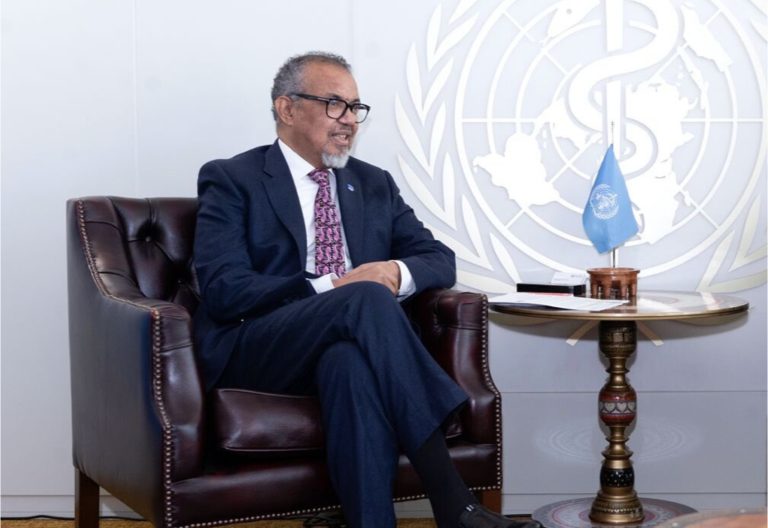
On World AIDS Day, the World Health Organization (WHO) called on governments and partners to expand access to new HIV prevention tools, including the injectable drug lenacapavir (LEN).
The move aims to reduce infections and counter the impact of cuts to foreign aid, which have disrupted essential health services.
Despite these funding challenges, 2025 has seen progress in the global HIV response. WHO approved twice-yearly injectable lenacapavir as a prevention option. LEN provides a long-acting alternative to daily oral pills.
It is particularly valuable for people who struggle with regular medication or face stigma when accessing health care. In July 2025, WHO released new guidelines recommending LEN as an additional pre-exposure prophylaxis (PrEP) option.
You Might Also Like

Cuts in international funding this year have disrupted HIV prevention, treatment, and testing. Community-led programmes, including PrEP and harm reduction initiatives for people who inject drugs, have been scaled back or closed in some countries.
“We face significant challenges with cuts to international funding, and prevention is stalling,” said Tedros Adhanom Ghebreyesus, WHO Director-General. “At the same time, we have new tools that can change the course of the epidemic. Expanding access to these tools must be a priority for all governments and partners.”
WHO marked World AIDS Day under the theme “Overcoming disruption, transforming the AIDS response.” The organisation stressed a dual approach: supporting communities and investing in innovations to protect those at greatest risk.
Funding cuts threaten progress
Data from 2024 highlight the urgency. HIV prevention efforts stagnated, with 1.3 million new infections. Nearly half of these new infections occurred among key populations, including sex workers, men who have sex with men, transgender women, and people who inject drugs, as well as their sexual partners.
These groups face significantly higher risks: sex workers and transgender women have a 17-fold higher chance of acquiring HIV, men who have sex with men face an 18-fold higher risk, and people who inject drugs a 34-fold higher risk.
Barriers such as stigma, discrimination, and restrictive laws make it harder for these populations to access care. Globally, an estimated 40.8 million people were living with HIV in 2024, and 630,000 people died from HIV-related causes.
The impact of foreign aid cuts has already been felt. The AIDS Vaccine Advocacy Coalition estimates that 2.5 million people who used PrEP in 2024 lost access to it in 2025 due to funding reductions. These service gaps could slow global efforts to end AIDS by 2030.
WHO is optimistic about innovation.
“We are entering a new era of powerful innovations in HIV prevention and treatment. By combining these advances with decisive action, supporting communities, and removing barriers, we can ensure key populations have access to life-saving services,” Tereza Kasaeva, Director of WHO’s Department for HIV, TB, Hepatitis and STIs, said.
LEN was prequalified by WHO for HIV prevention on 6 October 2025. National regulatory approvals have followed, including in South Africa (27 October), Zimbabwe (27 November), and Zambia (4 November).
The WHO Collaborative Registration Procedure (CRP) supported these approvals. WHO is working with partners such as CIFF, the Gates Foundation, the Global Fund, and Unitaid to make LEN affordable and widely available.
WHO emphasises that ending the AIDS epidemic requires a fully integrated, evidence-based approach, centred on primary health care. Strengthening health systems, increasing domestic investment, and protecting human rights are essential to safeguarding progress.
Despite funding setbacks, resilient communities offer a path forward. By prioritising key populations, governments can ensure no one is left behind in the fight against HIV.
Author
Kenneth Mwenda
Kenneth Mwenda is a business, sports, and politics digital writer with over seven years of experience in journalism, covering breaking news, feature stories, and in-depth analysis across a range of beats.
For inquiries, he can be reached at [email protected]
View all posts by Kenneth MwendaLatest News








Advertisement
More on News