Advertisement
Wandayi defends fuel tax cut and subsidy, says diesel could have hit Ksh236
Saturday 18th April, 2026 08:41 PM|

Energy Cabinet Secretary Opiyo Wandayi has defended the government’s decision to cut Value Added Tax (VAT) on fuel and introduce a subsidy, saying the measures have shielded Kenyans from a sharper rise in pump prices.
Speaking on Saturday, April 18, 2026, amid concerns over the cost of living, Wandayi said reducing VAT on petroleum products to eight per cent and providing a Ksh6.2 billion subsidy helped keep prices within reach for many households and businesses.
“Without these interventions, the price of super petrol would have been 217 shillings per litre, diesel 236 shillings per litre, and kerosene 261 shillings per litre,” he said.
He warned that such levels would have pushed fuel beyond the reach of many Kenyans.
You Might Also Like
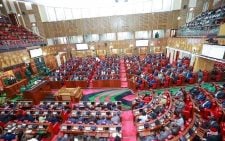


His remarks come a day after William Ruto signed the Value Added Tax (Amendment) Bill, 2026, into law, cutting VAT on fuel from 16 per cent to eight per cent. The move followed public uproar over rising fuel prices linked to global supply pressures.
Wandayi said diesel remains central to the economy, particularly in transport and manufacturing. He added that kerosene continues to serve millions of low-income households.
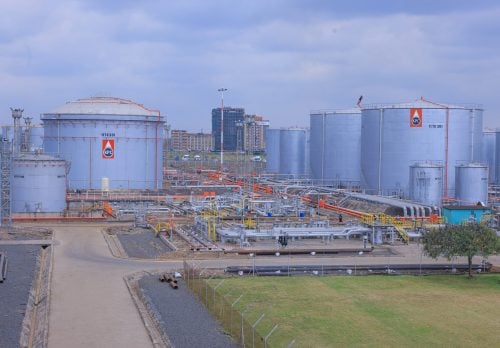
Government moves to stabilise
According to the CS, the risk of higher fuel costs forced the government to act quickly. He said the decision aimed to prevent further increases that could have triggered wider economic strain.
Beyond the subsidy, Wandayi pointed to the government-to-government fuel import arrangement as another factor helping to stabilise prices. He said the system has improved supply and reduced exposure to volatile global markets.
The Ministry of Energy said it is monitoring global developments closely, particularly the ongoing conflict in the Middle East, which has disrupted supply chains and pushed up international oil prices.
Wandayi said the government will continue to intervene where necessary to protect consumers.
Recent figures from the Energy and Petroleum Regulatory Authority show that the tax cut has already lowered pump prices, with petrol retailing below the projected levels cited by the CS.
However, the government’s approach has drawn criticism from some quarters, with critics arguing that price adjustments often come after steep increases, leaving consumers under pressure.
Reduced fuel prices
The Energy and Petroleum Regulatory Authority (EPRA) announced a downward adjustment in fuel prices following a reduction in Value Added Tax (VAT).
In an addendum to its earlier pricing review released on April 14, 2026, EPRA said the revised prices follow a directive by the National Treasury to cut VAT on petroleum products from 13 per cent to 8 per cent under a legal notice dated April 15, 2026.
The regulator noted that the new adjustment will take effect from April 16 through May 14, 2026, replacing the prices announced on Tuesday, April 14, 2026.
“As a result, the pump price per litre in Nairobi of Super Petrol and Diesel decreases by Ksh9.37 and Ksh10.21, respectively, while that of Kerosene remains unchanged,” read the statement by EPRA.
The regulator outlined new pump prices in Nairobi, noting that “Super Petrol, Diesel and Kerosene now retail at Ksh197.60, Ksh196.63 and Ksh152.78 respectively.”
Author
Kenneth Mwenda
Kenneth Mwenda is a business, sports, and politics digital writer with over seven years of experience in journalism, covering breaking news, feature stories, and in-depth analysis across a range of beats.
For inquiries, he can be reached at [email protected]
View all posts by Kenneth MwendaLatest News





Advertisement
More on News