Advertisement
Universities’ operations at stake amid Ksh223B funding gap crisis
Sunday 22nd February, 2026 06:57 AM|

Kenya’s universities are facing a serious financial crisis, with a total funding gap of Ksh223 billion threatening their daily operations. The shortage is putting student loans, scholarships, staff salaries, and key reform plans at risk.
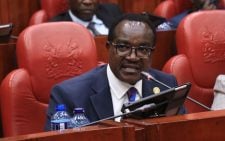
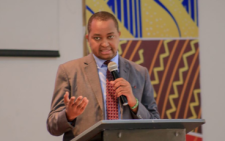
The crisis was revealed by Beatrice Inyangala, the Principal Secretary for Higher Education, during a meeting with the National Assembly Education Committee, chaired by Julius Melly.
She told MPs that the sector is struggling to meet many financial obligations.
According to Inyangala, the shortfall affects several critical areas. These include government scholarships, loans issued through the Higher Education Loans Board, debts owed by private universities, stalled development projects, and unpaid collective bargaining agreement arrears.
You Might Also Like
The State Department for Higher Education is also heavily underfunded. For the 2026–27 financial year, it requires Ksh311.9 billion for day-to-day operations. However, it has only been allocated Ksh155.2 billion.
This leaves a huge deficit of Ksh156.7 billion. On the development side, there is an additional shortfall of Ksh6.55 billion. In simple terms, the department is operating with less than half of the money it needs.
“Public universities are feeling the pressure. As of January 31, 2026, they had unpaid bills totalling Ksh 85.28 billion. These arrears include money owed to suppliers, pension schemes, statutory deductions, and bank loans. None of these liabilities has been fully provided for in the proposed budget,” she explained.
“Because of this, many universities are struggling to pay workers on time, submit required statutory contributions, and service existing debts. More than half of their recurrent expenditure remains unfunded, while development projects face a funding shortfall of over 57 per cent.”
HELB crisis
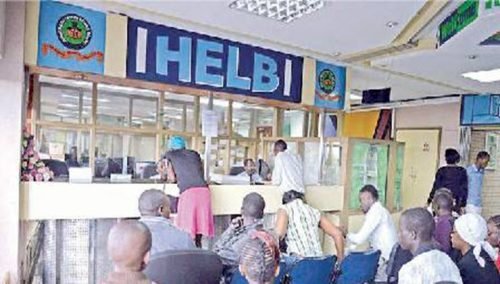
The Higher Education Loans Board (HELB) is among the hardest hit. The board requires Ksh112 billion to clear deficits accumulated over the past three years. In the 2026-27 financial year alone, HELB plans to support 1,383,728 students in universities and technical and vocational institutions. This will cost Ksh112.1 billion.
However, the proposed allocation to HELB stands at only Ksh45.06 billion. This leaves a deficit of Ksh67.42 billion. Current arrears include Ksh33.9 billion for this year and Ksh10.7 billion carried forward from the 2024–25 financial year.
Inyangala warned that without urgent action, thousands of vulnerable students could face delays or reductions in loan disbursements. She appealed to Parliament to allocate Ksh112 billion to clear the three-year deficit and allow full implementation of higher education funding reforms.
“Scholarship programmes under the Universities Fund are also under severe strain. The number of students benefiting from the student-centred funding model is expected to rise sharply, from 122,634 in 2023–24 to 656,927 in 2026–27,” the PS stated.
“For the 2026–27 financial year, scholarships will require Ksh47.36 billion. Yet only Ksh17.92 billion has been allocated, leaving a gap of Ksh29.44 billion.”
By that time, cumulative scholarship deficits could reach Ksh51.7 billion, threatening the sustainability of the funding model introduced in 2023 to promote fairness and access.
There is also growing concern about possible industrial unrest. The government had committed Ksh7.76 billion to implement the 2017–2021 collective bargaining agreements for university staff in two phases.
While Ksh3.88 billion was paid in the first phase, only Ksh2.8 billion has been set aside for the second. This leaves a shortfall of Ksh1.08 billion.
Education officials cautioned that failure to meet these obligations could trigger strikes in public universities, further disrupting learning and putting the future of thousands of students at risk.
Author
Latest News


Advertisement
More on News