Advertisement
Irungu Nyakera: Debt crisis is driven more by corruption than taxation
Friday 05th June, 2026 10:11 AM|
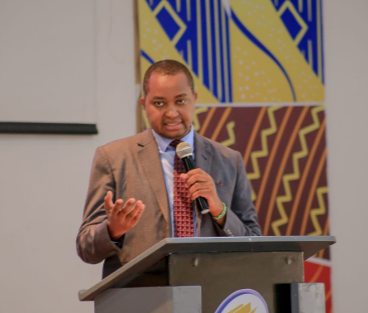
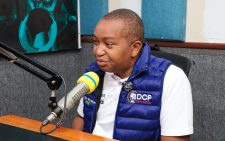
Nairobi County Democracy for the Citizens’ Party (DCP) patron, Irungu Nyakera has sparked debate over Kenya’s fiscal crisis, arguing that the country’s rising debt burden is more a reflection of entrenched corruption than excessive taxation on citizens.
In a statement shared on his X account on Friday, June 05, 2026, Nyakera said public discourse on debt should begin with accountability in public office, not increased tax pressure on ordinary Kenyans.
“When I see headlines about a debt crunch, my mind goes to corruption before it goes to taxation,” he said.
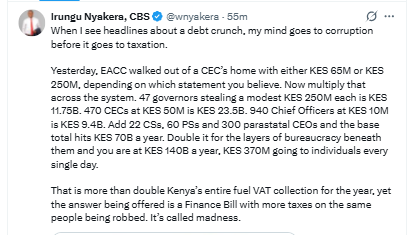
/X
He pointed to recent reports involving the Ethics and Anti-Corruption Commission (EACC), which allegedly recovered millions of shillings from a senior county official, saying such incidents reflect a deeper systemic problem.
You Might Also Like

“Yesterday, EACC walked out of a CEC’s home with either KES 65M or KES 250M, depending on which statement you believe,” Nyakera noted.
Cost of corruption across the system
Nyakera argued that when corruption is scaled across national and county leadership structures, the financial loss to the country becomes staggering.
He estimated that if governors, county executives, chief officers, Cabinet Secretaries, Principal Secretaries, and parastatal CEOs were all implicated in similar leakages, the cumulative loss could run into tens of billions annually.
“47 governors stealing a modest KES 250M each is KES 11.75B. 470 CECs at KES 50M is KES 23.5B. 940 Chief Officers at KES 10M is KES 9.4B,” he stated.
He added that extending the calculation across national government officials would push the estimated losses significantly higher.
“Add 22 CSs, 60 PSs and 300 parastatal CEOs and the base total hits KES 70B a year. Double it for the layers beneath them, and you are at KES 140B a year,” he said.
Tax debate questioned
Nyakera further argued that the scale of corruption losses exceeds major national revenue streams, questioning the logic of increasing taxes on citizens while governance leakages persist.
“That is more than double Kenya’s entire fuel VAT collection for the year,” he said.
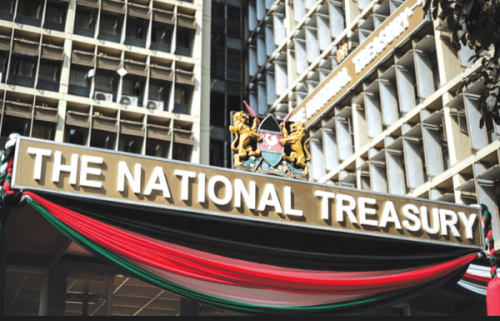
He concluded that policy focus should shift toward accountability and recovery of stolen public funds rather than burdening citizens with additional taxation measures.
“It’s called madness,” he added.
His remarks are likely to fuel ongoing debate over public debt, taxation policy, and governance accountability as Kenya continues to grapple with rising fiscal pressures.
Author
Latest News





Advertisement
More on News