Advertisement
Why Kenya Airways is bringing back the Boeing 777-300ER – and why it matters
Monday 20th July, 2026 11:06 AM|
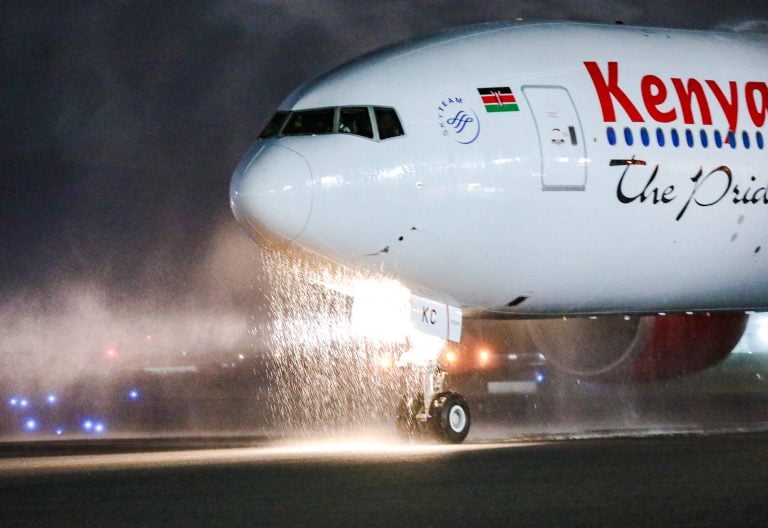
When Kenya Airways leased out all three of its Boeing 777-300ER aircraft to Turkish Airlines in 2016, the decision reflected the harsh reality facing the national carrier. The airline was battling heavy losses, rising debt and an oversized fleet that no longer matched demand on its long-haul network.
Nearly 10 years later, one of those aircraft is back.
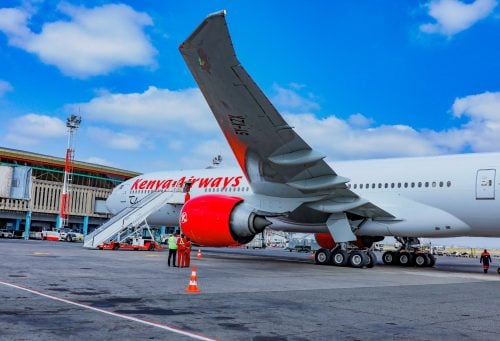
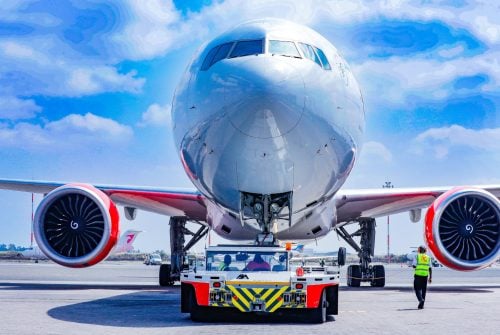
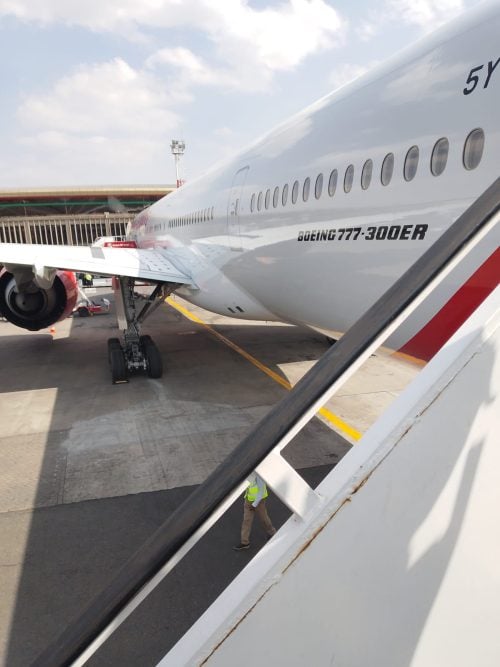
The return of the Boeing 777-300ER, registered 5Y-KZX, is not simply a nostalgic homecoming. It is part of Kenya Airways’ effort to restore lost capacity, strengthen its busiest international route and support exporters at a time when global aircraft shortages continue to affect airlines worldwide.
The aircraft resumed commercial service on July 17, 2026, operating the Nairobi-London Heathrow route after completing familiarisation flights between Nairobi and Mombasa.
You Might Also Like
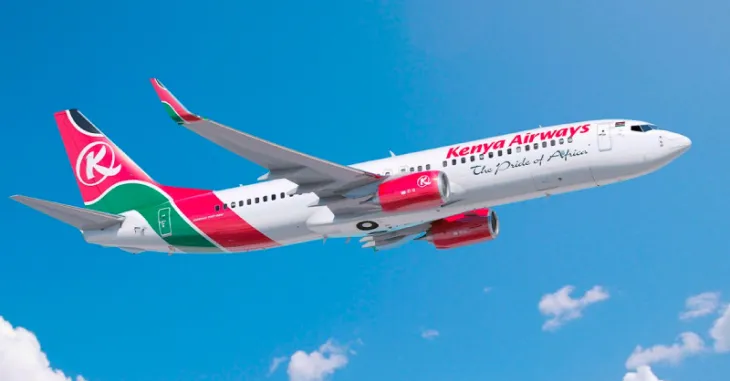
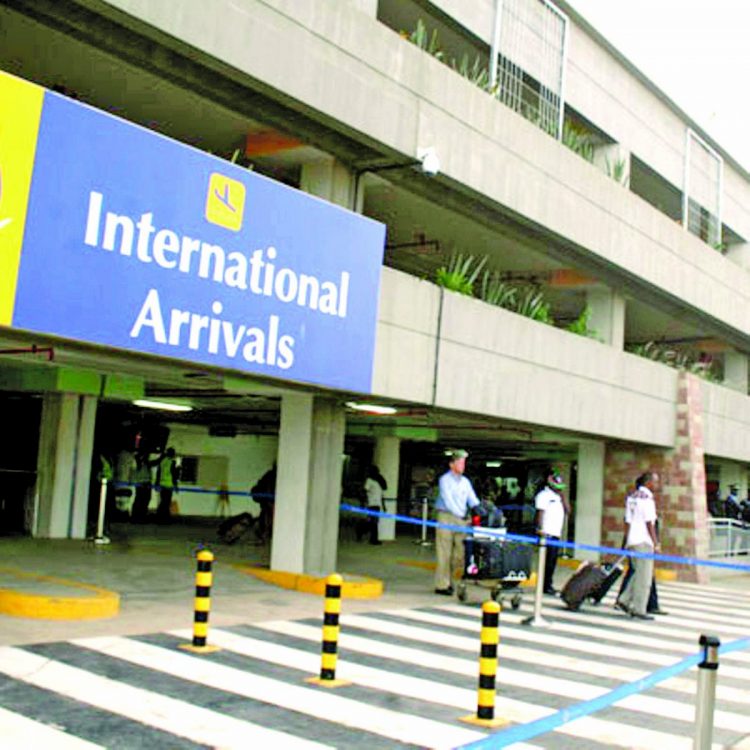
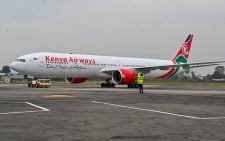
Its return also highlights how Kenya Airways’ biggest challenge has changed over the past decade. In 2016, the airline had more capacity than it could profitably use. In 2026, it is struggling with too little capacity after several of its Boeing 787 Dreamliners were grounded.
Why did Kenya Airways lease out the Boeing 777s?
Kenya Airways introduced three Boeing 777-300ER aircraft between 2013 and 2014 as it expanded its long-haul operations.
The aircraft offered excellent range and could carry around 400 passengers, making them suitable for busy international routes.
However, the airline’s financial position deteriorated quickly.
Passenger demand failed to keep pace with expansion, operating costs remained high and Kenya Airways accumulated billions of shillings in losses. Management concluded that the Boeing 777-300ERs were too large for its operational needs and retired all three aircraft in January 2016.
Rather than leave them parked, Kenya Airways leased them to Turkish Airlines under long-term agreements, generating lease income while reducing operating costs.
The then Kenya Airways GMD and CEO Mbuvi Ngunze said,
“It has been a long journey and we are happy to announce our plans are now coming to fruition. Subleasing and selling of aircraft will improve our fleet costs by over $7 million a month and is part of our strategy to turn Kenya Airways into profitability in the next 18 to 24 months”.
What has changed since then?
The biggest difference is that Kenya Airways is now short of aircraft rather than having too many.
The airline reported a Ksh17.2 billion net loss for the year ended December 2025, reversing the Ksh5.4 billion profit recorded a year earlier. Revenue fell 14 per cent to Ksh161.5 billion, while operating costs reached Ksh167.1 billion, resulting in an operating loss of Ksh5.6 billion.
One of the main reasons for the weaker performance was reduced fleet availability.
Three Boeing 787-8 Dreamliners were unavailable during 2025. Two were grounded because of global engine maintenance shortages and supply chain disruptions, while a third entered its scheduled 12-year heavy maintenance programme.
Acting Group Managing Director and Chief Executive Officer Captain George Kamal said the grounded aircraft reduced Kenya Airways’ operating capacity by about 20 per cent.
Chief Financial Officer Mary Mwenga told investors the airline operated at only 80 per cent of its available capacity during the year.
“What we operated in 2025 is 80 per cent of the available capacity. We are still better than 2019, when we recorded Ksh128 billion while operating at full capacity,” Mwenga said at an investor meeting on Tuesday, March 24.
That made restoring aircraft to the fleet a priority.
During the March 2026 results briefing, Kamal confirmed that Kenya Airways expected the Boeing 777 returning from Turkish Airlines to help rebuild capacity alongside a leased Boeing 737 Next Generation arriving later this year.
He also said all nine Dreamliners are expected to return to service by the end of 2027.
Why bring back the Boeing 777 now?
The timing is largely driven by demand.
Instead of waiting years for newly built aircraft, Kenya Airways has brought back an aircraft it already owns.
The Boeing 777-300ER offers significantly more capacity than the Boeing 787-8 Dreamliner that has been operating many long-haul routes.
While the Dreamliner carries about 234 passengers, the Boeing 777 accommodates 400 passengers, including 28 Business Class and 372 Economy seats.
That gives Kenya Airways roughly 166 additional seats on every flight operated by the larger aircraft.
Captain Kamal also confirmed that the airline is working to secure another Boeing 777 from the remaining aircraft still leased to Turkish Airlines as a “backup sistership”, signalling that management sees value in expanding wide-body capacity if demand continues to grow.
Why is London the first destination?
The Nairobi-London Heathrow service is Kenya Airways’ flagship international route and one of its strongest revenue earners.
The airline now plans to deploy the Boeing 777-300ER on the route four times a week, replacing the smaller Dreamliner on those services.
Using the larger aircraft allows Kenya Airways to carry more passengers without increasing flight frequencies.
It also provides additional premium seats, which generally generate higher yields than economy travel.
Captain Kamal described the deployment as part of the airline’s fleet optimisation strategy.
“This is more than the introduction of an aircraft. It reflects our continued commitment to building a stronger, more competitive and future-ready airline while connecting Africa to the world through reliable, efficient and world-class operations.”
Cargo is just as important as passengers
The Boeing 777’s return is not only about filling more passenger seats.
The aircraft’s belly hold can carry around 22 tonnes of cargo, giving Kenya Airways much more freight capacity than the Dreamliner.
That is important because the London route serves one of Kenya’s biggest export markets.
Fresh flowers, vegetables, fish, manufactured goods and other time-sensitive exports rely on air freight to reach European supermarkets and businesses quickly.
Transport Cabinet Secretary Davis Chirchir said the extra cargo space would help exporters while supporting economic growth.
“The aircraft immediately strengthens our operations on the Nairobi-London Heathrow route, expands passenger and cargo capacity, and enhances our ability to connect Kenya to global markets.”
He added that the additional cargo capacity would give exporters in horticulture, fisheries, manufacturing and fresh produce more reliable access to overseas markets.
Before beginning London services, the Boeing 777 operated several flights between Nairobi and Mombasa.
These flights allowed Kenya Airways to complete operational integration after the aircraft returned from nearly a decade abroad.
The domestic services helped pilots and cabin crew familiarise themselves with the aircraft, while engineers, airport staff and ground handling teams tested operational procedures before launching long-haul flights.
How does this fit into Kenya Airways’ recovery?
The Boeing 777 alone will not solve Kenya Airways’ financial challenges.
The airline is still restructuring after reporting a Ksh17.2 billion loss in 2025 and continues to face higher financing costs, global supply chain disruptions and intense competition on international routes.
However, management believes the fundamentals remain strong.
Board Chairman Kiprono Kittony has argued that the airline’s challenges are structural rather than demand-driven.
At the same time, the government is pursuing broader reforms, including strengthening Kenya Airways’ balance sheet, attracting a strategic investor and expanding Jomo Kenyatta International Airport.
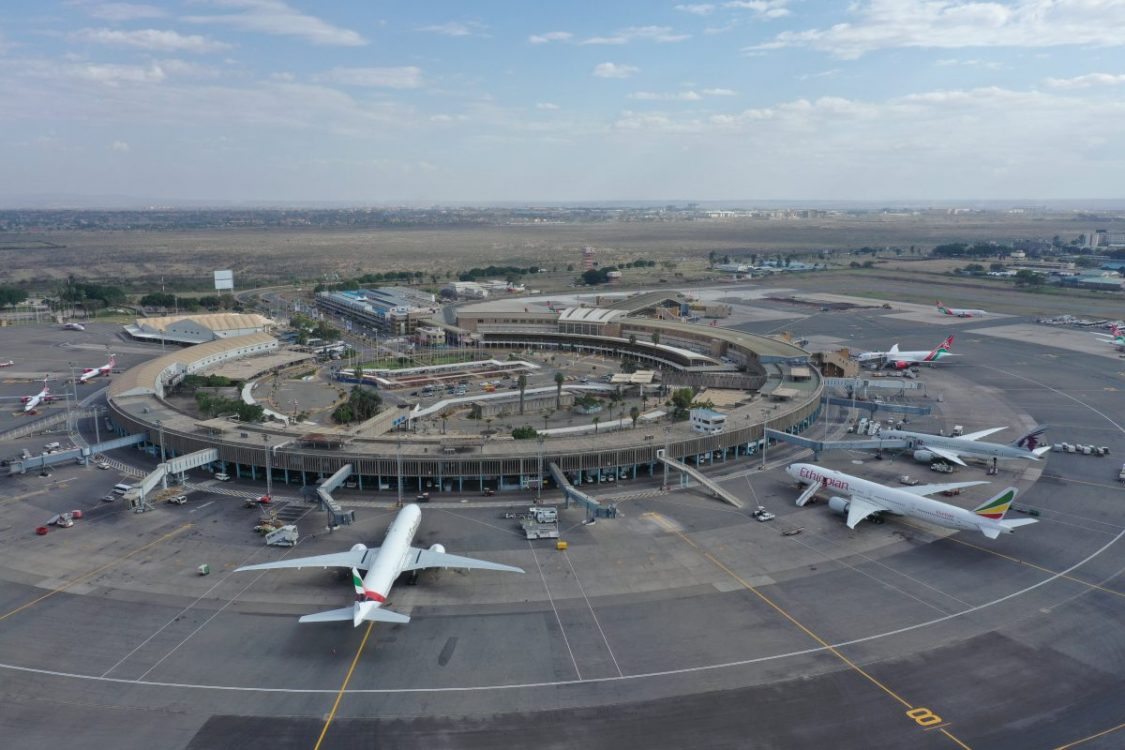
Transport CS Davis Chirchir said the airport upgrade aims to increase annual passenger capacity from 7.5 million to about 22 million, positioning Nairobi as a leading aviation hub for East and Central Africa.
Kenya Airways is also planning for the future. Kamal has said the airline has secured an investor for early aircraft orders, although any new aircraft ordered today would likely not be delivered until between 2030 and 2033 because of global manufacturing backlogs.
For now, bringing back the Boeing 777 is the quickest way to restore capacity.
Author
Kenneth Mwenda
Kenneth Mwenda is a business, sports, and politics digital writer with over seven years of experience in journalism, covering breaking news, feature stories, and in-depth analysis across a range of beats.
For inquiries, he can be reached at [email protected]
View all posts by Kenneth MwendaLatest News








Advertisement
More on Insights