Advertisement
UN warns Kenya over protest crackdown and rising debt, despite social protection gains
Wednesday 11th February, 2026 07:21 AM|

The United Nations has warned Kenya over its response to social protests and its growing public debt, even as it praised the country for strengthening social protection over the past decade.
According to a press release on Tuesday, February 10, 2026, the concerns were raised as the UN Committee on Economic, Social and Cultural Rights concluded its review of Kenya’s sixth periodic report under the International Covenant on Economic, Social and Cultural Rights during its 79th session in Geneva.
Committee experts said they had received extremely worrying information about the state’s response to protests that followed proposed tax increases and rising living costs.
Julieta Rossi, a committee expert and leader of the Task Force for Kenya, said protests in June, July and August 2024, as well as demonstrations in June 2025, led to serious human rights violations.
You Might Also Like


“What measures were being taken to prevent and put an end to the illegal repression of social protest, the persecution of human rights defenders, and acts of intimidation, harassment or arbitrary detention of journalists? What was the status of investigations, criminal proceedings initiated, sanctions imposed and reparations granted to victims?” the press release read.
Public debt
The committee also raised alarm over Kenya’s public debt and its impact on basic rights.
Michael Windfuhr, a committee expert and member of the Task Force for Kenya, said Kenya ranked among the world’s most indebted countries.
“Kenya was trying to increase revenue collection, but was also lowering taxes, so how did this work?” Windfuhr asked. He also questioned whether Kenya had a clear policy on debt restructuring and whether debt repayment was undermining access to essential services.
Other experts criticised regressive tax measures, including higher taxes on basic goods, warning that they had worsened poverty and inequality. According to national data cited by the Committee, almost 40 per cent of Kenyans live in poverty, with arid and semi-arid regions worst affected.
In response, the Kenyan delegation said the country faced challenges in managing protests but stressed that the right to protest must remain peaceful.
“Young people have a right to protest, but it must be peaceful,” the delegation said. “There has to be a balance between the protection of life and property and the right to peaceful protest. It is regrettable when deaths occur.”

The delegation added that both police officers and civilians had been prosecuted for rights violations, and that programmes were being rolled out to educate young people and law enforcement officers.
On debt, officials said Kenya had not defaulted on repayments and that the government was expanding the tax base while targeting tax relief at low-income earners.
“The debt repayment problem is a work in progress. So far, the State has not defaulted, meaning the repayment process is working,” the delegation said.
Social protection gains praised
Despite the criticism, the Committee praised Kenya for major progress in social protection.
Windfuhr welcomed what he described as the “significant development” of Kenya’s social protection system over the last decade, saying it had contributed to poverty reduction.
He cited the adoption of the Social Protection Act 2025, which expanded support for people facing extreme poverty, disasters, job loss and economic shocks.
Introducing Kenya’s report, Judith Nayiai Ramaita Pareno, Principal Secretary in the State Department for Justice, Human Rights and Constitutional Affairs and head of the delegation, said Kenya had enacted key laws to give effect to economic and social rights.
“During the reporting period, Kenya had enacted key legislation giving effect to Covenant rights, including the community land act, the water act, the health act, and amendments to the national health insurance fund act, which strengthened accountability, decentralised service delivery, and prioritised marginalised communities,” Pareno said.
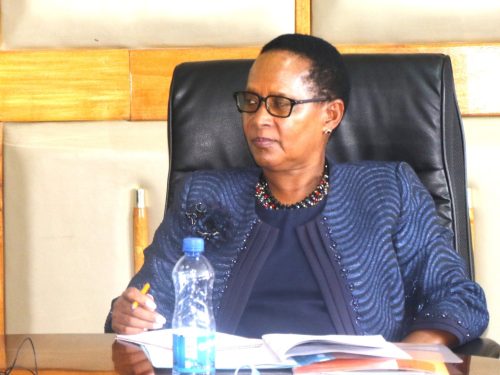
She highlighted reforms such as the Persons with Disabilities Act 2025 and the national policy on ethnic minorities and marginalised communities, which aim to improve representation and access to public services.
Pareno said programmes like the Kenya Social and Economic Inclusion Programme Phase II were expanding cash transfers and livelihood support, with coverage expected to reach up to 12 million beneficiaries.
In her closing remarks, Rossi said the dialogue had highlighted both progress and serious challenges. Pareno also said that Kenya would consider the Committee’s recommendations.
Author
Kenneth Mwenda
Kenneth Mwenda is a business, sports, and politics digital writer with over seven years of experience in journalism, covering breaking news, feature stories, and in-depth analysis across a range of beats.
For inquiries, he can be reached at [email protected]
View all posts by Kenneth MwendaLatest News




Advertisement
More on News