Trump breaks silence after US seizes oil tanker off Venezuela coast
By Associated Press, December 11, 2025President Donald Trump said on Wednesday, December 10, 2025, that the United States has seized an oil tanker off the coast of Venezuela as tensions continue to rise with the government of President Nicolás Maduro.
Using United States forces to take control of a merchant ship is highly unusual and marks the Trump administration’s latest effort to increase pressure on Maduro, who has been charged with narcoterrorism in the United States.
The United States has built up its largest military presence in the region in decades and has launched a series of deadly strikes on alleged drug smuggling boats in the Caribbean Sea and the eastern Pacific Ocean. The campaign is facing increased scrutiny from Congress.
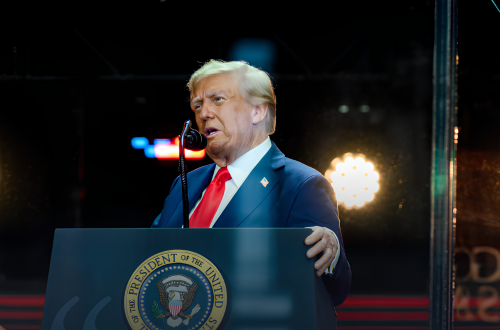
“We have just seized a tanker on the coast of Venezuela, a large tanker, very large, the largest one ever seized, actually,” Trump told reporters at the White House, later adding that it had been taken for a very good reason.
Trump did not offer further details. When asked what would happen to the oil on board, he said, “Well, we keep it, I guess.”
The seizure was led by the United States Coast Guard and supported by the Navy, according to a United States official who was not authorised to speak publicly and requested anonymity. The official added that the operation had been carried out under United States law enforcement authority.
The Coast Guard members were taken to the tanker by helicopter from the aircraft carrier USS Gerald R. Ford.
The carrier is in the Caribbean Sea after arriving last month as part of a major show of force, joining several other warships.
·
Video posted on social media by Attorney General Pam Bondi shows personnel fast roping from a helicopter as it hovers close to the deck.
Further footage shows Coast Guard members moving through the ship’s superstructure with weapons drawn.
Bondi wrote that the tanker had been sanctioned for years by the United States because of its involvement in an illicit oil shipping network that supported foreign terrorist organisations.
The Venezuelan government said in a statement that the seizure constituted a blatant theft and an act of international piracy.
It added that the situation revealed the true reasons behind what it described as prolonged aggression against Venezuela, claiming it had always been about the nation’s natural resources.
A United States official identified the seized tanker as the Skipper. The ship left Venezuela on 2 December with about two million barrels of heavy crude oil, roughly half of which belonged to a Cuban state run importer, according to documents from the state-owned company Petróleos de Venezuela SA, known as PDVSA.
The Skipper was previously known as the MT Adisa, according to ship tracking data.
The Adisa was sanctioned by the United States in 2022 for allegedly belonging to a shadow network of tankers that smuggled oil on behalf of Iran’s Revolutionary Guard and Lebanon’s Hezbollah.
Venezuela has the world’s largest proven oil reserves and produces about one million barrels a day.
PDVSA remains central to the nation’s economy. Its reliance on intermediaries increased in 2020 when the first Trump administration expanded its pressure campaign, imposing sanctions that threaten to exclude individuals and companies working with Maduro from the United States economy.
Russia and Iran, both under sanctions, have helped Venezuela evade restrictions.
The transactions often involve a network of intermediaries and shell companies based in jurisdictions known for secrecy. Buyers use ghost tankers that hide their locations and transfer cargo at sea before reaching their destinations.
Maduro did not address the seizure during a speech at a ruling party event in Caracas. He told supporters that Venezuela was prepared to defend itself against what he described as aggression by the North American empire.
He has insisted that the true purpose of the United States military activity is to remove him from office.
Senator Chris Van Hollen, a member of the Senate Foreign Relations Committee, said the seizure undermined the administration’s stated justification for the military buildup.
He argued that the operation supported concerns that the campaign was aimed at regime change by force.
Vincent O Hara, a naval historian, called the seizure unusual and provocative. He said it would likely deter ships from operating near Venezuela and warned that without maritime traffic, an economy cannot function.
The seizure came one day after the United States military flew two fighter jets over the Gulf of Venezuela in what appeared to be one of the closest approaches to the country’s airspace. Trump has said land attacks may come soon but has not offered details.
The Trump administration is facing growing scrutiny over the maritime strike campaign, which has killed at least 87 people in 22 known strikes since early September.
This includes a follow up strike that killed two survivors clinging to wreckage after an initial attack.
Some legal experts and Democrats say the campaign may violate laws governing the use of deadly force. Lawmakers are demanding unedited video of the strikes. Defence Secretary Pete Hegseth told congressional leaders that he was still deciding whether to release it.
The Coast Guard referred all questions about the tanker seizure to the White House.
Goodman reported from Miami and Garcia Cano from Caracas. Associated Press writers Lisa Mascaro and Alanna Durkin Richer in Washington, Rebecca Boone in Boise and Susan Haigh in Hartford contributed to this report.