Advertisement
Tourism CS raises alarm over mass deaths of turtles at Coast
Monday 19th December, 2022 12:45 AM|
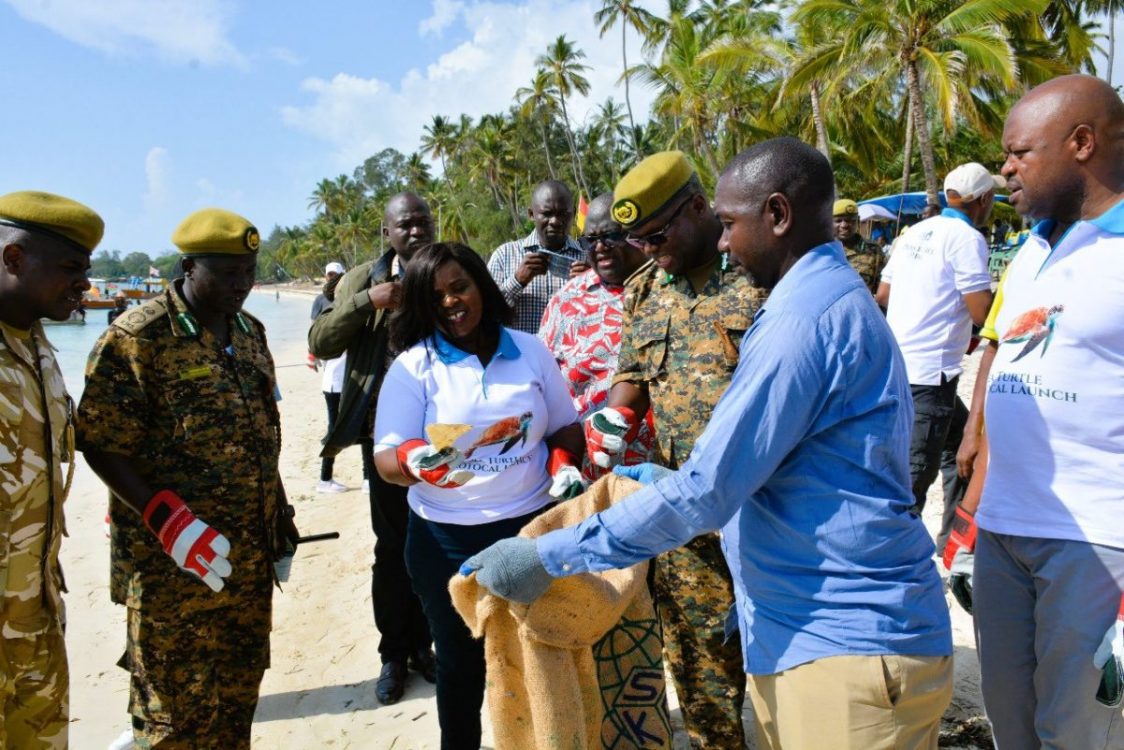
Tourism Cabinet Secretary Peninah Malonza has sounded the alarm over mass deaths of turtles along the coastline, in what is attributed to pollution and encroachment of nesting areas.
To minimise the losses, the CS has announced that the ban on single-use plastics as espoused under the Wildlife Conservation and Management Act, will be strictly enforced in all beaches.
“Today we have imposed a total ban on plastics in our beaches. We will not allow any form of single use plastics such as straws, bottles and plastic bags in our shores. Our law enforcement officers and police officers alongside the Ministry of Interior will ensure that the ban is effective,” Malonza said.
She was speaking on the sidelines of the launch of Sea- Turtle Conservation protocol and standards at the Kenya Wildlife Service Marine Park and Reserve headquarters in Mombasa.
The CS noted marine researchers had established that turtles along the coastline have been dying due to persistent dumping of plastic waste that end up in the ocean.
Plastic waste
During rains, deposits of plastic bottles, used condoms, needles and syringes, glass bottles, household equipment and more are washed into the ocean posing threat to marine life.
“The wanton dumping of plastics that end up in the ocean has been alarming… people dump assorted wastes and mostly plastic wastes. Now turtles have been consuming these plastic wastes which have resulted in mass deaths,” she said after taking part in clean up of Jomo Kenyatta Public beach where 349kg of mostly plastic wastes were collected in less than an hour.
Most of the sea turtles, she said, have succumbed to fatal fibropapillomatosis tumors which she said is linked to pollution.
Fibropapillomatosis, is a tumor-causing disease that affects some sea turtles. It causes cauliflower-like tumors to form on the skin or anywhere on the body, including the eyes and mouth. Tumors can also form in internal organs. Some sea turtles only have mild forms of the disease whereas others develop numerous or large tumors that result in debilitation and death.
She said it is the responsibility of all Kenyans to ensure the environment, including beaches, is clean.
According to Wild Wide Fund (WWF) manager of the Coastal Kenya programs Asma Awadh, the turtle population at the Kenyan coast is on the decline because of poaching and encroachment of turtle nests.
Beach invasion
“Many of the challenges faced by the turtles are human related. For instance, the face the threat of being poached by fishers for both meat and their carapace and other body parts to be used as artifacts… the other challenge is that turtles come to the beach to nest and now we have more and more people coming to the beaches and we have a lot of day and night activities along the beach,” said Awadh.
She added: “So we are encroaching on the space the turtles use to come and nest and therefore we are reducing their population. Turtles have been observed to have a habit of using the beach they hatched from to come and nest decades later,” explained Awadh.
The Turtle conservation protocol, according to Malonza, will be a guiding tool that will help in conservation of turtles by allowing them to reproduce.
“Under this protocol we will be examining even the DNA of the turtles and their shells to obtain important information about the historical background and genetic makeup of turtles so that we can offer practical solutions regarding their lives,” explained the CS.
Author
Reuben.Mwambingu
View all posts by Reuben.MwambinguLatest News






Advertisement
More on News