Advertisement
Teachers body defends hiring, lays out process to Parliament
Tuesday 24th June, 2025 12:20 AM|

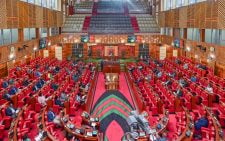
The Teachers Service Commission (TSC) has defended its recruitment and deployment procedures, asserting its commitment to fairness, transparency, and inclusivity following concerns raised by Homa Bay MP Joyce Bensuda and other members of the National Assembly’s Departmental Committee on Education.
In an official response dated June 2025, the TSC reiterated that its teacher recruitment process is guided by legal frameworks, including the Constitution, the TSC Act, the Employment Act, and the National Cohesion and Integration Act.
The commission emphasised that they remain an equal opportunity employer, guided by principles of merit, equity, inclusiveness, and non-discrimination.
“In accordance with Section 55 of CORT (Code of Regulations for Teachers) Commission has developed a Teachers Recruitment Policy that governs the recruitment process to ensure that the process is carried out in a lawful manner and within the tenet of rights and freedom encapsulated within the constitution,” TSC stated.
You Might Also Like



TSC highlighted the recruitment procedure necessary for hiring, beginning with the identification of vacancies caused by teacher shortages or exits.
These vacancies are then distributed proportionally across counties and sub-counties based on need. Advertisement of positions follows through mainstream media and the TSC website, where applicants submit their applications online.
TSC then employs a standardised scoring system to ensure integrity and inclusivity during interviews conducted at the sub-county or school level, enabling regional representation and minimising logistical barriers.
Data-driven exercise
“Teacher recruitment deliberately takes into account gender balance, persons with disabilities and the inclusion of marginalised groups. A total of 5 per cent of all advertised vacancies are reserved for PWDs,” the report stated.
Special focus is also given to marginalised areas, including Arid and Semi-Arid Lands (ASAL), and schools that are hard to staff.
The commission has also responded to the issue of whether school demographics and student population influence recruitment, confirming that it uses a data-driven model.
In primary schools, staffing is based on the number of classes plus one teacher per school, while in junior and secondary schools, staffing aligns with Curriculum-Based Establishments, factoring in subject needs and student population.
According to the report, the commission ensures the absorption of teachers at a prime age to maximise long-term expertise, noting that its recruitment guidelines consider not just professional qualifications to ensure a balance between older graduates and recent entrants into the teaching profession.
“The commission distributes recruitment vacancies equally among the 47 counties. The recruitment scorecard is developed in an inclusive manner to consider items such as profession qualification, age, length of stay since qualification as a teacher and CBC upgrade,” TSC said.
The TSC clarified that the registration of schools falls under the Ministry of Education and County Education Boards.
However, it acknowledged that the rapid increase in schools has strained teacher availability, as the registration process is not always matched with an adequate teacher recruitment strategy.
The commission has also confirmed the promotion of 25,252 teachers across the country during the 2024/2025 Financial Year to enhance career progression, improve motivation, and boost performance in schools.
TSC made this disclosure in response to a request by Julius Taitumu, Igembe North MP, regarding the promotion and deployment of teachers.
Special considerations
According to the TSC report, the distribution of promoted teachers, their TSC numbers, schools, and new cadres is detailed in Appendices 3 and 4 of the report submitted to the National Assembly’s Departmental Committee on Education.
“The commission ensured that every teacher who qualified and met the required criteria was given a fair chance. This includes teachers in acting positions, those who had stagnated in one grade for years, and those with exemplary performance records,” TSC stated, highlighting that the promotions adhered strictly to Public Service principles as outlined in Article 232 of the Constitution.
Special consideration was given to institutional administrators who served in acting capacities, teachers who had remained in the same grade for extended periods, high performers in the Teacher Performance Appraisal and Development (TPAD), and teachers involved in co-curricular activities such as sports, music, and drama.
The evaluation also considered age, with senior teachers scoring more, based on a tiered structure, to acknowledge their experience and service.
The commission also highlighted efforts to ensure gender equity in school leadership, particularly in girls’ schools, and continued progressive promotions for teachers in Arid and Semi-Arid Lands (ASAL) and hard-to-staff areas as outlined in the 2021–2025 Collective Bargaining Agreement (CBA).
Several reforms have been implemented to strengthen the transparency and predictability of future recruitment and promotion processes.
“The commission remains committed to ensuring that all teacher management processes reflect fairness, inclusivity, professionalism, and accountability as enshrined in the Constitution,” TSC stated.
Author
Faith Macharia
View all posts by Faith MachariaLatest News







Advertisement
More on News