Advertisement
Tanzania restricts social media platforms as internet is restored
Monday 03rd November, 2025 09:24 PM|
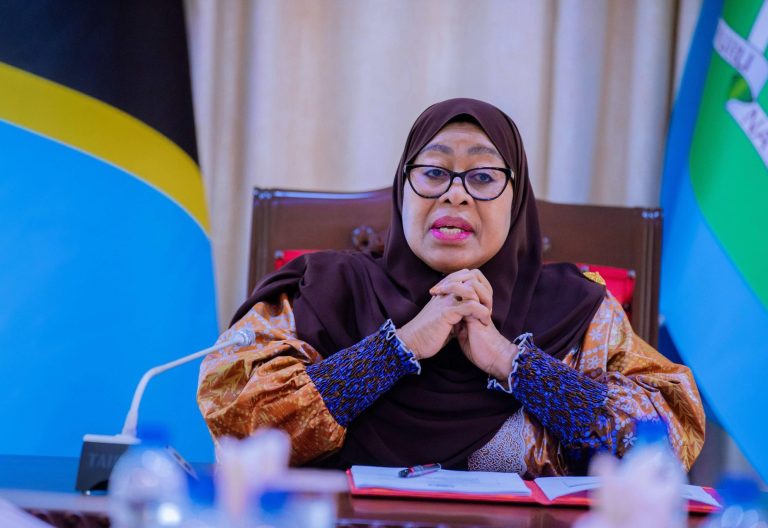
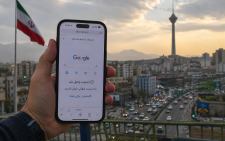
Tanzania has restored internet access after a five-day shutdown that blocked social media and messaging platforms across the country.
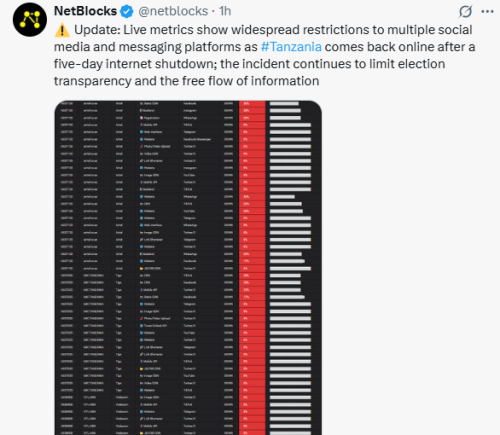
The blackout followed the October 29, 2025 presidential election, which opposition parties and rights groups have widely criticised. The restrictions were verified by NetBlocks, an internet observatory that monitors connectivity worldwide
“Live metrics show widespread restrictions to multiple social media and messaging platforms as #Tanzania comes back online after a five-day internet shutdown; the incident continues to limit election transparency and the free flow of information,” the organisation reported.
In addition, the Tanzanian government has urged international media to verify information with official sources before reporting on the elections and post-poll unrest.
You Might Also Like
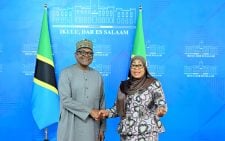
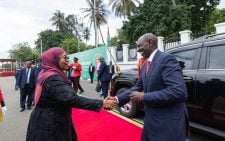
Foreign Affairs Minister Mahmoud Thabit Kombo said the election was conducted with utmost transparency and adherence to democratic principles and that isolated incidents were swiftly handled by security agencies.
He emphasised that the government remains committed to peace and stability and asked the media to seek confirmation from official channels before publishing reports.
President Samia Suluhu Hassan was declared the winner with 97.66 per cent of the vote, according to the Independent National Electoral Commission (INEC). She begins her first full term after succeeding John Magufuli in 2021.
Opposition boycott sparks unrest
The main opposition party, Chadema, boycotted the election after its leader Tundu Lissu and other key figures were barred from running or arrested. The ruling Chama Cha Mapinduzi (CCM) party claimed 270 of 272 parliamentary seats.
The election and its aftermath sparked violent protests in several cities, including Dar es Salaam and Dodoma. The internet shutdown made it difficult to verify reports or document the scale of unrest.
Amnesty International criticised the government for using excessive force against protesters during the blackout. Vongai Chikwanda, Amnesty’s Deputy Regional Director for East and Southern Africa, said:
“Authorities must immediately refrain from suppressing protests and instead respect, protect, and facilitate the right to peaceful assembly. They must also allow both local and international media to freely report on the human rights situation.”
Amnesty called for thorough investigations into killings by security forces and for the release of those arrested for peaceful assembly.
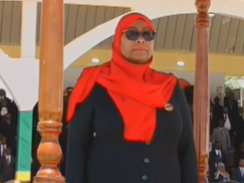
President Samia was sworn in under heavy security at a military parade ground in Dodoma. The ceremony, usually open to the public, was closed and broadcast only on state television. She thanked election officials for what she called efficient work and expressed regret over the violence, describing it as a blot on Tanzania’s image.
Police blamed some of the unrest on foreign nationals and motorbike operators. Prices of food and fuel have surged, schools and colleges are closed, and public transport remains disrupted in many areas.
International observers, including SADC, said voters could not freely express their will in many areas, citing restrictions on the opposition and suspected ballot tampering. Despite these concerns, the government insists security forces acted lawfully and that the election was conducted transparently.
Author
Kenneth Mwenda
Kenneth Mwenda is a business, sports, and politics digital writer with over seven years of experience in journalism, covering breaking news, feature stories, and in-depth analysis across a range of beats.
For inquiries, he can be reached at [email protected]
View all posts by Kenneth MwendaLatest News




Advertisement
More on News