Advertisement
Kenya overtakes Tanzania in global peace rankings
Saturday 13th June, 2026 11:06 PM|
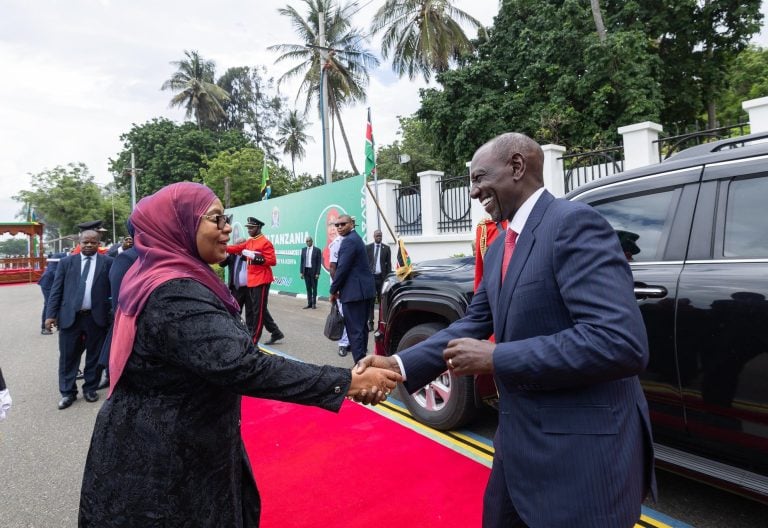
Kenya has strengthened its position as one of East Africa’s relatively stable nations, overtaking Tanzania in the latest Global Peace Index rankings even as experts warn that growing regional conflicts and economic pressures could threaten future gains.
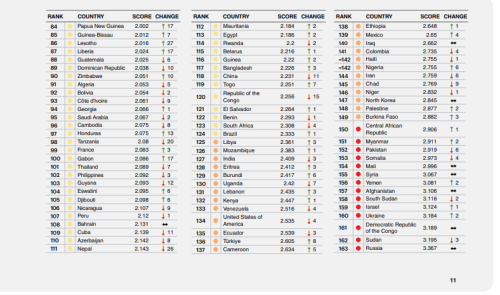
The newly released Global Peace Index (GPI) 2026 ranks Kenya 132nd out of 163 countries globally, an improvement from the previous year and enough to place it ahead of several regional neighbours, including Uganda, Ethiopia, Somalia, South Sudan and the Democratic Republic of Congo.
The report also reveals a sharp decline in Tanzania’s performance. Tanzania dropped 20 places in the global rankings to position 98, making it one of the biggest deteriorations recorded worldwide over the past year.
For Kenya, the findings offer a rare positive story amid ongoing concerns over the cost of living, youth unemployment and political tensions.
You Might Also Like



Yet the report warns that East Africa’s largest economy cannot afford complacency.
“The world became less peaceful for the 15th time in the last 18 years,” the report notes, adding that 99 countries recorded a deterioration in peacefulness compared to just 62 that improved.
According to the rankings, Kenya’s overall peace score improved slightly, helping it climb above Uganda, which ranked 130th globally, Ethiopia at 138th, Somalia at 153rd and South Sudan at 158th.
The result places Kenya among the better-performing countries in a region facing growing security and humanitarian challenges.
By contrast, Tanzania’s ranking slipped significantly, falling to 98th position globally.
While Tanzania remains considerably more peaceful than Kenya overall, the scale of its decline drew attention in the report, which identifies the country as one of the largest long-term deteriorations in this year’s index.
The rankings come at a time when East Africa is grappling with multiple crises, including Sudan’s civil war, instability in eastern DRC, persistent insecurity in Somalia and geopolitical tensions across the Red Sea corridor.

A troubled neighbourhood
The report paints a concerning picture of the wider region.
“The Horn of Africa is no longer a set of separate conflicts. The conflicts in Sudan, Ethiopia, Eritrea, South Sudan and Somalia are now interlocked through every channel that causes conflicts to spread,” the index observes.
That assessment has direct implications for Kenya, which sits at the centre of East African trade, diplomacy and humanitarian operations.
Although Kenya has avoided the large-scale armed conflicts affecting some of its neighbours, it remains exposed to cross-border threats, refugee flows, terrorism risks and economic disruptions.
The report notes that conflict has become increasingly internationalised, with 103 countries now involved in some form of external conflict over the past five years, compared to just 59 in 2008.
What Kenya is getting right
Despite numerous domestic challenges, Kenya has maintained a relatively stable political environment compared with many countries in the region.
The country continues to play a leading role in regional peace initiatives, including mediation efforts in Sudan and South Sudan, while also serving as a key partner in security operations targeting Al-Shabaab militants in Somalia.
Kenya’s diversified economy, stronger institutions and robust private sector have also helped cushion it from some of the shocks affecting neighbouring countries.
These factors have contributed to the country’s gradual improvement in peacefulness over the long term.
However, the report identifies several emerging threats that could undermine progress.
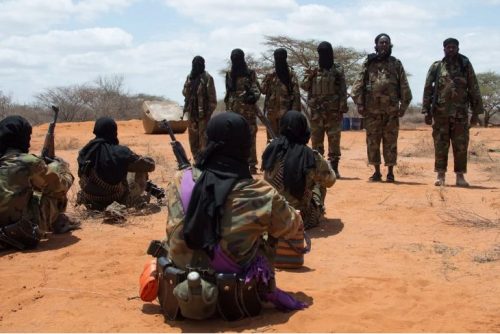
Among them are rising regional conflicts, economic pressures linked to global instability and the growing interconnectedness of crises across the Horn of Africa.
It warns that the spread of conflict increasingly occurs through refugee movements, illicit trade networks, arms trafficking and economic shocks.
The report also points to rising military expenditure globally, worsening relations between neighbouring countries and increasing internal conflict deaths as key drivers of deteriorating peace worldwide.
For Kenya, these risks are not theoretical.
The ongoing war in Sudan has displaced millions, instability in Somalia continues to pose security concerns, and tensions in the Red Sea threaten vital trade routes that support East African economies.
While Kenya’s improved ranking offers a positive signal, the Global Peace Index suggests the country’s future stability will depend not only on domestic governance but also on developments far beyond its borders.
In a region increasingly shaped by interconnected conflicts, Kenya may be outperforming many of its neighbours today, but maintaining that advantage could become significantly harder in the years ahead.
Author
Latest News








Advertisement
More on News