Advertisement
State raises concerns over poor immunisation uptake
Thursday 27th April, 2023 07:20 AM|
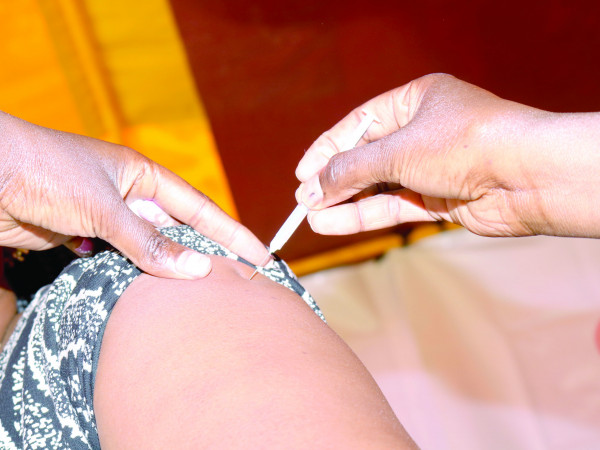
The Ministry of Health is concerned that despite an overall improvement in immunisation coverage in the country, majority of the counties were still lagging behind.
Health Cabinet Secretary Susan Nakhumicha yesterday disclosed that the numbers of unvaccinated Kenyans particularly at the county level continue to increase.
She applauded 13 counties for the tremendous progress in immunization performance in terms of Fully Immunized Child, Pentavalent 3 and Covid-19 vaccination coverages.
“Today I will award Nakuru, Nyandarua, Mombasa, Vihiga, Murang’a, Tharaka Nithi, Kirinyaga, Migori, Bungoma, Nyamira, Machakos, Samburu and Nairobi,” she said, commending those lagging behind because they have made efforts even if insignificant.
“I recognize your efforts in surmounting critical challenges such as insecurity, geographical and social barriers,” she added when she officially led the country in marking the National Immunization Week 2023.
This year’s theme was ‘The Big Catch-Up’.
According to the last Kenya Demographic Health Survey (KDHS 2014) , the routine immunization coverage currently stands at 80 percent, a slight improvement in the last nine years.
“Despite the great efforts, some communities have still been left out consistently, and others not fully vaccinated,” the CS noted.
Vulnerable miss out
Unfortunately, Nakhumicha pointed out most of the populations that miss out on vaccination are usually the most vulnerable. Over the past year, she said Kenya has grappled with measles outbreaks, an occurrence that clearly denotes significant immunity gaps in the population.
“Whereas outbreak responses were conducted, it is important that we improve routine coverages to avert the outbreaks in a more efficient and cost-effective fashion,” she said, calling on the counties to set aside funds for routine immunisation.
Strategy to increase coverage
She particularly emphasised that efforts be focused towards increasing the coverage of the second dose of measles. This, she said should be done alongside other strategies for other vaccines.
Since 2014, the health system has navigated many changes including devolution, the Covid-19 pandemic, and it is commendable that our immunization programmes have remained resilient, Nakhumicha noted.
And the CS underscored these efforts noting that over the years, the national government, county government and partners have invested in immunization in the form of cold chain equipment, capacity building of health workers, service delivery strategies such as campaigns and outreaches.
“So far, through support from Gavi, 37 counties have been provided with vehicles to support vaccine collection from our regional depots. All counties were also provided with a motorbike to support cold chain equipment repair and maintenance,” she said.
The CS noted that these initiatives have only served to improve access and helped to reduce the burden of vaccine preventable diseases.
“Indeed, the return on investment for immunization is high, the wider economic value of the immunization shows a double digit return on investment for each Shilling spent on immunization,” she said.
On her part Shaheen Nilofer, the Unicef Country Representative, the backslide in immunisation coverage is being driven by the Covid-19 pandemic, displacement and vaccine misinformation. “Globally, 6.7 million children missed out on routine vaccines between 2019-2022, while in Africa alone, 12.7 million children missed out over the same period, and over 40 percent, have received no vaccine at all,” she noted.
Author
George.Kebaso
View all posts by George.KebasoLatest News




Advertisement
More on News