Advertisement
South Sudanese fight worsening floods to save land
Sunday 14th December, 2025 07:38 AM|
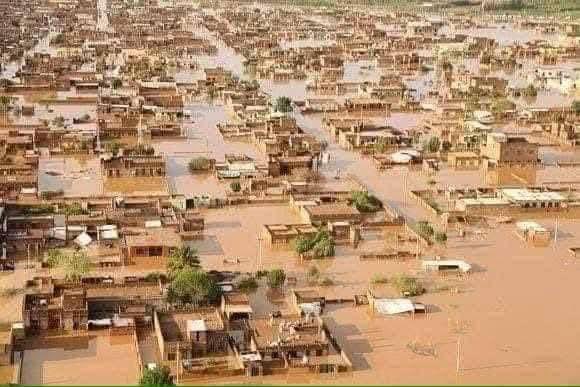
Standing in waist-deep water, Ayen Deng Duot uses a machete to break up the thick roots of a papyrus plant and throws the pieces onto a spongy mix of plants and clay soil. This human-made shore, once compacted and sun-dried, will expand the island where the South Sudanese mother of six stays with her family.
The Akuak community of about 2,000 people has been using this technique of layering plants and mud to build islands for generations in this swampy area along the Nile River, according to their chief.
Increased flooding driven by climate change in recent years has made the islands harder to maintain, with community members spending hours each day dredging up material by hand to keep water from encroaching. South Sudan is experiencing catastrophic flooding for the sixth year in a row.
“We have to do this work every day, so that water does not chase us away,” Duot says as she pauses from her task. “We have no choice; we need to protect our homes, because we have nowhere else to go.”
You Might Also Like
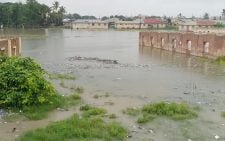

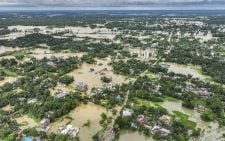
The Akuak, a clan of fishers within the Dinka ethnic group, live in an expanse of water, grass and papyrus where neighbours need canoes to visit each other. Everything is flat and quiet. On each atoll, traditional South Sudanese grass-thatched huts known as tukuls can be seen through the vegetation.
South Sudan is considered one of the countries most vulnerable to climate change. This year alone, over 375,000 people were displaced by flooding in the East African nation, according to the United Nations Office for the Coordination of Humanitarian Affairs. The country also remains politically unstable after years of conflict.
The Norwegian Foreign Policy Institute notes in a March 2025 paper that seasonal flooding has gotten worse and less predictable in South Sudan.
“Whereas floodwaters have historically receded during the November–January dry season, years of consecutive and record-breaking flooding have permanently changed the landscape,” the researchers write.
Commitment to the land
The Akuak families support themselves through fishing. They only go to town to sell their fish or in case of medical emergencies. Bor, the state capital, is 25 kilometres (15.5 miles) to the south, a five-hour rowing journey.
They have stayed even when many others have moved to cities because of the flooding.
“This is the land of our ancestors. We have been living here for thousands of generations, so we have learned how to resist the water and how to stay in this environment. We will never abandon our land,” says Matuor Mabior Ajith, an Akuak fisherman. “We do hope the water can recede so that we can recover some dry land and grow crops again.”
Author
Latest News








Advertisement
More on News