Advertisement
Ruto scoffs at critics over Naivasha-Kisumu-Malaba SGR project
Thursday 19th March, 2026 12:06 PM|

President William Ruto has dismissed critics of the Naivasha-Kisumu-Malaba Standard Gauge Railway (SGR) project, declaring that the government had always maintained a clear and strategic plan for the country’s rail expansion.
“It had been said by, not Kenyans. Let me correct. I think somebody said many Kenyans – no, it was the naysayers who said it is a railway to nowhere. We are just confirming to them that we had a plan. It was never a road to nowhere,” Ruto said.
The president emphasised that the new phase of the SGR is part of a broader economic and logistical strategy aimed at unlocking regional trade and strengthening Kenya’s position as East Africa’s transport hub.

You Might Also Like

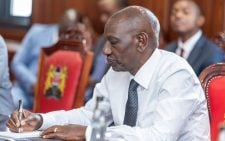

Ruto explained that his administration had spent the past three years stabilising the economy to create room for large-scale development projects.
“We were reorganising ourselves. I am very proud today that in the last three years, we have consolidated and stabilised our economy, allowing us to now undertake this major infrastructure project alongside all the other transformational projects that are going on in the Republic of Kenya,” he said.
Moreover, he said that Kenya’s economic indicators had improved significantly, giving the government confidence to proceed with ambitious investments.
“Our economy today is on sound footing. We have brought down inflation,” he noted.
The Naivasha-Kisumu-Malaba project
The extension is expected to cover approximately 369 kilometres, forming a crucial link between the Port of Mombasa and western Kenya, and ultimately connecting to neighbouring countries such as Uganda.
The project is seen as a key component in enhancing regional integration under the Northern Corridor.
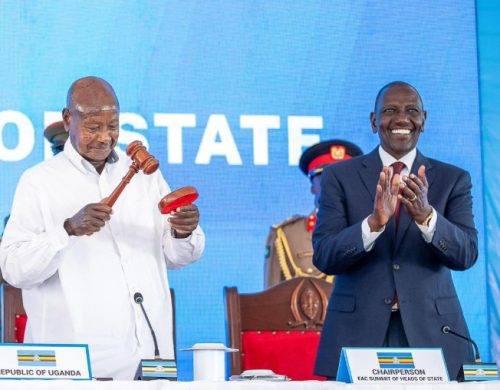
The launch comes ahead of a highly anticipated groundbreaking ceremony scheduled for Saturday, March 21, 2026, in Kisumu, where Ruto will be joined by Ugandan President Yoweri Museveni. The event is expected to draw more than 20,000 attendees, including residents, political leaders, and regional stakeholders.
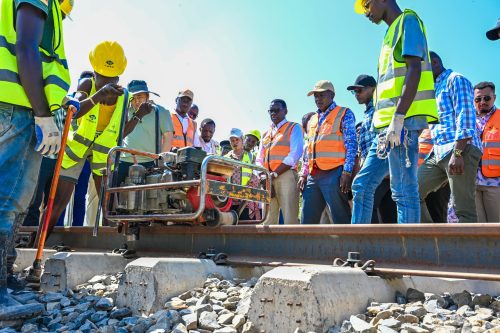
Transport Cabinet Secretary Davis Chirchir earlier confirmed that preparations for the ceremony were complete following an inspection tour of the Kibos SGR site in Kisumu.
“We have arrived here in Kisumu today in Kibos to check the preparedness for the groundbreaking of the Standard Gauge Railway extension from Naivasha to Kisumu and eventually to Malaba,” Chirchir said. “This is a big day that we will celebrate with our President and President Yoweri Museveni when they come to launch this very significant project.”
According to the Ministry of Transport, the railway will significantly reduce the cost and time of moving goods across the region, which is currently dominated by road transport. The SGR extension is also expected to include passenger services, improving mobility for millions of Kenyans.
“This is a very significant construction that will open up the regional transport corridor, which is currently serviced predominantly by trucks.It will also have passenger facilitation in order to improve the transportation of goods to market and enhance the movement of people across the region,” Chirchir said.
Author
Latest News





Advertisement
More on News