Advertisement
Ruto gives reasons for delayed reopening of Kenya–Somalia border
Thursday 14th May, 2026 09:28 AM|

President William Ruto has explained why the Kenya–Somalia border remains closed, despite his earlier pledge that it would reopen in April 2025.
Speaking during an interview with an international TV station on Wednesday, May 13, 2026, on the sidelines of the Africa Forward Summit in Nairobi, Ruto said renewed instability in Somalia forced Kenya to delay the reopening plan.
According to the President, Kenya and Somalia had made significant progress toward reopening the border before tensions emerged between Somalia’s federal government and regional states, particularly Jubaland.
“We were moving very well until there was a huge disagreement between the government in Mogadishu and the states,” Ruto said.
You Might Also Like



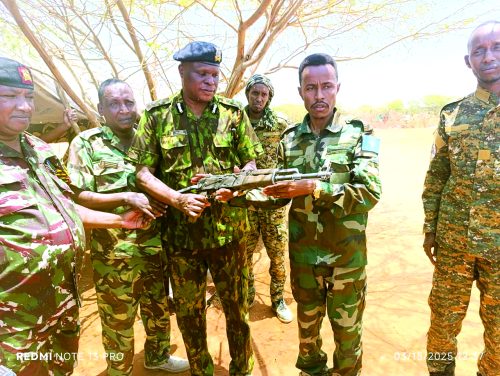
He explained that clashes involving the Somali National Army (SNA) and regional militias near the border created fresh security concerns for Kenya.
“In fact, at that time, some of the Somali National Army were pushed into Kenya, and that complicated the situation. We had to support members of the SNA by assisting them so that we could pacify the war,” he explained.
Ruto noted that Somalia’s political uncertainty has further complicated efforts to reopen the border, saying the country is currently facing an unclear transition period.
“The term of Parliament there expired, and the President is also expiring. Nobody knows where that situation is going. So the border for the time being is not open,” he said.
The President also revealed that Kenya has been engaging regional partners, including Ethiopia and Djibouti, in efforts aimed at restoring peace and stability in Somalia, although progress has remained limited.
His remarks come months after he announced that the border would reopen in April under enhanced security arrangements to facilitate trade and movement between the two countries.
The Kenya–Somalia border was closed in October 2011 following repeated Al-Shabaab attacks, and repeated attempts to reopen it have since been delayed due to persistent security concerns.
Terror fears
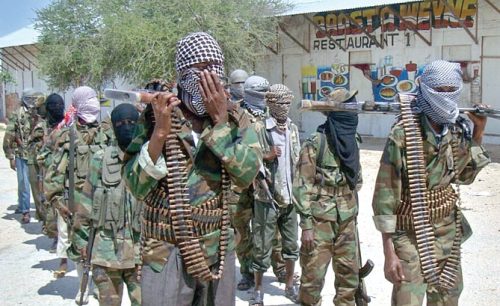
For years, these borderlands have become a critical frontline in the fight against the Somalia-based extremist group Al-Shabaab, which continues to launch cross-border attacks into Kenya before slipping back into Somali territory.
A new briefing from the Institute for Economics & Peace reveals just how dangerous such regions have become globally.
The 2026 Global Terrorism Index finds that 41 per cent of terrorist attacks occur within 50 kilometres of an international border, while 64 per cent take place within 100 kilometres, evidence that modern terrorism clusters in weakly governed frontier zones.
“Border proximity is a defining feature of modern terrorism,” the report states.
The Kenya-Somalia boundary stretches more than 680 kilometres across harsh terrain marked by scrubland, dry riverbeds and limited infrastructure. Formal crossing points are few, but informal routes used by pastoralist communities number in the hundreds.
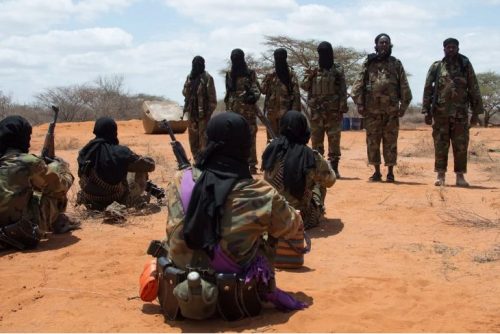
The index says these conditions allow fighters to move quickly, blending into civilian populations that share language, clan ties and livelihoods across both countries. Many families live on both sides of the border, complicating surveillance and enforcement.
“Borderlands often represent authority gaps: remote areas where state control is weakest,” the report notes, adding that distance from major cities enables armed groups to recruit, train and operate with relative freedom.
For Kenyan forces, pursuing attackers across the border requires diplomatic coordination and operational planning, often giving militants crucial time to escape.
Another troubling pattern is the silence surrounding many frontier attacks. The report finds that terrorist groups are increasingly unlikely to claim responsibility for incidents near borders, particularly those targeting civilians.
In 2025, only 24 per cent of attacks within 50 kilometres of a border were claimed, the lowest level in more than a decade.
The index says anonymity serves multiple purposes: it complicates intelligence gathering, avoids provoking large-scale retaliation and spreads fear among communities unsure who is responsible.
“Terrorism does not respect borders; it hides behind them,” the brief observes.
Author
Latest News




Advertisement
More on News