Advertisement
Inside Kenya-Somalia dead zones where the border fails and terror thrives
Friday 20th March, 2026 04:41 PM|

Along the vast, arid frontier separating Kenya and Somalia, the international boundary often exists more on maps than on the ground.
Here, in remote settlements stretching across Mandera, Wajir and Garissa counties, security officials describe a patchwork of dead zones, areas where state authority thins, movement is largely uncontrolled, and militant groups exploit the vacuum.
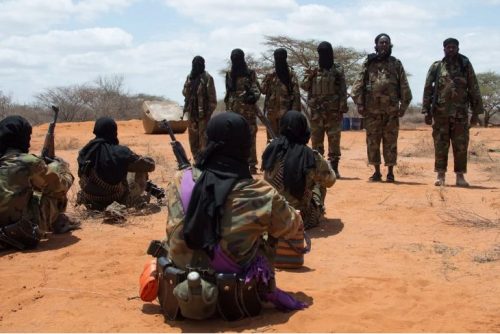
These borderlands have become a critical frontline in the fight against the Somalia-based extremist group Al-Shabaab, which continues to launch cross-border attacks into Kenya before slipping back into Somali territory.
A new briefing from the Institute for Economics & Peace underscores just how dangerous such regions have become globally.
You Might Also Like



The 2026 Global Terrorism Index finds that 41 per cent of terrorist attacks occur within 50 kilometres of an international border, while 64 per cent take place within 100 kilometres, evidence that modern terrorism clusters in weakly governed frontier zones.
“Border proximity is a defining feature of modern terrorism,” the report states.
Where geography favours militants
The Kenya-Somalia boundary stretches more than 680 kilometres across harsh terrain marked by scrubland, dry riverbeds and limited infrastructure. Formal crossing points are few, but informal routes used by pastoralist communities number in the hundreds.
The index say these conditions allow fighters to move quickly, blending into civilian populations that share language, clan ties and livelihoods across both countries. Many families live on both sides of the border, complicating surveillance and enforcement.
“Borderlands often represent authority gaps: remote areas where state control is weakest,” the report notes, adding that distance from major cities enables armed groups to recruit, train and operate with relative freedom.
For Kenyan forces, pursuing attackers across the border requires diplomatic coordination and operational planning, often giving militants crucial time to escape.
Another troubling pattern is the silence surrounding many frontier attacks. The report finds that terrorist groups are increasingly unlikely to claim responsibility for incidents near borders, particularly those targeting civilians.
In 2025, only 24 per cent of attacks within 50 kilometres of a border were claimed, the lowest level in more than a decade.
The index says anonymity serves multiple purposes: it complicates intelligence gathering, avoids provoking large-scale retaliation and spreads fear among communities unsure who is responsible.
“Terrorism does not respect borders; it hides behind them,” the brief observes.
East African vulnerability?
The Kenya–Somalia frontier is part of a broader regional pattern affecting the East African Community. Armed groups operating in the eastern Democratic Republic of the Congo (DRC) frequently cross into Uganda, while instability around the Lake Chad Basin affects several countries simultaneously.
Across Africa, similar tri-border areas, where three nations meet, have become hotspots due to fragmented jurisdiction, smuggling networks and limited security coordination.
Traditional counter-terrorism relies on national armies and police securing sovereign territory. But dead zones expose the limits of that model. Militants exploit legal barriers to cross-border pursuit, gaps in intelligence sharing and slow political processes required for joint operations.
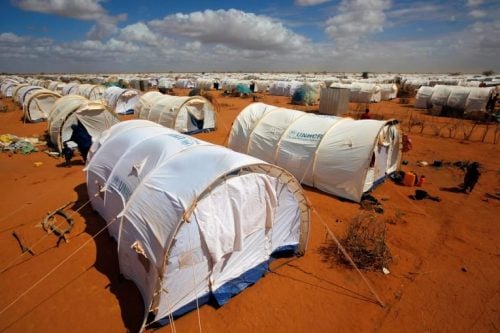
Illicit economies further entrench instability. Routes used for smuggling charcoal, fuel, livestock and weapons often double as militant supply chains, while refugee flows can mask the movement of fighters.
For civilians living in these areas, insecurity is a daily reality. Schools, transport routes and telecommunications infrastructure have repeatedly been targeted, disrupting economic activity and deepening isolation.
Development projects struggle to take hold where security is uncertain, reinforcing the cycle of neglect that militants exploit.
The index warns that without sustained investment in infrastructure, governance and cross-border cooperation, these neglected frontier regions will remain fertile ground for extremism.
Author
Latest News






Advertisement
More on News