Advertisement
Puzzle of man’s death after refusing treatment
Friday 01st August, 2025 10:20 AM|
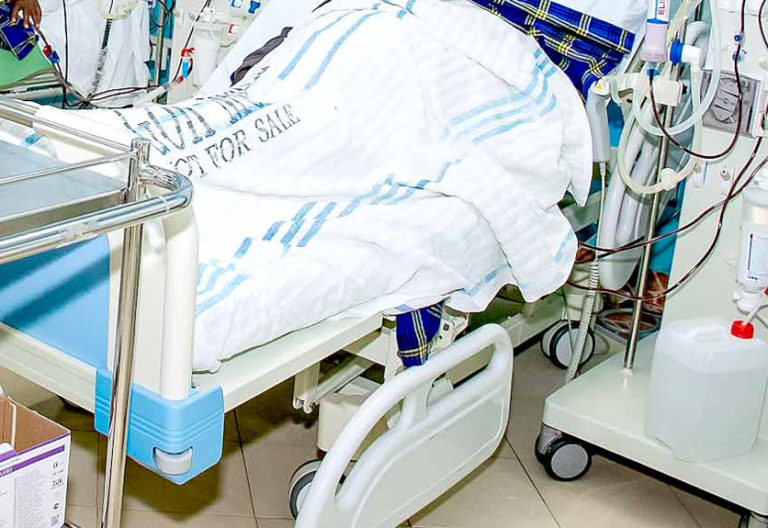
Police have launched investigations into the death of a 30-year-old man who refused to seek medical attention and instead went to be prayed for in a church within Mukuru slums where he died.
Detectives say Francis Inaweti Muchera, who had been sick for some time, had been taken to the church by his wife on Tuesday. As the pastor was praying for him, he fell asleep and never woke up again.
For over one hour, the wife remained beside him, hoping that he would wake up, in vain. The pastor who was praying for him had already left the church compound.
Police officers were later informed of the incident and arrived at the scene confirming the man had died.
You Might Also Like


Reports indicate that some church leaders exploit the vulnerability of the congregants by exposing them to extreme beliefs and out-of-context interpretations of religious texts. Some of the victims have even rejected treatment and conventional medicine.
Three months ago, the body of Francis Muli, also with a swollen face, and another man were found lying in a prayer room within a church compound in Rongo, Migori County.
A total of 57 other weak and frail congregants were also rescued from a church in East Kamagango, the same place where another follower, a General Service Unit (GSU) officer Dan Ayoo Obura, died after he refused to seek medical attention and his body buried within the church few weeks earlier.
On Tuesday, the Cabinet approved recommendations from the Presidential Taskforce on Religious Organisations, a landmark move to safeguard the integrity of religious practice while curbing exploitation.
The proposed reforms, developed in response to the Shakahola tragedy, place religious leaders at the centre of accountability efforts, emphasising self-regulation over State control.
The key proposals include enacting a legal framework to govern religious organisations, establishing a Religious Affairs Commission, and strengthening umbrella faith organisations for coordination.
The model blends institutional autonomy with supportive oversight and calls for leadership standards, reforms to religious broadcasting, and civic education to promote tolerance and prevent extremism.
A multi-agency collaboration involving security agencies, interfaith platforms, and educational institutions will support implementation. A recent study by the National Crime research Centre (NCRC) revealed that there are alarming practices by the religious groups studied, including dietary restrictions, ritualistic animal slaughter, stringent access controls to their religious spaces, and a general aversion to conventional medical treatment.
The study further indicated that some religious groups are involved in abuses of human rights, murder and unusual killings, incitement of members to kill the elderly, seizures or persuading of members to sell their properties and surrender to the religious leaders.
Author
Zadock Angira
View all posts by Zadock AngiraLatest News






Advertisement
More on News