Advertisement
PS Sing’oei defends French President Macron over UoN audience rebuke
Wednesday 13th May, 2026 11:01 PM|

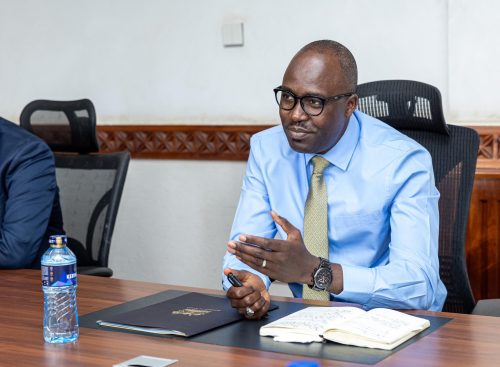
Principal Secretary for Foreign Affairs, Korir Sing’oei, has defended President Emmanuel Macron following criticism over the French leader’s public reprimand of a noisy audience during a youth forum at the University of Nairobi.
The incident, which unfolded during the inaugural Africa Forward Summit in Nairobi on May 11, 2026, sparked intense debate online and among political commentators, with critics accusing Macron of speaking to African attendees in a patronising tone reminiscent of colonial-era attitudes.
But speaking in a TV interview on Wednesday night, May 13, 2026, Sing’oei dismissed the backlash as exaggerated and defended the French president’s intervention as appropriate under the circumstances.
“Sometimes we can be a little oversensitive,” Sing’oei said.
You Might Also Like

“In a context where people are having a conversation, it is disrespectful for people to be consulting loudly because it interferes with the people who are keen on listening. I think he was fairly respectful,” he added.
The confrontation occurred at Taifa Hall during the “Africa Forward: Creation in Motion” session, where young African artistes, entrepreneurs and innovators were presenting ideas before an international audience.
As side conversations and rising chatter increasingly drowned out speakers on stage, Macron abruptly stood up, walked toward the platform and requested the microphone.
“Excuse me, everybody,” Macron said in English.
“I’m sorry guys, but it’s impossible to speak with such a noise. So this is a total lack of respect.”
The room quickly fell silent after the intervention, with parts of the audience applauding. The event moderator later praised the move as an example of leadership.
Yet clips of the moment rapidly circulated across social media platforms, igniting broader discussions about diplomacy, power and historical sensitivities in Africa-Europe relations.
Some critics argued that Macron’s tone reflected a tendency by Western leaders to lecture African audiences publicly in ways they might avoid elsewhere.
Others defended the French president, saying his comments were directed at maintaining decorum and ensuring that young African presenters received proper attention and respect.
Sing’oei appeared firmly aligned with the latter view, framing the incident less as a diplomatic controversy than a matter of audience etiquette.
The PS remarks also underscored the delicate balancing act facing African governments as they pursue closer partnerships with European powers while remaining sensitive to domestic concerns over sovereignty, dignity and historical memory.
The Africa Forward Summit itself was designed, according to Kenyan government officials, to recast relations between Africa and France around mutual respect, innovation and shared economic priorities.
The gathering brought together political leaders, investors and youth representatives to discuss industrialisation, technology, climate financing and educational partnerships.
But the episode at the University of Nairobi demonstrated how quickly symbolic moments can overshadow broader diplomatic messaging, particularly in an era where political gestures are instantly dissected online.
For Sing’oei, however, the controversy revealed more about public interpretation than about Macron’s conduct itself.
“The people speaking deserved to be heard,” he suggested, emphasising that maintaining order at such forums was a matter of respect for participants rather than hierarchy between nations.
Author
Martin Oduor
View all posts by Martin OduorLatest News







Advertisement
More on News