Advertisement
Protesters attack DRC Ebola treatment centre
Saturday 23rd May, 2026 11:27 AM|

The World Health Organization (WHO) warned Friday that violence is impeding efforts to contain a deadly Ebola outbreak in the Democratic Republic of Congo (DRC) after protesters demanding the return of a victim’s body set fire to a treatment centre.
A lethal Ebola strain has ripped through local communities in the area, triggering a global health emergency. Tests show that the Bundibugyo strain — which has no specific treatment or vaccine — is behind the outbreak.
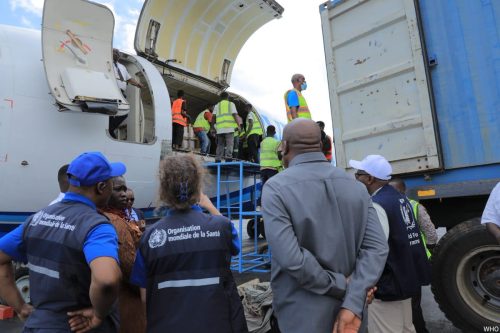
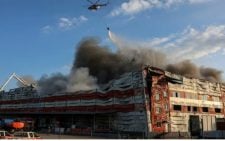
After health authorities refused access to the young man’s body, family members responded by lobbing projectiles at the hospital tents, causing a fire to break out, the local official said.
The WHO said violence and insecurity in the DRC were making it harder to contain the outbreak as it announced that at least 177 deaths are now thought to be linked to Ebola, with nearly 750 cases suspected.
You Might Also Like

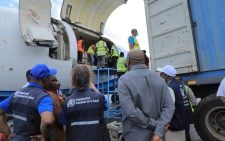
Years of militia-led fighting in the vast country have killed thousands and displaced many more, prompting accusations of war crimes.
In January, the White House claimed to have negotiated a peace deal between the foreign ministers of the DRC and Rwanda – which allegedly backs the key rebel group that seized two large cities in the eastern DRC earlier this year. But for civilians in the contested region, the threat of violence has not stopped.
Those tensions, coupled with a slew of US funding cuts, have impeded response efforts to the latest Ebola outbreak, aid workers say.
“The Ebola situation in the DRC is deeply worrisome,” WHO Director-General Dr Tedros Adhanom Ghebreyesus said in an update on social media Friday, cautioning that officials “know the epidemic in the DRC is much larger” than the seven deaths that have been confirmed by a laboratory.
“These numbers are changing as surveillance efforts and laboratory testing are improving, but violence and insecurity are impeding the response,” Tedros added.
The WHO has declared the outbreak a “public health emergency of international concern” but said on Friday that the spread of disease “did not meet the criteria of pandemic emergency”. The agency has raised its assessment of the level of risk within the DRC to “very high” but added that the global risk level still remains low.
It also signalled that an antiviral treatment called ‘Obeldesivir’ could possibly be used to prevent the development of Ebola among those who have come into contact with infected people. The WHO’s chief scientist, Dr Sylvie Briand, described it as a “promising treatment”.
As health workers try to curb the spread of disease, one relief official described the outbreak as “race against time” compounded by food insecurity, displacement and cross-border movement. About 26.5 million people face acute food insecurity in the DRC, according to the UN’s World Food Programme (WFP).
“This outbreak is a race against time,” David Stevenson, the WFP country director in the DRC, said on Friday. “Without rapid, coordinated action at scale, a health crisis could quickly turn the existing food insecurity and health crisis into an uncontrollable humanitarian emergency in eastern DRC and beyond.”
The UN will commit $60 million to response efforts in the DRC, the head of the agency’s Office for the Coordination of Humanitarian Affairs, Tom Fletcher, said Friday.

“These are some of the most difficult operating environments in the world for our life-saving work. We face conflict and high population movement,” Fletcher said, adding that relief workers “must have access to all routes – air, land and water – across the affected areas”.
Fears of misinformation
Tensions flared Thursday when the relatives of a young man who died of Ebola tried to take his body “by force” from the Rwampara Hospital in eastern DRC, Luc Mambele, vice president of the Congolese political party A2RC, told CNN.
Six patients were receiving treatment in the medical tents from the Alliance for International Medical Action at the time of the attack and are now being cared for in the hospital, ALIMA said in a statement.
The medical humanitarian organisation warned against the spread of “incorrect or unconfirmed information circulating on social media and the internet”, which is likely to fuel fear, misinformation and mistrust toward health facilities.
In a video shared with CNN, Mambele describes being locked down at the hospital as police fire warning shots to disperse protesters from the burning tents.
Video from Reuters news agency showed a large blaze engulfing the medical tents, with their scorched frames standing over blackened hospital beds in the aftermath of the attack.
Officers from the national police force who were deployed to the scene worked swiftly to restore order, Mambele told CNN.
A spokesperson for the DRC, Patrick Muyaya, condemned the attack, telling CNN that the locals responded by doing “exactly what they shouldn’t do”.
Mambele said the incident exemplified the dangers of rising misinformation within the community. Many residents in Ituri province believe that “Ebola is a lie”, he told CNN.
“The population is not sufficiently informed or made aware of what is happening. To members of the most remote communities, Ebola is a White man’s invention; it doesn’t exist,” Mambele remarked.
Cases rapidly spreading
The first suspected case involved a healthcare worker whose symptoms began on April 24 and who later died at a medical facility in Bunia, the WHO reported. By May 5, the organisation was notified of an “unidentified illness” associated with high mortality rates in the province. After an inquiry by a “rapid response team” on May 13, the outbreak was identified as the Bundibugyo virus on May 15.
The CDC found out about the outbreak on Thursday, May 14, a CDC expert source who is working on the Ebola response told CNN. The first meetings about the outbreak were on Friday, the CDC source said.
Author
Latest News


Advertisement
More on News