Advertisement
Ndegwa Njiru calls for public transport boycott over rising fuel prices
Thursday 21st May, 2026 07:29 AM|

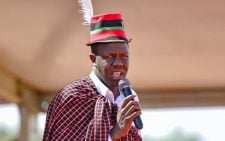
Lawyer Ndegwa Njiru has called on Kenyans to boycott matatus and embrace a nationwide “Walk to Work” movement in protest against the rising cost of living and soaring fuel prices.
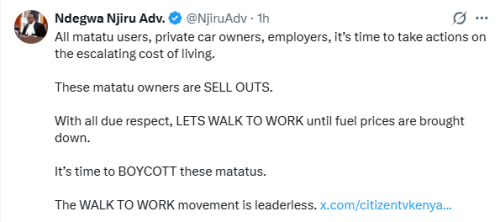
In a statement on his X handle on Thursday, May 21, 2026, Njiru has called on matatu users, private car owners and employers to take action, saying some matatu operators have failed to support the ordinary citizens during the fuel crisis.
“All matatu users, private car owners, and employers: it’s time to take action on the escalating cost of living. These matatu owners are sell-outs. With all due respect, let’s walk to work until fuel prices are brought down. It’s time to boycott these matatus,” Njiru stated.
Njiru has also urged Kenyans to rethink their use of public transport for a while and walk to work and to buy food and other essentials until the government intervenes to address soaring transport fares and basic commodity prices, which have continued to push living costs up.
You Might Also Like


He further said that the movement would be a leaderless one, Njiru said, as citizens are becoming increasingly discontent with the growing economic burden on families throughout the country.
“The walk-to-work movement is leaderless,” he added.
The remarks by the advocate come in the days after the riots over the latest increase in fuel prices, which resulted in transport strikes and protests across the country.
Matatu strike called off
The nationwide matatu strike was suspended for one week after the government held talks with public transport sector stakeholders over the rising cost of fuel.
In a statement issued by the Ministry of Interior and National Administration on Tuesday, May 19, 2026, the government said both sides agreed to continue negotiations while transport operators resume services across the country.
The strike had disrupted transport in Nairobi and other towns on Monday and Tuesday, May 19, 2026, leaving thousands of commuters stranded. In several areas, protests turned chaotic as demonstrators lit bonfires, blocked roads and clashed with police.
Interior Cabinet Secretary Kipchumba Murkomen said the government understands the pressure Kenyans are facing due to the increase in global fuel prices linked to the crisis in the Middle East.
“The Government appreciates the challenges faced by Kenyans as a result of the rising global fuel prices occasioned by the Middle East crisis,” the statement read.
The government noted that it had already introduced several measures to reduce the burden on consumers. Last month, it reduced VAT on petroleum products by 8 per cent and also used the Petroleum Development Levy to stabilise fuel prices.
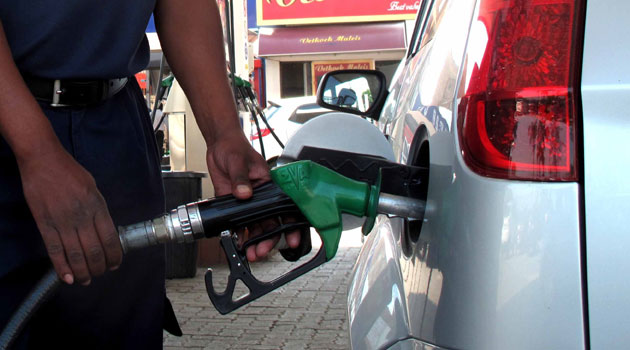
Despite those interventions, transport operators continued to push for further reductions in fuel prices, especially diesel, which is widely used by matatus, buses and trucks.
The government announced that it had reduced the price of diesel by Ksh10 per litre on Monday night, May 18, 2026. It also adjusted kerosene prices to prevent fuel adulteration by dealers mixing kerosene with diesel.
Following Tuesday morning’s meeting on May 19, 2026, both sides agreed to continue discussions.
“Following a meeting this morning between the government and representatives of public sector stakeholders, we agreed as follows: That there was a need for further negotiations between the government and the stakeholders; that the strike is suspended for one week to give room for the negotiations,” the statement added.
Author
Latest News





Advertisement
More on News