Advertisement
Mbadi: Matatu strike is uncalled for; fuel prices would be higher without govt interventions
Monday 18th May, 2026 08:49 AM|

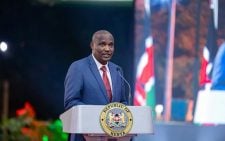
Cabinet Secretary for the National Treasury John Mbadi has defended government intervention in fuel pricing, saying the recent matatu strike is unnecessary and driven by pressure that ignores global realities.
Speaking during a morning television interview on Monday, May 18, 2026, Mbadi said the government has already cushioned Kenyans from even higher fuel prices and warned against what he termed as emotional reactions to the crisis.
“In my view, the strike is completely uncalled for,” Mbadi said. “The prices have gone high; that is a fact, but we are trying to manage a global shock with domestic tools.”
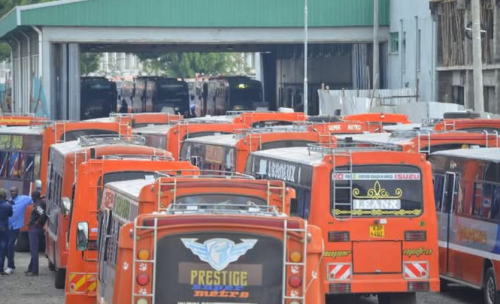
His remarks came as major public service vehicle operators suspended operations in response to the planned nationwide strike over rising fuel costs.
You Might Also Like
The coordinated suspension left thousands of commuters stranded in Nairobi and other towns, with schools closed in some areas and businesses disrupted.
Mbadi said the government understands the pressure facing Kenyans but insisted that policy responses must remain calm and data-driven.
“This is not a time to make emotional decisions,” he said. “We must act based on facts and not panic.”
He explained that global events, especially instability in oil-producing regions, have pushed up international fuel prices. He said Kenya has limited control over such shocks.
“We are trying to solve a global problem using domestic means, and that is not easy,” he said.
Mbadi added that the government has already absorbed significant costs to stabilise fuel prices. He said reductions in VAT on petroleum products and the fuel subsidy programme have cost the government billions of shillings.
“We have reduced VAT on petroleum products from 16 per cent to 8 per cent,” he said. “That alone is a loss os at least 12 billion shillings per month. We have also used the fuel subsidy fund, which had limited resources, and we have already spent a large portion of it.”
He said the government has spent over 35 billion shillings in two months to cushion consumers from price shocks.
“If we were to leave the prices without any intervention as a government, diesel today would be costing us not less than 35 shillings more. And petrol actually would be costing us over 70 shillings more.About 311 would be the price of petrol. So already the government has intervened.”
Fiscal pressures limit subsidies
Mbadi said the interventions have slowed down further price increases, but warned that the government cannot sustain unlimited subsidies.
“There is a limit to what we can do,” he said. “We must balance relief for citizens with the stability of the national budget.”
He also pointed to pressure on the national budget, saying most government revenue goes to debt repayment, salaries, counties, and other fixed obligations.
“Out of the 3.6 trillion shillings we collect, about 1.5 trillion goes to debt repayment and another trillion to salaries,” he said. “That leaves very little flexibility.”
Mbadi said even development spending is constrained because many projects depend on donor agreements and counterpart funding.
He defended government spending on security and other essential services, saying they remain necessary even during economic strain.
“We are in a region facing instability. If we fail to invest in security, we risk destabilising our economy further,” he said.
On the matatu strike, Mbadi said operators should consider broader economic conditions before taking action that affects millions of commuters.
“I understand the pressure in the transport sector,” he said. “But we must understand why prices have gone up before taking drastic steps.”
Transport operators have blamed rising fuel costs and operational expenses for the strike. Some SACCOs have also warned of possible fare increases if the government does not introduce further relief measures.
Mbadi said the government will continue reviewing the situation but urged patience.
“We may do more, but it must be done carefully,” he said. “We cannot risk the entire economy through rushed decisions.”
As the strike continues to disrupt transport in major towns, attention now turns to whether the government and transport operators will reach a compromise in the coming days.
Author
Kenneth Mwenda
Kenneth Mwenda is a business, sports, and politics digital writer with over seven years of experience in journalism, covering breaking news, feature stories, and in-depth analysis across a range of beats.
For inquiries, he can be reached at [email protected]
View all posts by Kenneth MwendaLatest News





Advertisement
More on News