Advertisement
Maraga laughs off Ruto’s Singapore transformation dream
Thursday 18th December, 2025 01:28 PM|

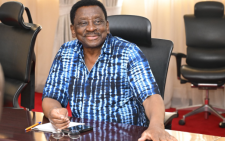
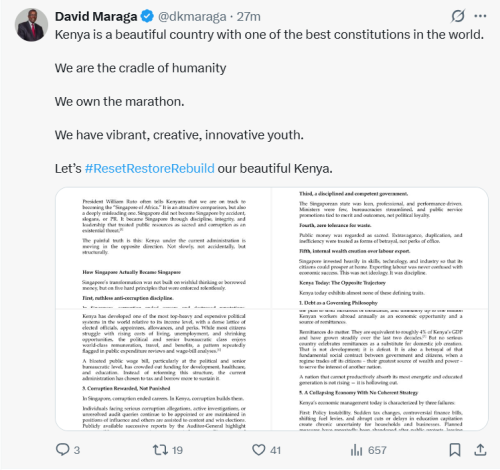
Former Chief Justice David Maraga has delivered a sharp critique of President William Ruto’s vision of transforming Kenya into the Singapore of Africa, warning that the country is instead moving in the opposite direction.
In a statement shared on X on December 18, 2025, Maraga said portraying Kenya as being on a Singapore-like trajectory is misleading and “dangerous”, arguing that the foundations that enabled Singapore’s rise are absent in Kenya today.
Maraga contends that Singapore’s success was not built on slogans or public relations but on discipline, integrity and leadership that treated corruption as an existential threat.
He notes that Singapore enforced ruthless anti-corruption measures, citing the 1986 investigation of then Minister for National Development Teh Cheang Wan as evidence that no office was beyond scrutiny.
You Might Also Like
“First, ruthless anti-corruption discipline. In Singapore, corruption ended careers and destroyed reputations, regardless of rank. Ministers were investigated, prosecuted, and removed without hesitation.”
Maraga adds that Singapore combined this with fiscal restraint, long-term planning, a lean merit-based government, zero tolerance for waste and a focus on domestic wealth creation rather than exporting labour.
Debt and governance concerns
In contrast, Maraga argues that Kenya’s current trajectory undermines these principles. He points to a sharp rise in public debt under the current administration, saying it has grown from about Ksh 8.6 trillion when President Ruto took office to over Ksh 12 trillion by late 2025, though recent estimates place the figure slightly lower amid fiscal pressures.
“Second, fiscal restraint and long-term planning. Singapore treated debt as a tool of last resort, not a governing strategy. For decades, it ran prudent budgets, accumulated national reserves, and funded development from productivity and savings rather than perpetual deficit financing, a stance repeatedly highlighted in IMF and World Bank assessments of its macroeconomic framework.”
He warns that debt service now consumes close to 70 per cent of ordinary government revenue, crowding out funding for healthcare, education and development.
According to Maraga, this debt burden has not translated into improved public services but has instead sustained a bloated political system. He criticises what he describes as an expensive political class that continues to enjoy generous perks while ordinary Kenyans struggle with unemployment, high living costs and shrinking opportunities.
He argues that corruption is no longer punished but rewarded, with individuals facing serious allegations retaining influence as audit queries worth billions go unresolved and oversight institutions weakened.
Labour exports and economic direction
Maraga also takes issue with the government’s promotion of labour export as an economic strategy. While acknowledging that remittances contribute significantly to the economy, he says celebrating the export of hundreds of thousands of workers annually as a development model amounts to defeat. He argues that a country serious about growth must prioritise creating jobs at home through skills development, industry and productivity.
He further notes that manufacturing remains a small share of GDP, weighed down by high power costs, policy instability and limited investment in productivity. In his view, these factors, combined with frequent tax changes and uncertain policies, continue to stifle business confidence and long-term growth.
Maraga concludes that Singapore’s leaders understood clean governance, rule of law and restraint as economic assets. He says Kenya’s challenge is not a lack of talent or ideas, but an extractive system that serves elites before citizens. He maintains that with disciplined and ethical leadership anchored in strong institutions, Kenya can still choose a different future.
Author
Latest News


Advertisement
More on News